
Lieferung heute & morgen

Qualitätsgarantie

Willkommens-Angebote freischalten: KOSTENLOSE Lieferung | Bis zu 80 % RABATT | Kostenlose 30-Tage-JoyPlus-Testphase
App herunterladen
A narrow shoe cabinet can keep your entrance tidy, provided its dimensions, interior layout and anti-tip safety features suit your needs. In smaller homes, inaccurate product details or an unsuitable design can quickly lead to a disappointing purchase. A hallway shoe cabinet should not only look good, but also fit the available floor space and the shoes you own.
A model with a depth of 24 cm can be a space-saving choice. However, doors, tilt-out compartments and drawers need extra room to open. If you’re considering a tilt-out shoe cabinet, check that the compartments can open fully without hitting a wall or another piece of furniture.
Capacity figures are often based on particular styles of shoe, such as flat trainers. Boots, high-top trainers and shoe boxes need more height and depth. A narrow shoe rack with fixed compartments may therefore hold fewer pairs than the advertised capacity suggests.
Tall furniture has a higher centre of gravity. A tall shoe cabinet with doors or a mirror should be placed on a level surface and secured to the wall according to the instructions. An anti-tip device is not optional if you have children at home or the furniture is opened frequently.
Measure the available alcove in at least three places. Check:
A shoe cabinet with tilt-out compartments usually needs less depth than a conventional cabinet with doors, but it may not accommodate particularly large shoes. A shoe cabinet with doors, on the other hand, can provide extra compartments for bags or household items.
Adjustable or removable shelves make a cabinet easier to use. They let you leave a compartment free for taller shoes or reorganise your shoe storage later. A drawer can also come in handy for storing keys, shoe-care products or small everyday items in the hallway.
Check whether the stated capacity is explained clearly, too. For example, the ten compartments in the WOLTU model each measure 40 × 30 × 17 cm. This gives you a clearer idea of the space available than a general figure for the number of shoes it holds.
MDF, chipboard, plastic components and metal frames all have different properties. When choosing a cabinet, focus on:
Marks and dirt tend to show up more quickly on a white shoe cabinet. A wipe-clean surface can make it easier to keep tidy. Do not exceed the stated load limits. The top of a cabinet is not automatically suitable for sitting on.
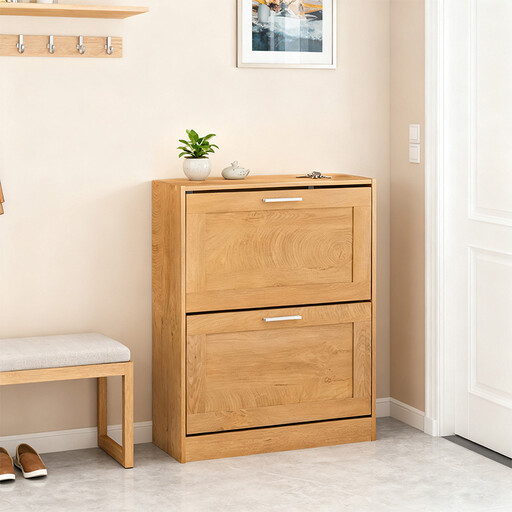
Why this product suits this type of buyer: At around 60 cm wide and 23 cm deep, this model is well suited to compact hallways. Its two tilt-out compartments keep shoes tucked away, while the extra drawer holds smaller items.
The removable shelves can be adjusted to different heights, so the interior layout isn’t limited to shoes of just one height.
Adjustable compartments, a drawer and a stated load capacity of up to 20 kg.
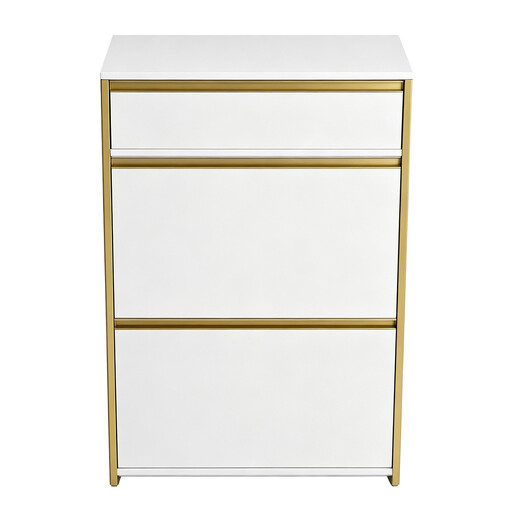
Why this product suits this type of buyer: Measuring 60 × 24 × 104.5 cm, this model combines four adjustable or removable compartments with a drawer. It can be used in a hallway or corridor, or as extra storage in a living area.
The interior layout isn’t completely fixed, helping to reduce the chance of a compartment going unused because your shoes vary in height.
Adjustable compartments, a drawer, a top surface for display or storage, and a stated anti-tip wall-fixing system.
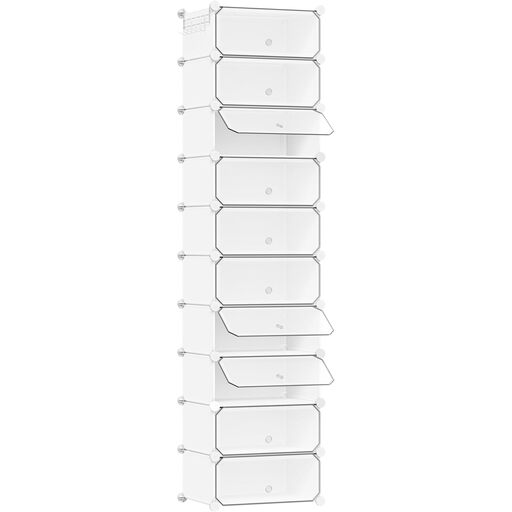
Why this product suits this type of buyer: The modular unit measures 40 × 30 × 170 cm and has ten compartments. According to the product description, it can hold up to 20 pairs of shoes, depending on their shape and size.
The dimensions of each compartment are clearly stated. The eyelet doors help with ventilation and keep dust away from your shoes.
PP plastic panels, a metal frame, ten enclosed compartments and a modular design that can be used for shoes or general storage.
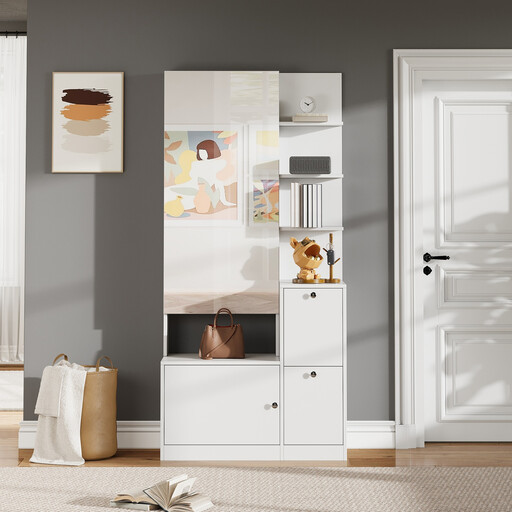
Why this product suits this type of buyer: Measuring 85 × 40 × 180 cm, this unit combines shoe storage with a mirror, five open shelves and additional enclosed storage for clothes or household items.
Its 40 cm depth and tall, vertical design are clearly stated. Before buying, check that there’s enough room for the doors to open and that you have a suitable wall for fixing it securely.
Built-in mirror, two pull-out shoe compartments, five open shelves and a stated top-surface load capacity of 50 kg.
Before ordering, check that the package will fit through your stairwell, lift and front door. Some models arrive in several packages, so wait until you have all the parts before starting assembly. Place the cabinet on a level floor and secure it to the wall using the fixing provided.
For many coated surfaces, a soft, slightly damp cloth is all you need. Don’t leave moisture on MDF or chipboard for long. Store shoes dry wherever possible, to prevent odours and damp from building up inside the closed cabinet.
We’ve put together a complete, regularly updated list of products that meet these strict selection criteria and fully comply with the safety regulations in force in the EU.
It depends on your shoes and the cabinet’s design. Models around 23 to 24 cm deep may work well in very narrow hallways. Larger shoes or open compartments may need more depth. Measure your longest shoes before you buy.
Place it on a level surface and use the anti-tip device supplied. Narrow, tall furniture should be secured to the wall in line with the assembly instructions. Children should not climb on doors, drawers or open shelves.
A tilt-out shoe cabinet makes good use of limited depth and usually keeps shoes out of sight. Doors also protect shoes from dust and often offer more storage for other items. Open shelves give you quick access and work well for shoes you wear often, but need dusting more regularly. The right option depends on your space, shoe size and how easily you want to reach your shoes.