
Lieferung heute & morgen

Qualitätsgarantie

Willkommens-Angebote freischalten: KOSTENLOSE Lieferung | Bis zu 80 % RABATT | Kostenlose 30-Tage-JoyPlus-Testphase
App herunterladen
A narrow shoe rack should keep your hallway tidy without blocking walkways. In small flats, narrow entrances and shared hallways, it’s not just the number of shelves that matters. The actual depth, stability and practicality of the design are just as important.
Many products look more spacious in photos than they really are in a hallway. Before you buy, it’s worth checking for three common pitfalls:
Measure the available space in your hallway in several places. Allow for skirting boards, door frames and the space needed to open doors. A shoe rack for small spaces should be narrow, but also leave enough room around doors and walkways.
The external dimensions don’t tell you everything about the usable space, either. With a narrow shoe cabinet, the back panel, doors and sides take up some of the interior. So check whether the shelves listed will fit trainers, slippers or taller shoes.
A multi-tier shoe rack makes better use of vertical space than a single shoe shelf. Removable or adjustable shelves are especially useful if you need to store different types of shoes. An adjustable shoe shelf, for example, can provide more space for ankle boots, then be set closer together again for flat shoes.
Also check whether the shelves are open or enclosed. Open metal or fabric shelves make it easy to grab your shoes. Doors help keep the contents out of sight and can make the hallway look less cluttered.
When choosing a metal shoe rack, check the joints, feet and coating. Lightweight metal frames are easy to move, but shouldn’t be loaded beyond their stated capacity. Fabric or non-woven shelves can be cleaned with a dry or slightly damp cloth; too much water may damage laminated materials.
A cabinet made from coated engineered wood can offer extra shelves and doors. Look for sturdy fittings and a way to secure it to the wall. Tall furniture should be secured against tipping in line with the manufacturer’s instructions, particularly in homes with children or pets.
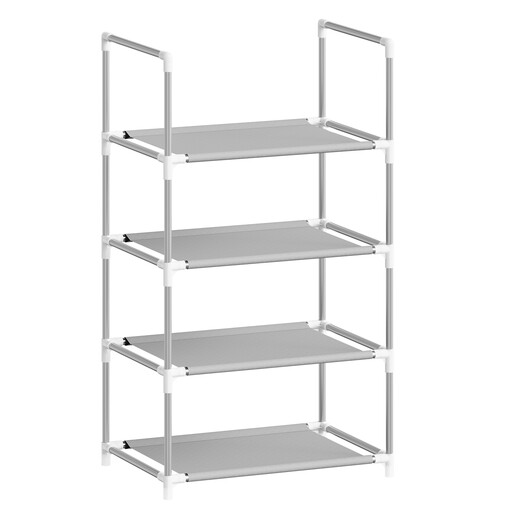
Why it suits this type of buyer: Measuring 41 × 28 × 72 cm, this rack is well suited to narrow hallways, smaller living rooms or compact entrance areas. Its four tiers provide space for shoes and smaller accessories.
Its compact external dimensions make it easy to see how much floor space you’ll need. The shelves are removable, and wall fixing is recommended for extra tip-over protection.
A metal frame, laminated non-woven shelves and four tiers, all in a width of 41 cm. Its low weight makes it easy to move later on.
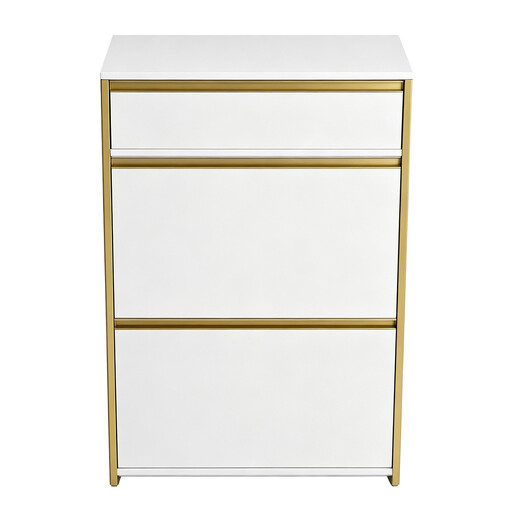
Why it suits this type of buyer: This cabinet combines enclosed shoe storage with a drawer and a top shelf. Measuring 60 × 24 × 104,5 cm, it fits in many narrow entrance areas.
The adjustable, removable shelves let you make room for shoes of different heights. Integrated tip-over protection helps keep the cabinet securely fixed to the wall.
Four shelves, one drawer, two doors and a stated capacity of up to 12 pairs. The white finish with gold-coloured details is designed to suit a range of interior styles.
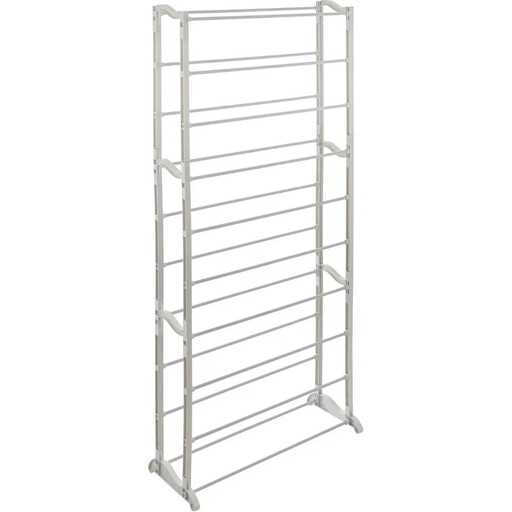
Why it suits this type of buyer: This tall freestanding rack is designed to hold up to 30 pairs, making it a good fit for families or households that regularly rotate their shoes.
The stated capacity gives frequent users a clear guide. Before assembling it, check that you have room for its 138 cm height and the floor space it needs.
A white metal frame with plastic components, a freestanding design and stated capacity for 30 pairs of shoes. The rack is designed for self-assembly.
We’ve put together a complete, regularly updated list of products that meet these strict selection criteria and the safety regulations in force in the EU.
Keep frequently worn shoes on the lower shelves. They’re easier to reach, and this also helps reduce uneven loading on taller racks. Let wet shoes dry before putting them in a shoe cabinet with a drawer or behind closed doors. This helps keep the materials and interior surfaces drier.
Don’t automatically fill a high-capacity shoe rack to its maximum stated number of pairs. Different shoe sizes, boxes and winter boots all affect how much space you’ll actually need. Check the screw fittings and wall fixings regularly, too.
A depth of around 24 to 30 cm works well in many hallways. The right size depends on your shoes and the space available for walking through. Measure the area, including skirting boards and the clearance needed for doors to open.
Three or four tiers are often enough for one person. Families or households with lots of everyday shoes may prefer a taller rack or a combination of a closed cabinet and an open rack. Treat the manufacturer’s stated capacity as a guide, not a guaranteed everyday figure.
Open racks make shoes easy to reach and allow good airflow. Closed models keep shoes out of sight and make dust less noticeable. Follow the manufacturer’s care instructions for either type, and avoid keeping damp shoes in enclosed storage for long periods.