When you’re working with multiple draft versions, the right solution depends on how you want to retrieve an older version. Set up file versioning to restore individual files, or use snapshots to capture selected states of a suitable volume. You’ll also need a separate backup and enough usable storage for your projects and version history. A faster NAS connection only makes a difference if the rest of your network can keep up. The German Federal Office for Information Security (BSI) does not consider RAID mirroring to be a backup.
Which solution is right for you?
If you want to find previous draft versions
If you regularly update project files and need to retrieve a specific earlier version, look for file versioning that you can enable, a version history and suitable retention rules. Synology explains how to restore earlier files using version control in Synology Drive; TerraMaster offers historical versions for TerraSync.
If you want extra protection for your archive
A copy within the NAS may not be enough for active and completed projects. Plan for a separate backup destination and check that you can restore the files and versions you need from it. The BSI expressly distinguishes data mirroring from data backup.
Growing project teams
For shared drafts or growing archives, usable capacity, shared folders and the connection between your workstation and NAS all matter. Assess your whole network, not just the stated speed of a single NAS port.
What should you look for when buying?
First decide whether you need to restore individual file versions or entire saved states. Then you can assess backup options, storage requirements and network performance to suit the way you work.
| What you need |
What to check before buying |
Who will find this especially useful? |
| Restore older drafts |
Check that file versioning is available for the folders you use, along with retention and rotation rules. |
If I want to retrieve a specific earlier project file, rather than just the latest copy, a clear version history matters to me. Around 25 % of consumers focus on being able to find individual draft versions. |
| Keep a separate archive backup |
Plan for a backup destination outside the primary storage pool and make sure you can restore a project version from it. |
If I want to recover my projects even after a problem with the NAS, I need a separate copy and a practical way to restore it. Around 25 % of consumers prioritise an independent backup. |
| Plan for usable storage |
Consider project sizes, expected growth, drive configuration and the space needed for versions or snapshots together. |
As my archive grows, I want to keep enough room for the history I need as well as current files. Around 20 % of consumers base their choice mainly on the storage available for projects and versions. |
| Shared access and file transfers |
Check shared folders and permissions, as well as the connections on your NAS, computer and other network equipment. |
For shared or large design files, I want to work with my team without relying solely on the speed of a single port. Around 15 % of consumers focus on team access and file transfers. |
| Total cost of the complete solution |
Check what’s included and choose compatible drives and a separate backup destination before placing your order. |
If I want to set up a complete archive, I want to plan for the drives I need and a separate backup from the outset. Around 15 % of consumers pay particular attention to the total cost of the complete solution. |
Which mistakes should you avoid?
-
Treating RAID or local snapshots as a complete backup
Mirroring also copies unwanted changes. Snapshots stored locally are no substitute for a separate copy of your archive.
Choose an independent backup destination and test whether you can restore an older project file from it. The BSI distinguishes data mirroring from data backup.
You may need a different backup or migration method to preserve the version history you want.
-
Assuming a NAS enclosure or raw capacity is a complete archive solution
Usable capacity depends on factors including the drives and the configuration you choose. QNAP states that the TS-264-8G is supplied without an HDD.
Compare complete configurations and check that the usable capacity is enough for your projects, versions and, where applicable, snapshots.
Compatible drives and a separate backup destination may need to be purchased as well.
Which brands are worth considering?
Synology
Worth considering if you’re looking at file versioning through Synology Drive and a NAS such as the DS225+ with a 2.5 GbE port.
- With version control set up for Team folders, Synology says you can select earlier files. Hyper Backup supports a range of backup destinations.
- A Drive package backup won’t back up file versions on its own. Also check drive compatibility with the specific NAS model.
QNAP
The TS-264-8G is a specific two-bay model with 2.5 GbE ports and QTS snapshots.
- QNAP lists two 2.5 GbE ports. HBS supports backup destinations on remote, external or cloud storage.
- The TS-264-8G is supplied without an HDD. Snapshots require a suitable storage pool, and the number available depends on factors such as the model and storage.
ASUSTOR
The NIMBUSTOR 2 Gen2 AS5402T is worth considering if you’re comparing drive and NVMe slots alongside snapshot features.
- ASUSTOR lists two 2.5 Gigabit Ethernet ports and four M.2 slots for this model.
- The manufacturer’s help documentation says volume snapshots require a Btrfs-formatted volume. Stated transfer rates don’t guarantee the throughput you’ll get at your own workstation.
TerraMaster
The F2-425 is a two-bay option if file history and Btrfs snapshots are part of your decision.
- TerraMaster describes historical versions for TerraSync and configurable schedules for TOS snapshots.
- The documented snapshot feature requires TOS 5.0 or later and Btrfs.
Joybuy products
This selection includes NAS systems for growing project archives, as well as internal drives for an existing, compatible Synology NAS.
 No image available
Synology DiskStation DS925+ 4-Bay NAS
For growing project archives, if you’re looking for a NAS enclosure with multiple drive bays and room to expand.
Four drive bays; expandable to up to nine bays; two 2.5 GbE ports; M.2 NVMe SSD caching.
According to the product description, Synology drives are required for installation.
View at Joybuy
 No image available
Synology DiskStation DS1825+ 8-Bay NAS
For large project archives, if a NAS with eight drive bays and the stated expansion option suits your storage needs.
Eight bays; two 2.5 GbE ports; optional 10 GbE upgrade; stated capacity of up to 360 TB.
View at Joybuy
 No image available
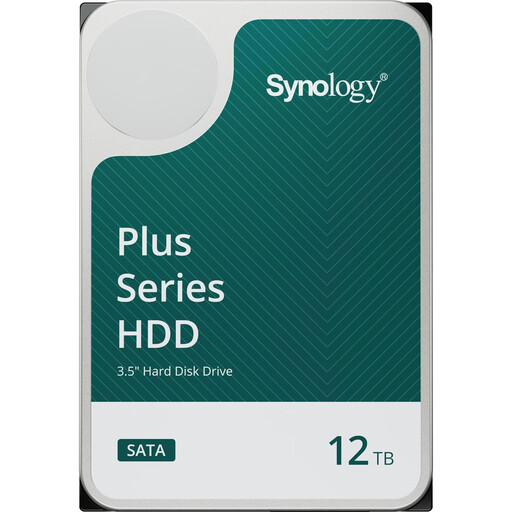
Synology HAT3310-12T 12 TB NAS hard drive
Extra storage for an existing compatible Synology NAS with a spare 3.5-inch bay. This hard drive is not a standalone NAS.
12 TB; 3.5 inches; SATA III; CMR.
View at Joybuy
 No image available
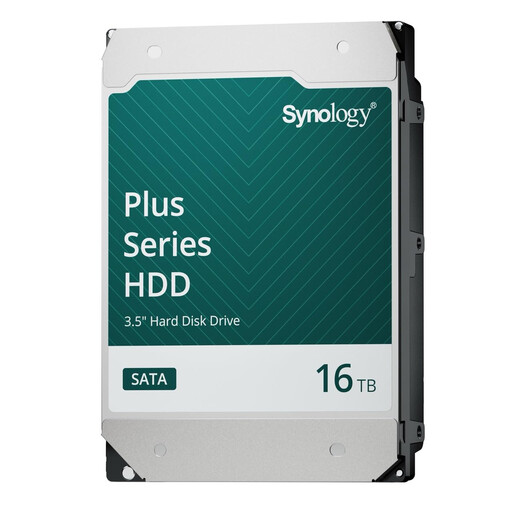
Synology HAT3310-16T 16 TB NAS hard drive
Extra storage for an existing compatible Synology NAS with a spare 3.5-inch bay. This drive is not a replacement for a NAS system.
16 TB; 3.5 inches; SATA 6 Gb/s; CMR.
View at Joybuy
 No image available
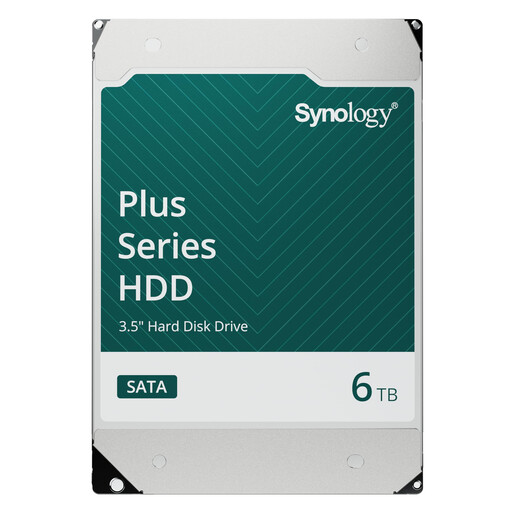
Synology HAT3300-6T 6 TB NAS hard drive
Extra storage for an existing compatible Synology NAS with a spare 3.5-inch bay. An internal hard drive on its own doesn’t provide file versioning.
6 TB; 3.5 inches; SATA 6 Gb/s; CMR.
View at Joybuy
Frequently asked questions
Is RAID 1 enough to back up my draft versions?
No. RAID 1 is no substitute for an additional backup. The BSI expressly distinguishes data mirroring from data backup because changes can be copied to the mirrored data. Plan for a separate copy and check that you can restore it.
How can I check that I can restore the right older file?
With Synology Drive versioning enabled, you can download or restore an earlier file from the version history. Test the process with a sample file and check which folders and points in time it covers.
Are internal hard drives and a backup included with the NAS enclosure?
It depends on the specific model and offer. QNAP explicitly states that the TS-264-8G is supplied without an HDD. Check what’s included, which drives are compatible and whether you need a separate backup destination before planning your complete setup.
Do design drafts containing customers’ personal data need special treatment?
When an organisation processes personal data, the GDPR requires appropriate technical and organisational measures that are proportionate to the risk. The European Data Protection Board also lists storage limitation as one of the applicable principles. The right access, protection and deletion rules depend on the specific processing involved.


