Families with a growing RAW archive
If you keep your original camera files, take stock of your current data and expected growth before choosing your drives. Usable capacity also depends on how the drives are configured.


Choose a NAS based on how much storage you use now, how quickly you expect your RAW archive to grow and how you want to restore your files. A NAS can back up PC files centrally and regularly, but it isn’t a substitute for a separate copy in case the NAS or the place where it’s kept is damaged. If you choose an empty enclosure, remember to factor in the drives you’ll need and their usable combined capacity.
If you keep your original camera files, take stock of your current data and expected growth before choosing your drives. Usable capacity also depends on how the drives are configured.
It’s not enough to create a backup; you should also be able to test that you can restore it. The German Federal Office for Information Security also recommends keeping a copy away from home if you want to plan for damage to the place where your data is stored.
If you want to back up or share files from several devices in one place, check that your devices, backup software and network connections will work with the setup you have in mind. The German Federal Office for Information Security notes that backup software must support the file formats and devices you use.
First work out how much usable capacity you need and how you’ll restore your files. Then check device compatibility and the overall cost, including drives and a separate backup copy.
| Buying priority | What to check | Who it matters most to |
|---|---|---|
| Usable capacity | Check your existing data and expected growth, then confirm the usable capacity of your planned drive configuration. | As our RAW archive grows, we want to know how much storage will actually be available once the drives are installed. That’s why around 33 % of consumers put usable capacity for RAW files first. |
| Ability to restore files | Set a backup schedule and choose a separate backup destination; test restoring a RAW file. | If important photos are accidentally deleted or the NAS is damaged where it’s kept, we want a second copy that we can access. That’s why around 27 % of consumers prioritise being able to restore their backups. |
| Connecting your devices | Check that the operating systems, folders to be backed up and RAW files are supported by the backup software. | If several family devices contribute files, we want to include them in a backup setup that works for us. Around 20 % of consumers therefore focus on compatibility with the devices they already own. |
| Overall cost | Check what’s included and how many drives you’ll need; budget separately for a second backup destination if required. | If we mainly need to back up one computer, we don’t want to budget for more devices and drives than our setup requires. Around 20 % of consumers pay particular attention to the overall cost of their backup. |
A second drive in the same NAS won’t automatically protect you from accidental deletion or damage to the place where it’s kept that affects all the drives there.
For important RAW originals, plan to keep a separate copy and check that you can restore a file from it.
According to Synology, usable capacity depends on the drives you use and how your storage is configured.
Compare the usable capacity of your planned setup rather than simply adding together the drives’ raw capacities.
The UGREEN NASync DXP4800 Plus is sold without hard drives; a NAS enclosure without drives can’t store any files yet.
Check what’s included and whether the drives you plan to install are compatible.
The connection between a NAS and a computer also depends on the other network devices and cabling. So a single connection specification doesn’t tell you the transfer speed you’ll actually achieve.
Check the connections on your NAS, computer and network before planning for a faster connection.
Synology describes the DS223j as supporting PC folder backups, while the DS225+ is a two-bay model with 2.5GbE.
The TS-233 is a two-bay NAS with Gigabit Ethernet for keeping household files in one place.
The NASync DXP4800 Plus, available in Germany, has four SATA bays, plus 10GbE and 2.5GbE connections.
This selection includes NAS models for growing archives and external drives for a simpler or additional backup of a family computer.
 No image available
For a growing archive and backups from several devices; the product description also mentions real-time backups.
Eight drive bays.
Two built-in 2.5GbE ports.
Option to add 10GbE.
Stated capacity: up to 360 TB.
 No image available
For a growing archive, if four bays and the stated storage expansion suit your needs.
Four drive bays; according to the product name, expandable to up to nine bays.
Two 2.5GbE ports.
The product description limits compatible drives to Synology-branded drives; check model compatibility before buying.
 No image available
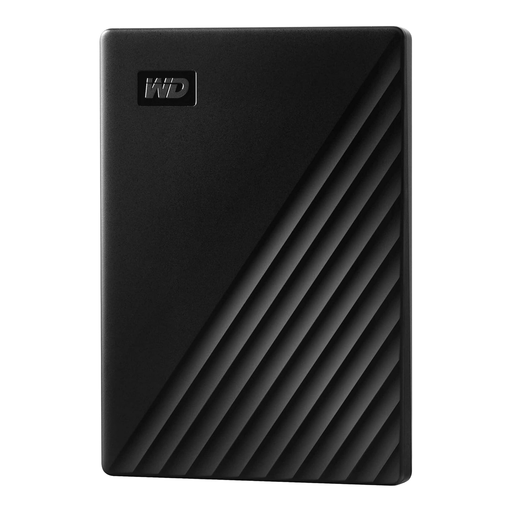
An external backup for one computer, if a planned backup routine is all you need instead of a NAS.
2 TB of storage.
The product description mentions USB 3.0 and automatic scheduled backups.
 No image available
An external storage option for computer files when you want a directly connected copy rather than central network access.
2 TB of storage.
USB Type-C 3.2 Gen 2.
The product description mentions compatibility with PCs.
What matters is that your chosen backup setup includes the original files and lets you test restoring one. The German Federal Office for Information Security recommends checking that your backup software is suitable for the file formats and devices you use.
Decide which PC folders to back up, set a suitable schedule and check from time to time that the files are included and can be opened. To prepare for damage at home, the German Federal Office for Information Security also recommends keeping a copy away from home.
Check the specific offer to see whether drives are included, which compatible drives you’ll need and what warranty terms apply. If you need a second backup destination, budget for it separately from the NAS.
The exception in Article 2(2)(c) of Regulation (EU) 2016/679 applies to data processing carried out solely for personal or family activities. It doesn’t automatically apply to professional or commercial use; the regulation is published in the Official Journal of the European Union.
The German Federal Office for Information Security advises against using risky port forwarding for NAS web servers and similar applications. It suggests a VPN-enabled NAS or a VPN on your home router as alternatives. This is security advice, not a general legal requirement.