Who is this buying guide for?

A steadily growing collection

If you’re regularly adding new recordings, plan for your existing data, expected growth and the usable space in your NAS configuration together. Western Digital notes that the actual usable capacity can be lower than the stated capacity, depending on the operating environment.

An archive of irreplaceable recordings

If you want to keep older lectures, plan for a separate backup in addition to your NAS and check that you can restore files from it. The Federal Office for Information Security (BSI) does not consider RAID mirroring to be a data backup.

An archive containing contributions from others

If recordings include participants’ voices or images, it’s important to consider how they’ll be used and to set appropriate access permissions. The Data Protection Conference notes that images and audio can make people identifiable.

What should you look for when buying?

CMR in a multi-drive pool

A good fit if: You want to expand your storage pool, regularly write new recordings or plan for a RAID rebuild. Check the exact model number against your NAS compatibility list.

Bear in mind: The stated total capacity of your drives won’t necessarily match the usable archive space. You’ll also need a separate backup.

SMR in a single-drive archive

A good fit if: Your NAS supports the specific drive and you’ll mainly save files once and read them later. TerraMaster lists SMR as a possible option for certain single-drive and archival uses.

Bear in mind: Changing stored data may require additional data reorganisation. For frequent writing and RAID rebuilds, TerraMaster recommends CMR instead.

Consideration What to check before buying Who it matters most to
Usable archive space Estimate your current data and future growth based on your past recordings. Check the usable capacity of your planned NAS configuration and any available expansion bays. Western Digital notes that stated and usable capacity can differ. If my archive is growing steadily, I want to know how much space will be left after configuring the pool. That’s why around 36% of consumers focus on future archive space.
Recoverability Plan for a separate backup destination and a recovery process you can test, in addition to your NAS. The Federal Office for Information Security (BSI) distinguishes this kind of backup from RAID mirroring. If older recordings can’t be obtained again, I want to be able to recover them after accidental deletion or a malware incident. That’s why around 29% of consumers prioritise data backup.
NAS compatibility and write activity Check the full model number, form factor and interface against your NAS requirements or compatibility list. Check the recording technology used by the specific model; TerraMaster recommends CMR for frequent writing and RAID rebuilds. If I want to keep using my existing NAS, the specific drive needs to suit both the enclosure and how I plan to use it. That’s why around 21% of consumers focus primarily on NAS compatibility.
Access to recordings If other people can be seen or heard in the recordings, clarify the context of recording and use with the relevant institution. Also check user permissions and security measures on your NAS; the Data Protection Conference notes that images and audio can identify people. If recordings include contributions from others, I want to restrict access appropriately and clarify how the recordings will be handled. That’s why around 14% of consumers put access protection first.

Common misconceptions

  • Assuming RAID is the same as a backup

    Mirrored changes can also include files that have been accidentally deleted or altered by malware. The Federal Office for Information Security (BSI) does not count RAID mirroring as a data backup.

    Set up a separate backup and test that you can restore files from it before making your NAS the only place you keep them.

  • Looking only at the stated hard drive capacity

    Your growing data collection and NAS pool configuration together determine how much space you can actually use.

    Start with your current archive and its observed growth, then check the usable storage space in your planned configuration.

  • Assuming every model in a drive range is the same

    The recording technology, form factor and NAS compatibility of the specific model can all matter. A product range name alone doesn’t confirm that a drive will work with your NAS.

    Compare the datasheet for the exact model with your NAS manufacturer’s compatibility list.

NAS hard drive brands to consider

Western Digital

Western Digital describes WD Red Plus as a CMR range for NAS use and growing data collections. The documented WD40EFPX model has a stated capacity of 4 TB.

  • The manufacturer’s datasheet lists CMR, 3.5 inches and SATA for the WD40EFPX.
  • These specifications don’t confirm compatibility with every NAS or the usable capacity of a particular pool.

Seagate

Seagate describes IronWolf as a CMR range designed for NAS use; the manufacturer’s manual lists the ST4000VN006 as an IronWolf model.

  • Seagate states that the IronWolf range covered comes with a three-year limited manufacturer’s warranty.
  • Check the coverage and warranty terms for the specific model and offer. Manufacturer specifications aren’t an independent comparison test.

Toshiba

Toshiba offers the N300 range for NAS use, media servers and archiving; its European product information also lists 4 TB variants.

  • According to Toshiba, the range is designed for NAS applications.
  • Don’t assume that specifications for the range apply to every capacity or model number. Compare the datasheet for the variant on offer with your NAS compatibility list.

NAS hard drives at Joybuy

This selection includes Synology NAS hard drives with CMR for planning a growing archive and NAS storage pool. Before buying, check that the specific model is compatible with your Synology NAS.
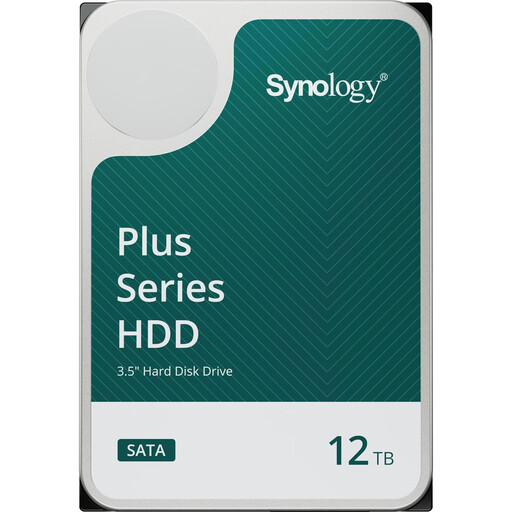
Synology HAT3310-12T, 12 TB NAS hard drive

Synology HAT3310-12T, 12 TB

The stated capacity gives you a clear starting point for planning a growing archive. Check compatibility with your Synology NAS.

12 TB, SATA III, 3.5 inches, 7200 RPM, 512 MB cache, CMR, helium.

View at Joybuy
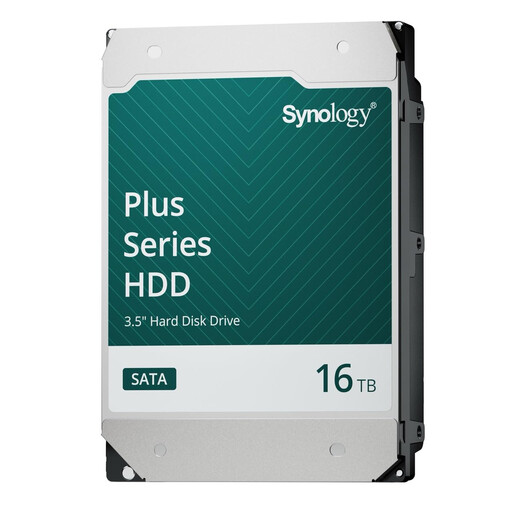
Synology HAT3310-16T, 16 TB NAS hard drive

Synology HAT3310-16T, 16 TB

The stated capacity can give you a starting point for a growing archive. Check the exact model against your Synology NAS.

16 TB, SATA 6 Gb/s, 3.5 inches, 7200 RPM, 512 MB cache, CMR.

View at Joybuy
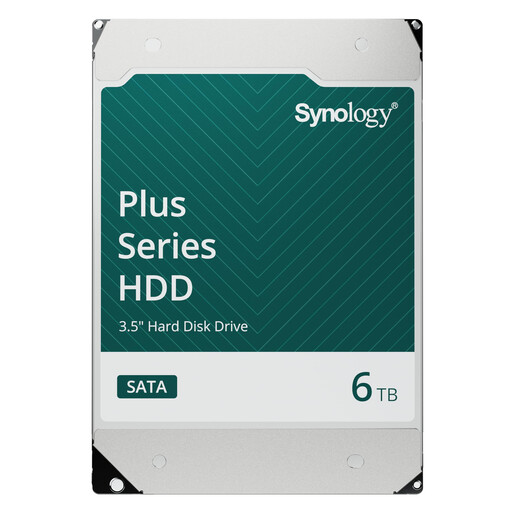
Synology HAT3300-6T, 6 TB NAS hard drive

Synology HAT3300-6T, 6 TB

The stated capacity gives you a specific figure to use when planning your archive. Check compatibility with your Synology NAS and the available space in your storage pool.

6 TB, SATA 6 Gb/s, 3.5 inches, 5400 RPM, 256 MB cache, CMR.

View at Joybuy

Frequently asked questions

Do I need a separate backup for a mirrored NAS?

Yes, if you also want to protect your recordings from accidental overwriting or malware. The Federal Office for Information Security (BSI) doesn’t consider RAID mirroring a data backup. Set up a separate backup destination and test that you can restore your files.

How can I check whether a NAS hard drive will work with my device?

Check your exact NAS model and the drive’s full model number against the NAS manufacturer’s compatibility list. Also check the form factor and interface; the drive range name alone isn’t enough to verify a specific model.

What should I consider when planning beyond the hard drive itself?

Depending on your setup, you may need a NAS enclosure, additional drives for your chosen storage pool and a separate backup destination. Also factor in your current storage use, expected growth and the usable space in the pool.

Is a manufacturer’s warranty the same as your statutory rights?

No. According to consumer information from the European Union, when you buy from a trader, you’re generally entitled to a minimum two-year legal guarantee from the seller, starting when you receive the goods. A manufacturer’s warranty is an additional promise, governed by its own terms and conditions.

Can I archive and share lectures featuring audible or visible participants?

You can’t answer this based solely on your choice of NAS hard drive. The Data Protection Conference notes that images and audio can make participants identifiable. Before recording, storing or sharing lectures, clarify the specific purpose, your role and the relevant university’s requirements, then set access permissions accordingly.