People archiving gaming footage
If you keep lots of gaming footage and completed project versions, estimate your future storage needs based on your existing folders and planned recordings.


For growing collections of gaming footage and large project folders, capacity should match your existing storage, expected growth and NAS storage pool; the drive’s stated capacity alone isn’t enough for planning. If you regularly change files, check the recording technology used by the specific model, its compatibility with your NAS and the whole network path. You’ll also need a separate backup for irreplaceable files: Synology points out that RAID is not a substitute for a backup.
If you keep lots of gaming footage and completed project versions, estimate your future storage needs based on your existing folders and planned recordings.
If you regularly make changes to large project folders, capacity isn’t the only thing to consider: the drive’s recording technology and the connection between your NAS and work device matter too.
If your original footage or project versions can’t be replaced, plan for a separate backup as well as your NAS.
Start by listing your files and estimating how much they’ll grow; then check the storage pool, drive model and NAS compatibility. If you regularly make changes to projects, consider the network path too, and plan a separate backup for irreplaceable files.
| Buying consideration | What to look for | Who is this important to? |
|---|---|---|
| Usable storage space | Check folder sizes, growth and how long you’ll keep files; factor in the usable capacity of your planned storage pool. | If I want to store footage and several project versions long term, I need space for both my existing files and future ones. Around 33% of consumers put usable capacity first. |
| Separate data backup | Decide which files to back up separately, where to keep the copy and how to check that files can be restored. | If I can’t replace my original footage, I want an independent copy outside my NAS storage pool. Around 27% of consumers prioritise protection against data loss. |
| Write behaviour | Check the recording technology against the full model number, and consider your workflow for frequently changed files. | If I often overwrite large project files, the drive needs to suit the way I work and write files to my NAS. Around 20% of consumers pay particular attention to write behaviour. |
| NAS compatibility | Check the full NAS and drive model numbers, along with the form factor, connection and NAS manufacturer’s compatibility list. | If I want to keep using my existing NAS, I want to know whether the specific hard drive variant will work with it before I install it. Around 20% of consumers put compatibility first. |
Formatting and your chosen storage pool configuration affect how much space is left for files.
Check how much data you already have and estimate future growth before comparing drive capacities.
RAID and a separate backup serve different purposes. Synology points out that RAID is not a substitute for a backup.
Choose an independent backup destination for irreplaceable footage and check that you can restore files from it.
Western Digital distinguishes between WD Red with DMSMR and WD Red Plus and WD Red Pro with CMR; recording technology can matter for sustained write operations.
Check the full model number and recording technology in the data sheet rather than relying on the range name or capacity alone.
When you work over a network, your NAS, work device and network connection all affect your file workflow.
Before choosing a drive, consider the entire transfer path and how you actually work with large project folders.
WD Red Plus is a range of NAS hard drives. Western Digital identifies WD Red Plus and WD Red Pro as CMR variants and recommends them for ZFS systems instead of WD Red with DMSMR.
IronWolf is a range of internal hard drives for NAS systems. Seagate describes IronWolf drives as CMR and optimised for NAS.
The Toshiba N300 range includes NAS hard drives for central storage and file sharing; Toshiba lists variants up to 22 TB.
The following Joybuy options are internal Synology NAS hard drives specified as using CMR recording. Before buying, check that the exact drive model is compatible with your NAS.
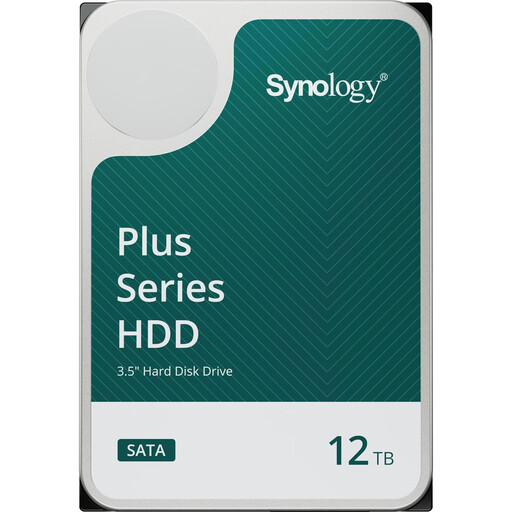 No image available
For a growing archive with frequently changed project files; check compatibility with your specific Synology NAS.
12 TB, 3.5 inches, SATA III, 7.200 RPM, 512 MB cache, CMR, helium.
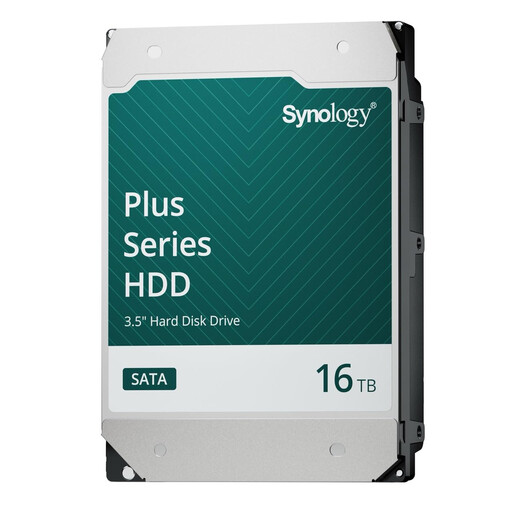 No image available
For large archives with frequently changed project files; check the exact model number against your Synology NAS compatibility list.
16 TB, 3.5 inches, SATA 6 Gb/s, 7.200 RPM, 512 MB cache, CMR.
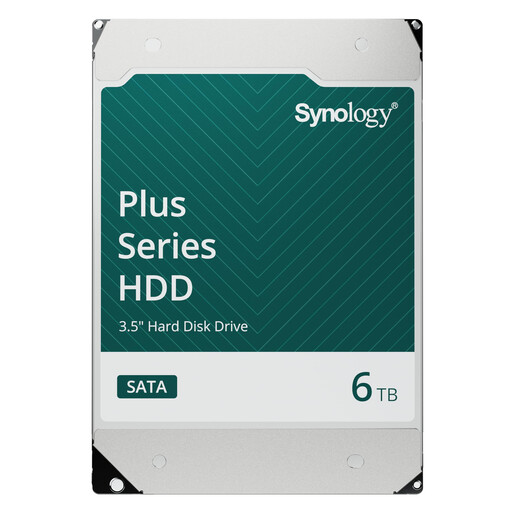 No image available
For storing footage and project folders centrally; check whether this specific hard drive variant is designed for your Synology NAS.
6 TB, 3.5 inches, SATA 6 Gb/s, 5.400 RPM, CMR.
That depends on the size of your folders and how much they’re expected to grow. First, check how much storage you’re using, allow for new footage and project versions, then check the usable capacity of your NAS storage pool. The drive’s full stated capacity won’t be available for storing files.
An internal 3.5-inch SATA hard drive needs a suitable NAS enclosure or drive bay. Before installing it, check that the specific model is compatible with your NAS, then set up the storage pool and shared folders according to the NAS instructions.
Yes, if you want to protect your files against data loss: Synology points out that RAID is not a backup. Choose a separate backup destination and check that you can restore the files you need from it.
No. The German Environment Agency recommends collecting electrical waste and relevant device parts separately. You can take them to a recycling centre, for example, free of charge.