Growing video libraries that need plenty of space
If you’re backing up large video files, or your library is growing, the usable storage space in your NAS setup matters. Formatting and configuration can affect how much space is actually available.


For regular video backups on a NAS, choose a hard drive capacity that suits the storage space actually available and the growth you expect. You should also check the exact drive model against your NAS compatibility information. CMR is particularly relevant if you expect frequent or sustained write operations, or use ZFS. Mirroring can keep your data available if a single drive fails, but it is no substitute for a separate backup and a tested recovery process.
If you’re backing up large video files, or your library is growing, the usable storage space in your NAS setup matters. Formatting and configuration can affect how much space is actually available.
If you want to recover recordings after a fault, accidental deletion or damage at the NAS location, remember that a mirrored drive is different from an independent backup. Germany’s Federal Office for Information Security (BSI) points out that mirroring alone is not a backup.
If your NAS is in your workspace, operating noise at its actual location matters, alongside compatibility and write activity. Noise figures for an individual hard drive don’t automatically reflect the noise of the whole NAS.
Start by working out how much usable storage you need, including room for expected growth. Then check that your NAS supports the drive and plan how you’ll recover files independently of the NAS.
| What matters | What to look for when buying | Who should pay particular attention |
|---|---|---|
| Usable storage space | Compare your library size and expected growth with the space available in your planned NAS setup. | If my video collection is growing, I want to know how much space will actually be left after formatting and NAS configuration. Around 26% of consumers put usable storage space first. |
| Recoverability | Decide where you’ll keep an independent copy and how you’ll restore a file from it. | If I want to keep accessing my recordings after accidental deletion or damage to my NAS, I need a separate backup. Around 26% of consumers prioritise recoverability. |
| NAS compatibility | Check the exact model numbers of your NAS and hard drive, as well as the form factor, interface and relevant manufacturer guidance. | If I want to keep using my existing NAS, the drive needs to suit that exact device and its requirements. Around 21% of consumers prioritise compatibility. |
| Write activity and recording technology | Check whether the exact model uses CMR or SMR, taking into account the file system and how often you make backups. | If I regularly back up large amounts of data or use ZFS, I want to know which recording technology the specific model uses. Around 16% of consumers prioritise suitability for their write activity. |
| Using a NAS in your workspace | Consider model-specific noise and power requirements, as well as the enclosure fan and where the NAS will be placed. | If my NAS is next to my workstation, I want to consider its operating noise and how suitable that spot is for continuous use. Around 11% of consumers focus on comfort in their workspace. |
Mirroring copies changes across drives at the same time. As a result, it won’t reliably protect you from accidental deletion or malware that affects both mirrored drives.
Decide how you’ll create and store a separate copy, and test that you can restore files from it.
A separate backup needs an additional storage medium, as well as time for storing it and carrying out regular recovery tests.
Formatting and NAS configuration affect usable storage space. You should also choose a capacity that suits the size of your library and how much you expect it to grow.
Compare the space your video collection needs with the storage available in your planned setup.
Western Digital’s Red range includes both SMR and CMR models. Which drives a NAS supports can also depend on the device series and system version.
Check the full model number, recording technology and guidance for your specific NAS. Recording technology is especially important if you use ZFS.
WD Red Plus includes NAS hard drives for RAID-optimised systems with up to eight drive bays. The WD40EFPX model is listed at 4 TB.
IronWolf is Seagate’s range of NAS hard drives. The ST8000VN002 model is listed as an 8 TB variant.
The N300 range includes 3.5-inch SATA hard drives for NAS and multimedia storage. The MN11ACA22TS model is listed at 22 TB.
Synology offers a Plus HDD range for its own storage systems, with drive integration and firmware management through DSM playing a part.
This selection features internal Synology NAS hard drives for backing up a video library. Compare the capacity with your needs and check that the drive is compatible with your NAS.
 No image available
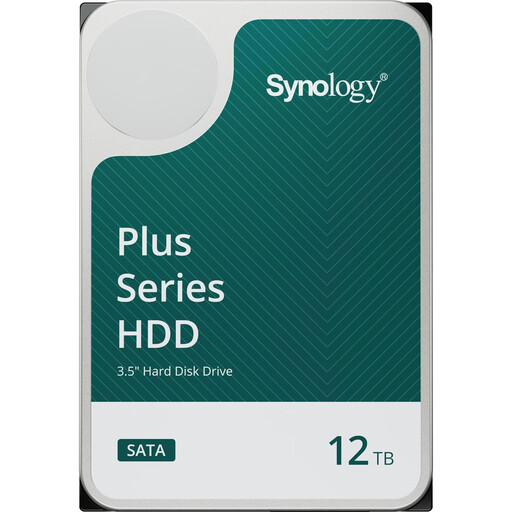
A 12 TB NAS hard drive for a video library, if its capacity and compatibility suit your planned setup.
3.5-inch, SATA III, 7,200 rpm, 512 MB cache and CMR. According to the product description, use only with compatible Synology NAS systems.
 No image available
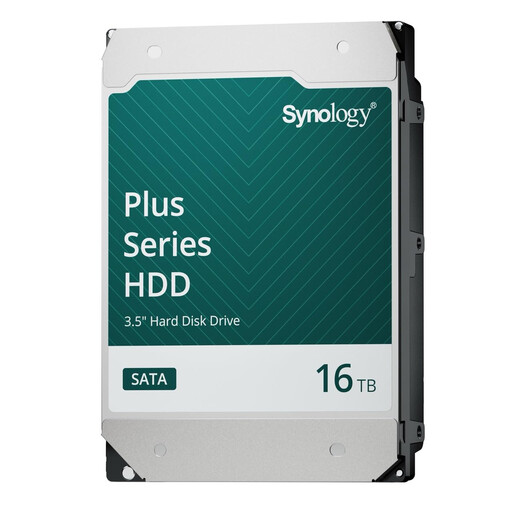
A 16 TB NAS hard drive for a larger video library, provided it suits your capacity plans and NAS.
3.5-inch, SATA 6 Gb/s, 7,200 rpm and CMR. According to the product description, use only with compatible Synology NAS systems.
 No image available
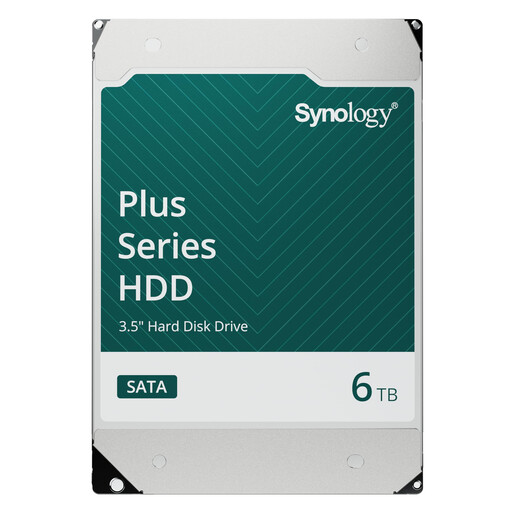
A 6 TB NAS hard drive if this amount of storage is enough for your library and planned setup.
3.5-inch, SATA 6 Gb/s, 5,400 rpm and CMR. According to the product description, use only with compatible Synology NAS systems.
No. Germany’s Federal Office for Information Security (BSI) says that mirroring can protect against the failure of a single storage device, but not against accidental deletion or malware being copied across at the same time. Keep an independent backup as well, and check that you can restore files from it.
The internal hard drives listed here are SATA drives and need a NAS enclosure to be used as network storage. If you’re looking for removable storage for a personal backup instead, the BSI lists an external hard drive as one possible backup method.
Check that your backup is being created regularly, then try restoring a selected file. Drive monitoring features may require a compatible NAS and don’t replace a recovery test.
If you don’t already have a NAS, you’ll need a suitable enclosure. Mirroring and keeping an independent backup may require additional drives or separate storage media; the exact setup depends on your configuration.
Under certain conditions, section 53(1) of the German Copyright Act (UrhG) allows individuals to make individual copies for private use, provided this is not for commercial purposes; this does not apply to an obviously unlawful source. Section 95a of the UrhG protects effective technological measures against the circumvention described there. This is not blanket permission to copy films from any source or to circumvent copy protection.