Photographers with a growing RAW archive
You want to store original files centrally and work out the capacity you need based on your existing collection, expected project growth and storage pool configuration.


Choose a NAS hard drive based on the usable archive capacity you need and whether it’s compatible with your specific NAS. If you’re using RAID or ZFS, the recording technology of the exact model matters too. A NAS can make your RAW originals available in one central location, but it doesn’t replace a separate backup or a local working copy for when you’re offline.
You want to store original files centrally and work out the capacity you need based on your existing collection, expected project growth and storage pool configuration.
You switch between your workstation and working on the move, and need a reliable way to keep local working copies and move them back into the archive afterwards.
It’s important to you to be able to recover RAW files after accidental deletion or damage at the storage location.
First, work out how much space your archive needs, including room for expected growth. Then consider NAS compatibility, local working copies for mobile use and a separate backup as distinct requirements.
A good fit if: You want to manage RAW originals centrally or access them from multiple computers.
Bear in mind: Access while you’re away requires a suitable connection; an internal SATA NAS HDD isn’t a portable USB drive.
A good fit if: You regularly work without a connection to your NAS and need your projects available locally.
Bear in mind: After you’ve finished working, local and central files need to be reconciled and backed up in an organised way. With Lightroom Classic, photos can be stored on a network drive, but the catalogue cannot.
A good fit if: Alongside availability in your storage pool, you need a recoverable copy of important shots.
Bear in mind: RAID isn’t a backup. Plan an additional, separate backup destination and test that you can restore your files.
| Priority | What to check before buying | Who it matters most to |
|---|---|---|
| Usable archive capacity | Check the size of your RAW collection and expected growth; work out the usable space based on your planned storage pool configuration. | If I want to keep my originals and future projects in one place, enough archive space is my main priority. Around 31% of consumers are likely to prioritise capacity above all else. |
| Recoverability | Plan a separate backup destination and test restoring files regularly; don’t count RAID as your only copy. | If my shots are irreplaceable, I want to be able to recover them after accidental deletion or damage at the storage location. Around 31% of consumers are likely to put recoverability first. |
| Mobile RAW workflow | Keep the projects you need for offline work available locally; consider your network connection and how you’ll transfer files. | If I work on the move without a connection to my NAS, I need my current projects locally and a reliable way to sync them afterwards. Around 23% of consumers are likely to prioritise mobile access. |
| NAS compatibility | Check the exact NAS and drive models, operating system version, form factor and supported capacity. | If I’m choosing a drive for my existing NAS, support for the exact model matters more than just the series name. Around 15% of consumers are likely to make NAS compatibility their main priority. |
A RAID storage pool being available doesn’t automatically mean you’ll have a recoverable copy after every deletion or damage at the storage location.
Plan a separate backup destination and test that you can restore files from it.
Western Digital offers Red family drives with different recording technologies. That’s why the full model number matters for a RAID or ZFS setup.
Check the recording technology of the exact model and make sure it suits your planned storage pool.
Real-world access through a NAS also depends on the NAS, client and network environment.
Consider the entire transfer path and keep projects available locally for working without a NAS connection.
Support can depend on the exact drive model, NAS model and software version. Synology’s policies vary according to the device and DSM version.
Compare the model numbers with the compatibility information for your specific NAS.
WD Red Plus is a series of internal NAS HDDs. The WD80EFPX is a documented 8-TB variant.
IronWolf includes internal NAS HDDs. The product manual lists ST8000VN002 as an 8-TB model.
The N300 series includes internal 3.5-inch SATA drives for NAS systems. The EMEA datasheet lists the 22-TB model MN11ACA22TS, among others.
These internal Synology NAS hard drives are designed for a central RAW archive in a compatible Synology NAS. For working without a network connection, you’ll also need a local working copy.
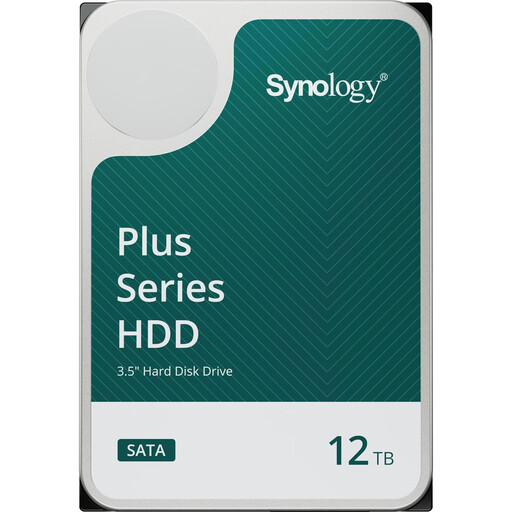 No image available
For a central RAW archive in a compatible Synology NAS; not described as a portable USB drive that connects directly to your device.
12 TB; 3.5 inches; SATA III; 7200 RPM; 512MB cache; CMR; helium.
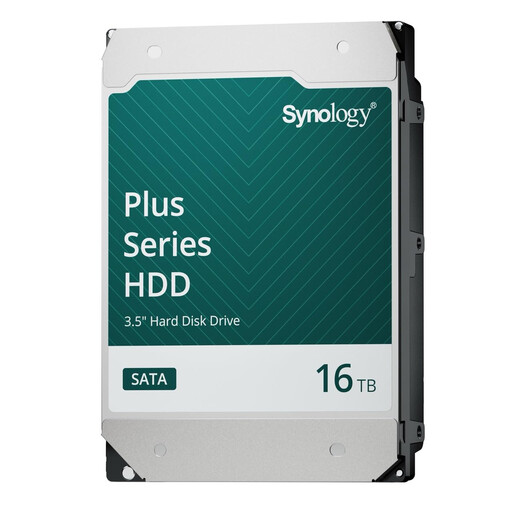 No image available
For a central RAW archive in a compatible Synology NAS; not described as a portable USB drive that connects directly to your device.
16 TB; 3.5 inches; SATA 6Gb/s; 7200 RPM; CMR; 1.2M Hours MTBF.
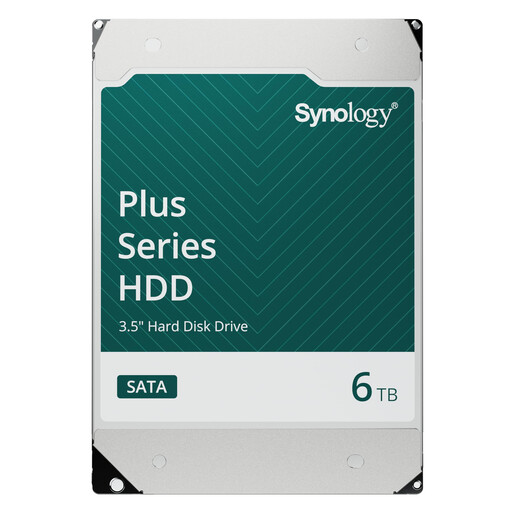 No image available
For a central RAW archive in a compatible Synology NAS; not described as a portable USB drive that connects directly to your device.
6 TB; 3.5 inches; SATA 6Gb/s; 5400 RPM; CMR; 1M Hours MTBF.
No. The drives described here are internal SATA HDDs for compatible NAS bays. For a local working copy that connects directly to your device, you’ll need a separate storage solution with a connection that suits your workstation.
Adobe allows photos to be stored on a network drive, but not the Lightroom Classic catalogue. Plan to keep the catalogue on a suitable local drive and back it up separately. Other image editing programmes have their own requirements.
No, RAID doesn’t replace a separate backup. It can keep your data available if a drive fails, but it won’t protect against every deletion or damage at the storage location. Back up important photos separately and test that you can restore them.
If you process personal data outside an exclusively personal or family activity, you must put appropriate technical and organisational safeguards in place. The Federal Commissioner for Data Protection and Freedom of Information describes these duties for controllers and processors; they don’t automatically require a particular NAS brand or hard drive capacity. Assess access permissions, backups and, where appropriate, encryption based on how you process the data.