Choose your NAS enclosure based on the number of simultaneous users, the usable capacity you’ll need in future and the network at your workplace. Remember to factor in suitable drives and the cost of the complete system. RAID can help if a drive fails, but it doesn’t replace a separate backup that you’ve tested restoring from. If you handle personal images, plan appropriate access controls and protection measures too.
Who is a studio NAS for?
Studios with irreplaceable shots
If you need to be able to recover RAW files after a drive failure, accidental deletion or malware attack, plan for a separate backup as well as drive redundancy. Germany’s Federal Office for Information Security explicitly distinguishes RAID mirroring from data backup.
Teams sharing project folders
If several people upload and access images, agree responsibilities and set access permissions. For images containing personal data, your safeguards should be appropriate to the specific processing involved. Germany’s Federal Commissioner for Data Protection and Freedom of Information and the European Data Protection Board offer guidance on this.
Studios handling large, ongoing imports
For regular, large transfers, usable capacity, drive configuration and the entire network path to the workstation all matter. Manufacturers’ port specifications describe individual devices; they don’t automatically tell you the speed you’ll get in your studio.
What should you look for when buying?
First, plan a separate backup that you can restore from. Then choose the enclosure, drives and network to suit shared access and the expected growth of your RAW archive.
| What matters |
What to check before buying |
Who it matters most to |
| Recoverability |
Plan a separate backup destination and test that you can restore files from it. RAID mirroring doesn’t count as an independent backup. |
If my shots can’t be repeated, reliable recovery is my priority. Around 33 % of consumers say recovering their RAW files is their most important buying consideration. |
| Team access |
Check user accounts, folder permissions and how simultaneous access is expected to work. Test application catalogues separately from access to image files. |
If several people use the same project folders, I need clear responsibilities and appropriate permissions. Around 27 % of consumers prioritise well-organised team access. |
| Transfer speed |
Compare the ports on the NAS, switch and workstations with the size and frequency of your RAW transfers. A fast NAS port alone doesn’t guarantee an equally fast connection. |
For regular, large imports, I make sure the whole network path can keep up with the pace of work. Around 20 % of consumers put transfer speed first. |
| Capacity and total cost |
Plan based on the usable capacity of your intended drive and RAID configuration. Check what’s included, drive compatibility and any additional costs for expansion and backup. |
As my archive grows, I want to consider the storage I’ll need alongside the cost of the complete system. Around 20 % of consumers prioritise usable capacity and total cost. |
Common assumptions to avoid when buying a NAS
-
Assuming RAID is the same as an independent backup
Mirroring can help if a single drive fails, but Germany’s Federal Office for Information Security notes that it also replicates unintended changes. It won’t automatically protect files that have been deleted or altered by malware.
Set up a separate backup destination and regularly test that you can restore files from it.
Depending on your existing setup, you may also need suitable switches or network interfaces for your workstations.
-
Assuming an enclosure or raw capacity is a complete storage solution
Usable capacity depends on the drives and storage configuration. QNAP states that the TS-464 is supplied without an HDD; the expansion unit for the Synology DS925+ is sold separately.
Compare complete configurations, check that the specific drive model is compatible and include a separate backup in your calculations.
Additional drives, a planned expansion unit and a separate backup medium may all involve extra purchases.
Brands to consider
Synology
The DiskStation DS925+ is a four-bay NAS for studios looking at expansion options and built-in 2.5-GbE.
- Synology says the model has two 2.5-GbE ports and can be expanded to nine drives with a separately available DX525.
- Usable capacity and drive compatibility depend on the configuration. Check the compatibility information for the specific drive you’re considering.
QNAP
The TS-464 is a four-bay NAS with built-in 2.5-GbE ports and optional 10-GbE expansion.
- QNAP lists two built-in 2.5-GbE ports.
- According to QNAP, the TS-464 is supplied without an HDD; 10-GbE expansion is available as an optional PCIe card.
UGREEN
The NASync DXP4800 Plus is a four-bay NAS with a built-in 10-GbE port.
- UGREEN lists one 10-GbE port and one 2.5-GbE port.
- Port specifications don’t show the speed you’ll actually get at a studio workstation.
ASUSTOR
The AS5404T is a four-bay NAS with 2.5-GbE ports and M.2 slots.
- ASUSTOR lists two 2.5-GbE ports and four M.2 slots.
- Performance figures published by the manufacturer are based on laboratory conditions and can’t necessarily be replicated on a particular studio network.
TerraMaster
The F4-424 Pro is a four-bay NAS with 2.5-GbE ports and M.2 slots.
- TerraMaster lists two 2.5-GbE ports and two M.2 NVMe slots.
- Advertised performance improvements over the previous generation are the manufacturer’s claims, not independent measurements of RAW workflows.
Seagate
IronWolf is a hard drive range for fitting in a compatible NAS enclosure, not a standalone NAS.
- Seagate lists CMR and 24/7 operation for the IronWolf models covered by each individual data sheet.
- Check the specific model number and make sure it’s compatible with your chosen NAS.
Western Digital
WD Red Plus is a hard drive range for NAS systems. The specifications quoted here refer to the WD80EFPX model.
- Western Digital lists 8 TB and 5,640 RPM for the WD80EFPX.
- These figures apply to this specific model and shouldn’t be assumed to apply to other capacity variants without checking.
Toshiba
N300 is a hard drive range to consider when choosing drives for a NAS.
- Toshiba EMEA lists 3.5-inch SATA and 24/7 operation; the number of supported bays varies by model.
- Check the specific model number and its compatibility with your NAS enclosure.
Joybuy NAS and drive products
This selection includes NAS enclosures with multiple drive bays, along with internal Synology NAS hard drives for compatible systems.
 No image available
Synology DiskStation DS925+
For a growing RAW archive, if a four-bay enclosure and 2.5-GbE ports suit your studio.
Four drive bays and two 2.5-GbE ports.
Expanding to up to nine drives requires a separately available expansion unit.
View at Joybuy
 No image available
Synology DiskStation DS1825+
For a studio considering a NAS with eight drive bays and several network options.
Eight drive bays and two built-in 2.5-GbE ports.
A 10-GbE upgrade is optional.
View at Joybuy
 No image available
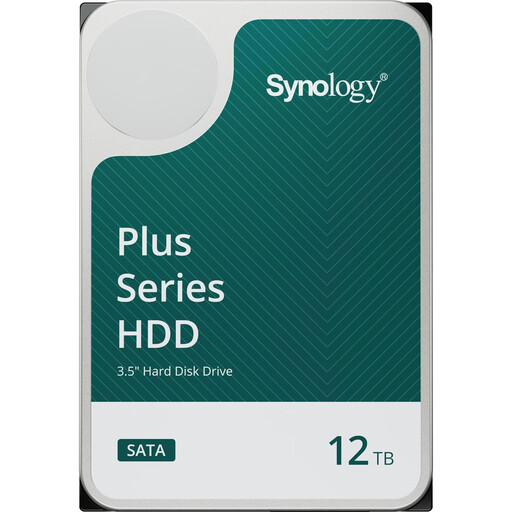
Synology HAT3310-12T
For fitting in a compatible Synology NAS; this hard drive doesn’t replace a NAS enclosure with network sharing.
12 TB, 3.5-inch, SATA III, 7.200 RPM and CMR.
Check that the specific drive model is compatible before buying.
View at Joybuy
 No image available
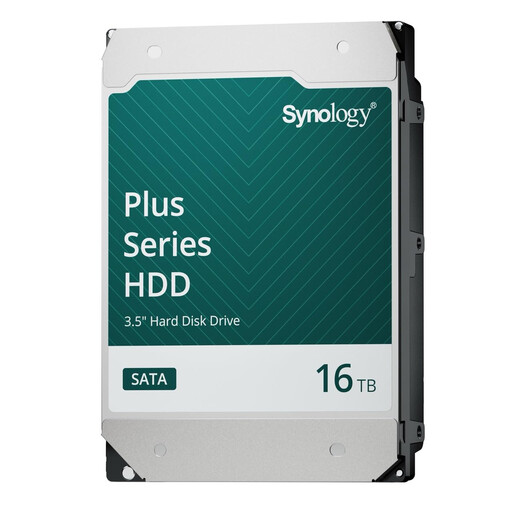
Synology HAT3310-16T
For a compatible Synology NAS that needs a 16 TB internal NAS hard drive; this isn’t a standalone NAS enclosure.
16 TB, 3.5-inch, SATA 6 Gb/s, 7.200 RPM and CMR.
Check that the specific drive model is compatible with the enclosure.
View at Joybuy
 No image available
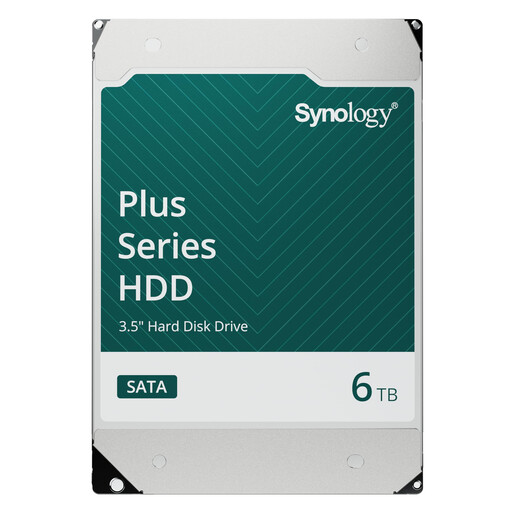
Synology HAT3300-6T
For a compatible Synology NAS that needs a 6 TB internal NAS hard drive; this isn’t a standalone NAS enclosure.
6 TB, 3.5-inch, SATA 6 Gb/s, 5.400 RPM and CMR.
Check that the specific drive model is compatible with the enclosure.
View at Joybuy
Frequently asked questions
Is RAID enough to back up RAW files in a studio?
No. Germany’s Federal Office for Information Security explicitly distinguishes RAID mirroring from data backup. Mirroring can help if a single drive fails, but it doesn’t automatically protect against accidental overwriting or malware. Plan independent copies and check that you can restore files from them.
What should I check before setting up multiple workstations?
Check the entire data path, including computers and the switch, as well as the project folders and access permissions you’ll need. If your image-editing software uses its own catalogue, test its multi-user workflow separately from access to the RAW files.
Does a diskless NAS enclosure come with hard drives and expansion units?
Not necessarily. QNAP says the TS-464 is supplied without an HDD; Synology lists the expansion unit for the DS925+ as sold separately. Check what’s included with the specific variant, the full drive model numbers and their compatibility.
Does a studio in Germany need a particular NAS model or 10 GbE for images containing personal data?
For images containing personal data, what matters is having suitable technical and organisational safeguards that match the risks of the processing—not choosing a particular NAS model or network speed as a blanket rule. Germany’s Federal Commissioner for Data Protection and Freedom of Information and the European Data Protection Board outline requirements for safeguards. The specific measures you need depend on how your studio processes the data.


