Studios with a growing project archive
If you need to keep a large project archive accessible for the long term, planning around actual growth and choosing a suitable upgrade path can help you select the right enclosure and drives.


Choose your NAS based first on your existing project archive, expected growth and recovery plan. Then compare usable capacity, drive compatibility and the network connection all the way to your workstations. A fast NAS connection is no substitute for a separate, tested backup, and having 10GbE on the device alone won’t guarantee equally fast transfers in your studio.
If you need to keep a large project archive accessible for the long term, planning around actual growth and choosing a suitable upgrade path can help you select the right enclosure and drives.
If several workstations regularly access raw footage and exports, factor access permissions and the performance of the entire network connection into your plans.
Important project files need a backup plan that’s separate from the NAS, as well as a tested recovery process. The German Federal Office for Information Security (BSI) explicitly distinguishes data mirroring from data backup.
Start with your archive and backup plan. Then match the drive configuration, team permissions and network to the way your studio actually works.
| Buying priority | What to check before buying | Who is this especially important for? |
|---|---|---|
| Usable capacity and growth | Calculate your existing project archive and expected growth against the planned drive and redundancy configuration; check that the enclosure and drives are compatible. | If I need to store a growing project archive with room to spare, usable capacity is what matters. Around 28% of consumers rank capacity and growth as their main priority. |
| Recoverability | Plan for a backup destination that’s separate from the active archive, and test the recovery process in practice. | If lost or damaged files would be hard to replace, I need an independent way to recover them. Around 28% of consumers put recoverability first. |
| Transfers to workstations | Consider the connections between the NAS, switch and workstations, as well as typical simultaneous transfers. | If I regularly transfer large files between the NAS and several workstations, the whole connection matters. Around 22% of consumers prioritise transfers between workstations. |
| Team access permissions | Set read and write permissions for people and completed projects; if you handle personal data, check which safeguards are appropriate for your specific use. | If several people access the archive, I want to control who can change projects. Around 22% of consumers prioritise managed team permissions. |
Usable capacity depends on the drive configuration and the RAID setup you choose. Synology’s manufacturer guidance recommends planning for these factors together.
Before you buy, note your current archive and expected growth, then calculate the space available with your specific configuration. Also check drive compatibility.
Your planned setup may require additional or larger compatible drives.
The BSI points out that mirroring also copies changes and deletions. A drive array is therefore not an independent data backup.
Plan for a backup destination that’s separate from your active NAS, and test regularly that you can restore projects from it.
A separate backup destination and recovery tests require extra planning and ongoing maintenance.
On the Synology DS1525+ and QNAP TS-664, 10GbE is an optional upgrade. Synology describes its published throughput figures as results from internal tests; they don’t show how a specific studio connection will perform.
Check the entire path between the NAS and workstations, including the connections on every device involved, rather than looking only at the NAS interface.
Optional network cards or modules, along with other compatible networking equipment, may involve extra set-up work.
The DiskStation DS1525+ is an example of a five-bay enclosure with an expansion option for a growing archive.
The TS-664 is an example of an enclosure with six drive bays.
The NASync DXP4800 Plus is a four-bay model that can be compared in terms of its connections and expansion options.
The F2-425 and F2-425 Plus are compact two-bay models featured in COMPUTER BILD’s editorial test.
IronWolf Pro is a range of drives for a NAS, not a standalone NAS enclosure.
The products below include multi-bay NAS enclosures and individual NAS hard drives to help you plan a shared video archive.
 No image available
Could be a good fit if you’re planning to install several drives in one enclosure and need to consider network access for your team.
Four drive bays; two 2.5GbE ports; expandable to up to nine bays; M.2 NVMe SSD caching.
Check that your specific drives are compatible with the NAS before installing them.
 No image available
Could suit an archive with a suitable expansion plan if you need several internal drive bays.
Eight drive bays; two integrated 2.5GbE ports; optional 10GbE.
Whether the network option makes a difference also depends on your switch and workstations.
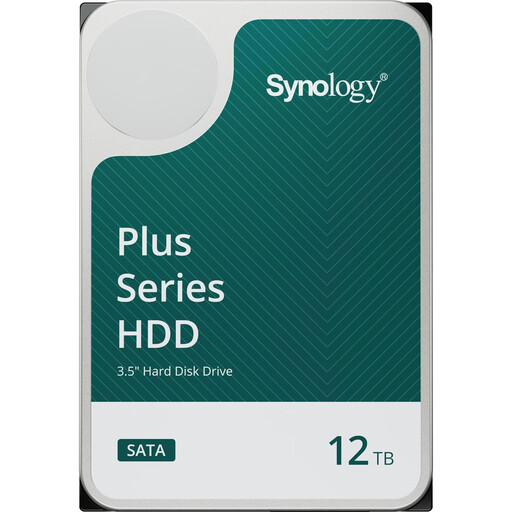 No image available
Could be considered when planning your NAS drive configuration, if its stated capacity suits the set-up you need.
12TB; 3.5-inch; SATA III; 7200 RPM; 512MB cache; CMR.
Check compatibility with the NAS model you plan to use.
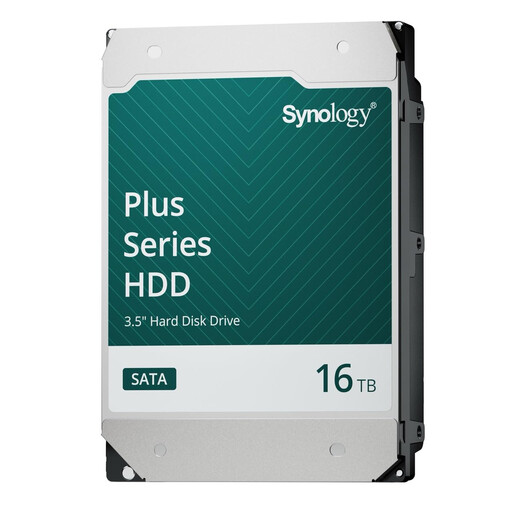 No image available
Could be suitable for a drive configuration with a higher stated capacity per drive, provided it meets the needs of your NAS and archive.
16TB; 3.5-inch; SATA 6Gb/s; 7200 RPM; CMR.
Check compatibility with the NAS model you plan to use.
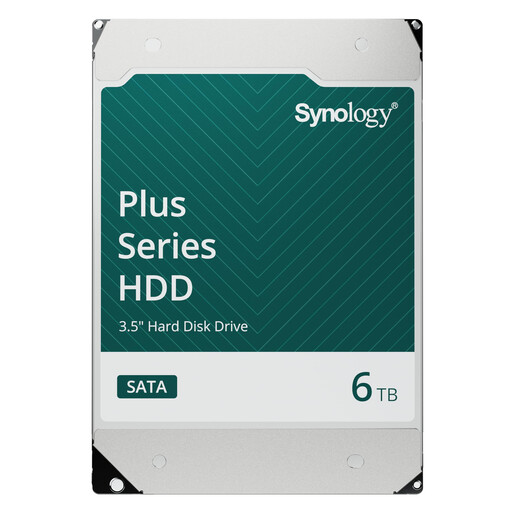 No image available
Could be considered when planning your drive configuration, if 6TB suits the set-up you have in mind.
6TB; 3.5-inch; SATA 6Gb/s; 5400 RPM; CMR.
Check compatibility with the NAS model you plan to use.
No. The BSI explicitly distinguishes RAID mirroring from data backup, because changes and deletions are mirrored too. Plan a separate backup and test that you can restore your files.
Not just because of the NAS connection. First check your workstation connections and actual transfer needs. According to their respective manufacturers, 10GbE is an extra, non-integrated option on the Synology DS1525+ and QNAP TS-664.
Allow for compatible drives and an independent backup. HDDs aren’t included with the QNAP TS-664; 10GbE on the Synology DS1525+ requires a module sold separately. Also, don’t assume data recovery services are available everywhere in Germany.
If you process personal data, data controllers and processors must take appropriate technical and organisational measures based on the risks involved. The BfDI explains this obligation in connection with the GDPR; you should check the purpose, access permissions and retention period for your specific use.