
Lieferung heute & morgen

Qualitätsgarantie

Willkommens-Angebote freischalten: KOSTENLOSE Lieferung | Bis zu 80 % RABATT | Kostenlose 30-Tage-JoyPlus-Testphase
App herunterladen
A natural-fibre rug made from jute or wool can add texture and a natural look to a room. At the same time, the materials differ considerably in feel, care requirements and suitability for different spaces. If you choose based solely on colour or price, it is easy to overlook important details.
Three common buying mistakes occur particularly often:
A natural jute rug is made from a plant-based natural fibre with a distinctive, relatively firm texture. A jute rug often suits Scandinavian, rustic, Boho and natural-living interiors. Its surface feels less fluffy and may develop a visible texture with frequent use. Jute should be protected from moisture and cared for using dry methods or a slightly damp cloth.
A natural wool rug made from pure wool feels softer, making it well suited as a living-room rug or bedroom rug. The wool models listed here are described as being made from 100% pure wool or 100% new wool. A hand-woven rug may have a slightly varied texture. This is not automatically proof of quality, but rather a characteristic of the manufacturing method.
It is worth taking a closer look at sustainability claims: natural fibres do not automatically have a particular environmental impact. Check the material content, care requirements, packaging and expected service life. The term sustainable rug should therefore be assessed based on specific product information.
Jute is a good choice if you want a robust, textured look. Models such as “Natural Bengal” combine a natural jute tone with a grey zigzag pattern. Wool is the better option if a softer surface and a more textile feel are the priorities.
Also consider the rug’s thickness. Most of the models listed are 1 cm deep. The “Wooly Dream 1” wool rug is additionally described as having a total height of 10 mm. This is relevant for doors, robot vacuum cleaners and furniture edges.
A rectangular rug measuring 200 × 250 cm can visually bring a larger seating area together. With a sofa, the rug should either extend clearly underneath the front legs of the furniture or be positioned deliberately with a gap in front of it. Mark out the area on the floor using masking tape.
For narrow areas, natural runners are a good choice, for example in sizes of 200 × 80 cm or 350 × 80 cm. Smaller sizes such as 90 × 60 cm can be placed in front of an armchair, beside the bed or in a small entrance area.
The surface weight affects how securely a rug lies on the floor. The “Natural Bengal” is specified as weighing 2700 g/m². Even so, a suitable anti-slip underlay is advisable on smooth floors. It can reduce movement and protect the floor between the rug and the underlying surface.
If you have underfloor heating, follow the information on the product page. Several wool models are stated to be suitable for underfloor heating. This suitability should not be assumed for jute without specific information from the manufacturer.
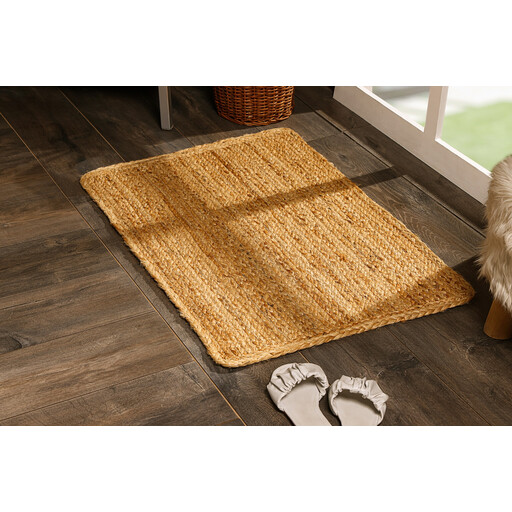
Why this product suits this profile: The compact 100% jute design is suitable for small living areas, an armchair space or as an accent in the bedroom.
The dimensions of 90 × 60 cm and the “jute” material specification make it easy to plan where it can be used. The small surface area reduces the risk of ordering the wrong size for a large seating area.
100% jute, a depth of 1 cm and a net weight of 1 kg; the natural colour scheme works with a range of interior styles.
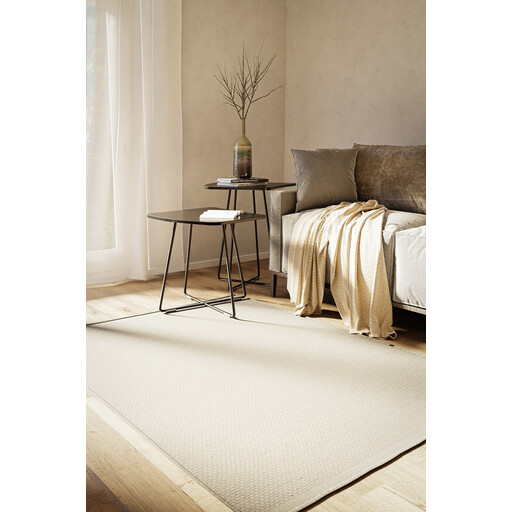
Why this product suits this profile: This handcrafted 100% pure wool rug combines a generous size with a specified total height of 10 mm.
The precise dimensions of 240 × 200 cm help with room planning. As the rug may be delivered folded, buyers should allow a few days for it to flatten out.
100% pure wool, a total weight of 2.4 kg/m² and, according to the product information, suitable for robot vacuum cleaners and underfloor heating.
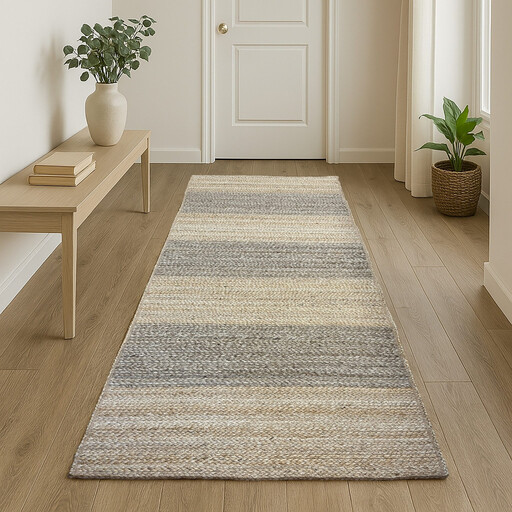
Why this product suits this profile: The elongated format is designed for hallways, transitional spaces and narrow areas where a large rug would not fit.
The width of 80 cm can easily be marked out on the floor before buying. This reduces the risk of poor planning around doors and in narrow passageways.
Jute with a specified surface weight of 2700 g/m², a depth of 1 cm and a two-tone zigzag texture.
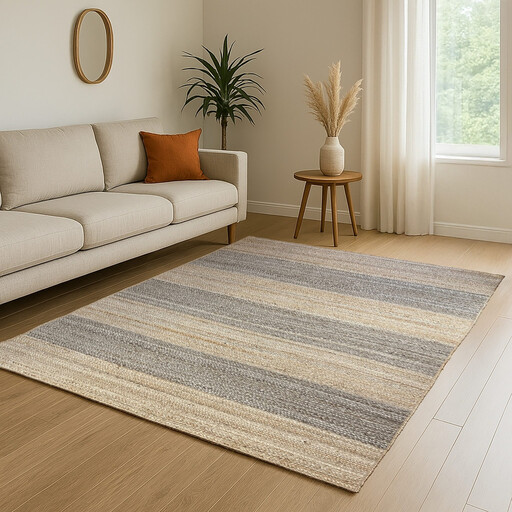
Why this product suits this profile: The 250 × 200 cm format covers a larger seating or play area and complements modern, rustic or natural interior schemes.
The product information clearly states the material, dimensions, depth and weight. Weighing 14 kg, this model should be checked in advance against the access route and its final position.
100% jute, a material weight of 2700 g/m² and a depth of 1 cm; the two-tone pattern adds a clear visual accent.
We have put together a complete, regularly updated list of products that fully meet these strict selection criteria and the safety regulations applicable in the EU.
Yes, provided that the material, size and care requirements suit the room. For heavily used areas, the specific construction, weight and a suitable floor surface are more important than the term “natural living”. A larger rectangular jute rug can help define the seating area, while a wool rug provides a softer surface.
There is no universally applicable lifespan. It depends on use, the underlying surface, cleaning, moisture and construction. Durable natural fibres can last a long time with suitable care. Look for specific information about the material, surface weight and construction rather than unsubstantiated marketing claims.
Jute and wool require different care. Jute should be kept dry and vacuumed regularly. According to the relevant product information, wool rugs may have dirt-repellent properties, but they should still be cleaned carefully. For stains and professional cleaning, the care instructions for the specific model are decisive.