
Lieferung heute & morgen

Qualitätsgarantie

Willkommens-Angebote freischalten: KOSTENLOSE Lieferung | Bis zu 80 % RABATT | Kostenlose 30-Tage-JoyPlus-Testphase
App herunterladen
A neck pillow is designed to keep your head comfortable when you’re travelling or in bed. In practice, though, not every model suits every posture or situation. Travellers often focus only on the U-shape, commuters underestimate how much space a pillow takes up, and side sleepers don’t always match the pillow height to their shoulder width.
To avoid making the wrong choice, it’s worth checking specific details such as material, dimensions, weight, filling and care instructions. The following criteria will help you distinguish marketing claims from product features that really matter.
A U-shaped travel pillow can help keep your neck in place from the sides. However, the support it provides depends on its height, firmness and fit. If the pillow is too soft, your head may sink too far into it. If it’s too high, sitting comfortably on a plane, train or in a car can be difficult.
When choosing a neck pillow for air travel, check that its dimensions suit your seat and preferred head position. A clasp or adjustable fastening can also help stop the pillow from slipping during your journey.
The term ergonomic neck pillow doesn’t describe a protected or uniformly defined product feature. What matters are the specific details: a contoured shape, pillow height, material density and whether you can adjust the firmness.
If you’re looking for a pillow to help with neck pain, don’t expect it to have an automatic effect. A pillow may support your individual sitting or sleeping position, but it’s no substitute for medical advice. If discomfort persists, it’s a good idea to consult a doctor.
An inflatable neck pillow takes up little space when packed away. However, you’ll need to inflate it before use and deflate it again after your journey. A memory foam neck pillow skips this step, but usually takes up more space.
For camping pillows, too, it’s important to consider weight, pack size and inflation mechanism together. A lightweight model may be a good choice for hikes, while a larger pillow offers more surface area in a campervan or tent.
A pillow designed for every sleeping position sounds versatile, but it won’t necessarily suit everyone equally well. Side sleepers often need more height than back sleepers. Front sleepers generally benefit from a lower profile.
The manufacturer’s specifications should clearly state the external dimensions or the dimensions when inflated. With the Intex neck pillow, measuring 36 × 30 × 10 cm, you can adjust the firmness by changing the amount of air. The larger Intex pillow for camping and travel measures 43 × 28 × 9 cm.
For a neck support pillow for your bed, the height at the shoulder side and the shape of the central recess are also important. The right height depends on factors including your build, mattress firmness and sleeping position. Adjustable inflatable pillows offer some flexibility, while foam models largely determine their own shape.
Velour or velvet surfaces feel soft, but need to be cleaned appropriately. Inflatable models made from PVC or TPU should be kept away from sharp objects, high temperatures and naked flames. Most of the models described here can be cleaned with a damp cloth; according to the product information, they should not be fully immersed or machine-washed.
Check the valves and seams of inflatable pillows regularly. Don’t overinflate the pillow, as this can put strain on the joins. Make sure it is completely dry before storing it.
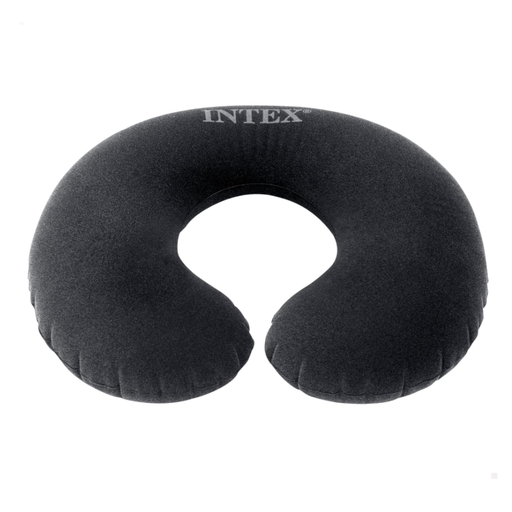
Why this product suits this profile: This inflatable neck pillow is designed for train, plane and car journeys, and packs away compactly once deflated.
The product information specifies the dimensions, flocked PVC material, and gives clear instructions for inflation, deflation and cleaning.
Contoured shape, water-repellent surface and compact storage once deflated.
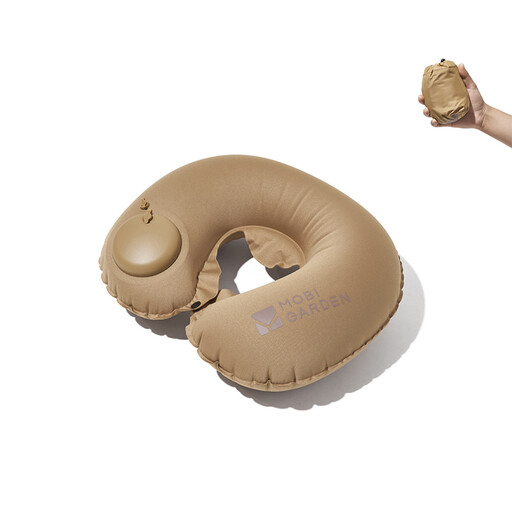
Why this product suits this profile: This U-shaped travel pillow is designed for campers, commuters and travellers who want to inflate a pillow without a separate mouthpiece.
The press-to-inflate design and sealable TPU air chamber mean fewer loose parts and let you adjust the firmness.
U-shape, press valve, packed dimensions of 30 × 10 × 5 cm and a stated weight of around 260 g.
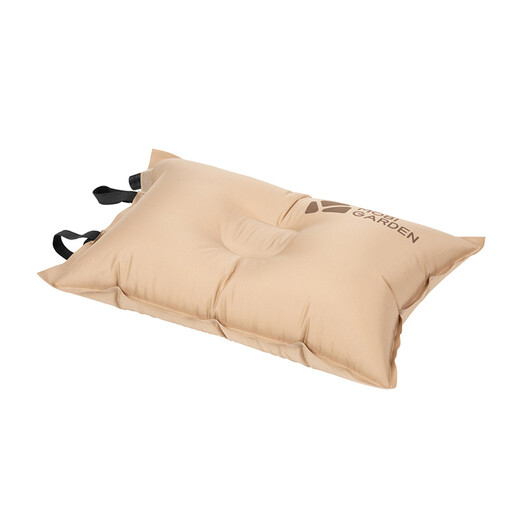
Why this product suits this profile: According to the product information, this model can be used as a pillow, lumbar cushion or back support in a tent, office or when travelling.
The product information specifies the packed dimensions, weight, valve type and care limitations. This makes it easier to assess whether it’s right for outdoor use before you buy.
210T polyester, water-repellent surface, self-expanding PU foam core and a net weight of around 260 g.
We’ve put together a complete, regularly updated list of products that meet these strict selection criteria and fully comply with the safety regulations in force in the EU.
How long a pillow lasts depends on its material, how heavily it’s used and how well it’s cared for. A memory foam neck pillow shouldn’t be washed or compressed heavily. If the manufacturer allows it, clean the cover separately. After unpacking, airing it out for 24 to 48 hours may help if it has a characteristic new-product smell.
Store inflatable models in a cool, dry place, away from sharp objects. Don’t continue using a pillow if you notice visible cracks, a leaking valve or crumbling foam. Without information from the manufacturer, it wouldn’t be responsible to give a single expected lifespan.
Open the valve and inflate the pillow by mouth, with a pump or, depending on the model, using an integrated press system. Adjust the firmness gradually. Avoid overinflating it, especially when air pressure may change during a flight.
There’s no one-size-fits-all height. Back and front sleepers often choose lower models, while side sleepers may need more height to accommodate their shoulder width. Your sleeping position, mattress and personal comfort are the main things to consider.
Care depends on the material. Inflatable PVC or TPU pillows can usually be wiped clean with a damp cloth. Foam cores generally shouldn’t be cleaned with water. Make sure any pillow is completely dry before storing it.