
Lieferung heute & morgen

Qualitätsgarantie

Willkommens-Angebote freischalten: KOSTENLOSE Lieferung | Bis zu 80 % RABATT | Kostenlose 30-Tage-JoyPlus-Testphase
App herunterladen
By a Joybuy Product Recommendation Officer, August 29, 2026
Waking up with neck strain is a widespread issue that can significantly impact your quality of life. Many people seek a solution with a neck support pillow, but the market is overwhelming and full of marketing promises. The right pillow can help alleviate discomfort, while an unsuitable model can actually make the problem worse.
As your Joybuy Product Recommendation Officer, I'm here to help you understand the crucial factors. We'll expose the most common pitfalls of buying a pillow and show you what to look for to make an informed decision.
Before we dive into the important features, let's debunk two common marketing traps that often lead to disappointment and wasted money.
To find a suitable orthopedic neck pillow, you should focus on objective, measurable criteria. The following three parameters are crucial for proper support and restful sleep.
The material is a key determinant of the pillow's comfort, support, and durability.
The shape and, most importantly, the height of the pillow must keep your spine in a straight, neutral line.
The right firmness is subjective, but the level of support is an objective necessity. The pillow shouldn't be so soft that your head sinks too deeply, nor so hard that it creates pressure points. A good pillow for neck tension provides a stable base that maintains the natural curve of the cervical spine throughout the night.
Based on the criteria above, we've selected a few products from our range that are suited for specific user profiles.
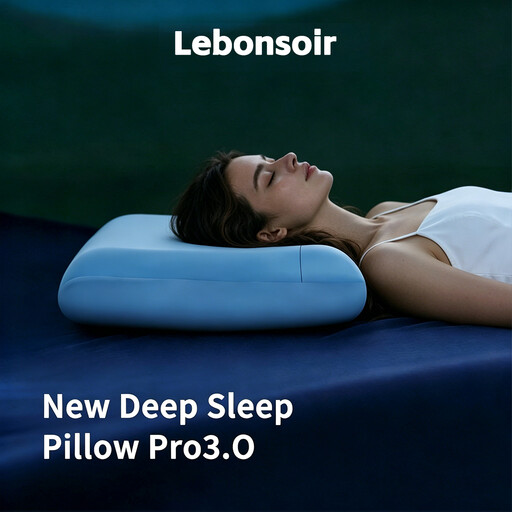
Why This Fits Their Persona: This pillow is designed for a stable side-sleeping position. The ergonomic contour features a shoulder recess, while the 8 cm height is suitable for many side sleepers to keep the spine straight and reduce pressure on the shoulder.
Instead of a vague 'one-size-fits-all' solution, the 3-layer construction offers a clear function: a soft top layer for comfort, a supportive middle layer to prevent sinking too deep, and a firm base for stability.
The combination of three foam layers ensures a fine-tuned balance of softness and firm support. The breathable cover aids in temperature regulation.
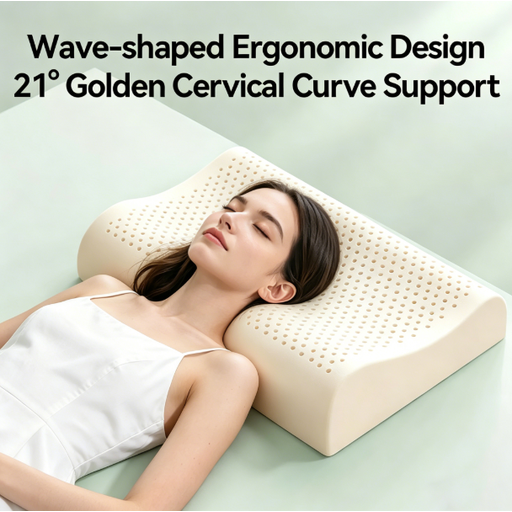
Why This Fits Their Persona: This pillow's wave shape is ideal for back sleepers. The lower contour (10 cm) supports the neck without pushing the head up, which promotes the natural lordosis of the cervical spine. The resilient latex material prevents the head from sinking in too deeply.
Instead of vague material claims, this one is clearly specified: 93% natural latex. The wave shape with two height options (10/12 cm) refutes the 'one-size-fits-all' approach and gives the user an adaptable choice.
The natural latex material is inherently breathable and resistant to mites. The ergonomic wave shape provides targeted support for the cervical spine.
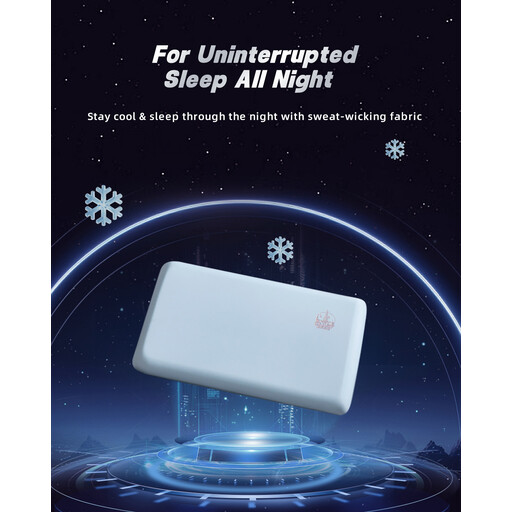
Why This Fits Their Persona: This pillow is designated as a pillow for all sleep positions. Its relatively low-profile and wide shape (70 cm) provides enough surface area for changing positions during the night without slipping off the pillow. The ergonomic contour still offers foundational support for the neck and head.
Instead of just claiming it's for everyone, the design provides the reasoning: its generous surface area and moderate height make it a compromise that works in various positions without being extremely unsuitable in any single one.
The memory foam material adapts with each new position. Its cooling properties can offer additional comfort for restless sleepers who frequently toss and turn.
Restful sleep depends on many factors. Discover more products that contribute to a comfortable sleep environment and meet our selection criteria.
An adjustment period of a few days to two weeks is normal. Your body, especially your neck and shoulder muscles, needs to adapt to the new, corrected sleeping posture. Give the pillow a fair chance before judging it as unsuitable.
The ideal height depends on your shoulder width and the firmness of your mattress. Measure the distance from the base of your neck to the end of your shoulder. This is a good guideline for the required pillow height. On a softer mattress where your shoulder sinks in, you might need a slightly lower-profile pillow.
The core of a memory foam pillow should generally not be machine washed or put in a dryer, as this will destroy the foam's structure. Air out the pillow regularly. The pillowcase is usually removable and washable. Always follow the manufacturer's care instructions. Stains on the core should only be spot-cleaned carefully with a damp cloth.