
Lieferung heute & morgen

Qualitätsgarantie

Willkommens-Angebote freischalten: KOSTENLOSE Lieferung | Bis zu 80 % RABATT | Kostenlose 30-Tage-JoyPlus-Testphase
App herunterladen
An ergonomic neck support pillow is designed to keep your head, neck and shoulders in a comfortable position. However, product names such as “orthopaedic pillow”, “cervical pillow” or “pillow for neck and shoulder pain” alone reveal little about how suitable a product really is. What matters are verifiable features such as pillow height, material, shape and cover care.
The Joybuy Product Recommendation Officer therefore bases the selection not on marketing claims, but on the individual sleep profile and the product information available.
A pillow that feels comfortable for back sleepers may be too low for side sleepers. Conversely, a high pillow can alter the position of the neck when sleeping on your back. This is particularly important with a pillow featuring a contoured design, so check whether it offers multiple heights or usable sides.
A memory foam neck support pillow can adapt to the body. However, its properties vary depending on the foam density, construction and ventilation. If there is no information about the core, outer cover or care instructions, it is difficult to assess how practical it will be for everyday use. Viscoelastic foam can also respond to room temperature and may initially feel firmer for some users.
Terms such as “antibacterial”, “hypoallergenic” or “cooling” should always be considered alongside specific material details. Natural latex, for example, can allow good air circulation, but it is not automatically suitable for people with a latex allergy. A cooling pillow for sleeping also does not necessarily require active cooling technology; the term often refers simply to a breathable cover.
Measurements such as “10/12 cm” or “8 cm” generally describe the construction height, not necessarily the height you will feel when the pillow is under load.
A latex pillow usually has an elastic restoring force and may be more breathable thanks to perforated structures. According to the product information, the JoySelect model is made from 93% natural latex and has two height options. However, natural latex is not suitable for people with a known latex allergy.
Memory foam, also known as viscoelastic foam, adapts under pressure. This can feel comfortable if you sleep in a relatively still position, while frequent changes of position may require slightly more effort. Look for a removable cover and clear care instructions. With some models, only the cover may be cleaned, not the foam core.
Feather pillows are soft and flexible, but offer different shape retention from a contoured cervical pillow. The DWONFOCUS model is listed as having 100% feather filling, a cotton cover and a filling weight of 800 g per pillow. For stable neck support, the individual filling quantity and your preferred sleeping position are key.
For everyday use, a removable, washable cover and clear care instructions are practical selection criteria. According to the product description, the smartsleep Recovery Pillow features materials tested for harmful substances, OEKO-TEX certification and air channels in the foam core. A certification applies to the materials specified and does not replace an individual compatibility assessment.
If you tend to feel warm at night, look for ventilation openings, breathable cover fabrics and the option to wash the cover. The term “temperature-regulating” is only meaningful when the construction or cover material is described.
The following models meet different requirements. The information is based on the respective product descriptions; comfort and the right height depend on your body shape, mattress and sleeping habits.
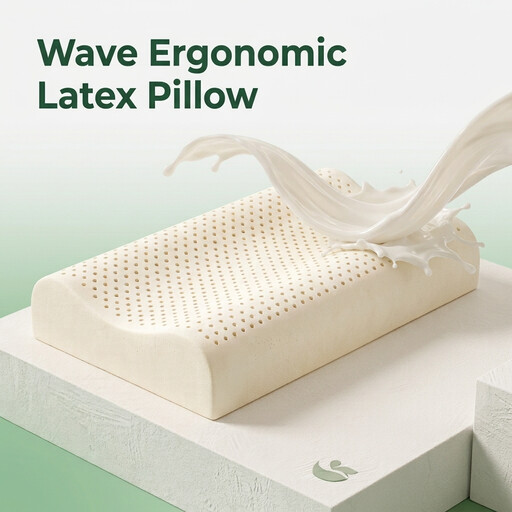
Why this product suits the profile: The two sides, measuring 10 and 12 cm in height respectively, offer a practical choice for different sleeping positions and preferences.
The material composition of 93% latex and the two specific heights are clearly stated. Any possible latex allergy should be ruled out before purchase.
Contoured design, ventilation structure and two removable covers; according to the product information, the outer cover is machine washable.
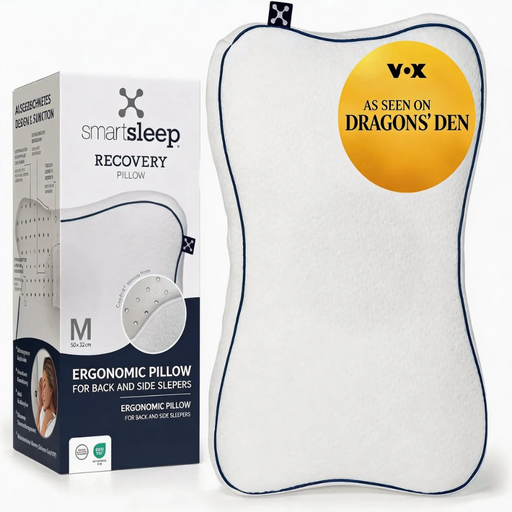
Why this product suits the profile: This model is described as suitable for back and side sleepers, and is aimed at users who value detailed material information and a trial sleep period.
The product information lists memory foam, integrated air channels, OEKO-TEX-certified materials and a 30-night trial period.
Head recess, contoured memory foam core and described air channels; suitable for sleeping on your back or side.
After unpacking, foam or latex pillows may have a temporary odour of their own. Air the pillow according to the manufacturer’s instructions before using it. A memory foam core should generally not be washed or soaked. Use a washable protective cover and clean it according to the care label.
It may take several nights to get used to the pillow. If possible, start by sleeping in the position for which it was designed. If persistent discomfort, numbness or severe pain occurs, the cause should be medically assessed. A pillow is not a substitute for medical advice or treatment.
We have put together a complete, regularly updated list of products that fully meet these strict selection criteria and the safety regulations applicable in the EU.
The appropriate height depends primarily on your sleeping position, shoulder width and mattress. Side sleepers often need more height than back or front sleepers. Models with two heights, such as 10 and 12 cm, are easier to adjust. However, there is no single height that works as a general guide for everyone.
The lifespan depends on the material, level of use, room climate and care. Memory foam and latex should retain their shape and show no cracks. If the core remains permanently flat, uneven or brittle, replacing the pillow is advisable. The manufacturer’s warranty and care instructions are also important.
There is no universal answer. Look for specific material and certification details, as well as a washable cover. With latex pillows, any latex allergy must be taken into account. Even a product described as hypoallergenic should be checked against the full material information if you have a known sensitivity.