
Lieferung heute & morgen

Qualitätsgarantie

Willkommens-Angebote freischalten: KOSTENLOSE Lieferung | Bis zu 80 % RABATT | Kostenlose 30-Tage-JoyPlus-Testphase
App herunterladen
Finding the right toy blaster can quickly become overwhelming. Whether it's a gift for a child or for action-packed recreational activities, the market is filled with models promising impressive ranges and features. However, exaggerated marketing claims and hidden running costs often lead to disappointment. This guide will help you identify the crucial features and make an informed choice that ensures long-term enjoyment.
Before you make a decision, you should be aware of the typical pitfalls that often only become apparent after the purchase.
To avoid a bad purchase, focus on three objective criteria that determine the quality and utility of a toy blaster.
The type of ammunition used is the central criterion for long-term usability.
The drive system determines the rate of fire, handling, and maintenance requirements.
Safety is non-negotiable. Always pay attention to the manufacturer's age rating. For high-performance dart and gel blasters, wearing safety glasses is recommended. Use only the projectiles specified by the manufacturer, as only these are designed to meet the safety standards of the respective blaster. Modifications to the blaster or ammunition should be avoided.

Why This Fits Their Persona: Ideal as an affordable gift for kids or for trying out the world of dart blasters. Its compact size and simple manual mechanism are perfect for quick, straightforward outdoor games and require no batteries.
Although it requires special N1 darts (the compatibility trap), its low purchase price is ideal for gauging interest without a large investment. The hidden costs trap is bypassed by its battery-free operation.
Very compact and lightweight design; simple pull-handle mechanism that is easy for children aged 8 and up to operate.
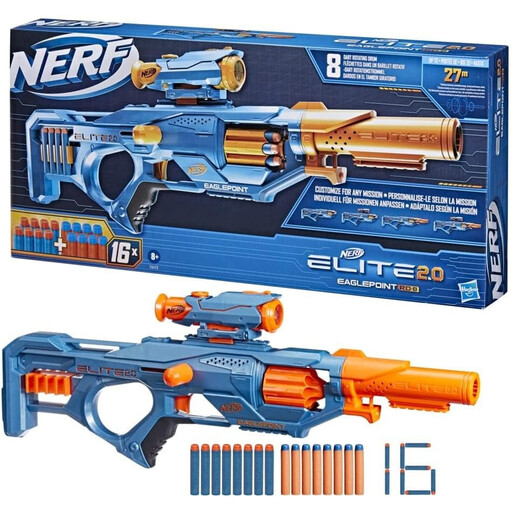
Why This Fits Their Persona: For teens and adults looking for a versatile and customisable blaster for tactical games. A great all-round model for classic outdoor play scenarios, combining performance and flexibility.
Uses widely available Nerf Elite darts, thus bypassing the compatibility trap. The manual bolt-action mechanism is reliable and incurs no battery costs, which mitigates the unrealistic performance trap.
Customisable with a detachable scope and barrel; 8-dart revolving drum for a good balance of capacity and handling; range of up to 27 metres according to the manufacturer.

Why This Fits Their Persona: For teens and adults who want a technological edge in water battles. This premium model redefines the electric water gun category and is designed for ambitious players who value precision and performance.
Addresses the hidden costs trap with a USB-C rechargeable battery. The performance claims are more precise due to the unique firing mechanism (individual "water slugs" instead of a stream) and less susceptible to environmental factors.
Automatic refilling in under 10 seconds; LED display for tank and battery status; three tactical game modes for different strategies.
We have compiled a complete, up-to-date list of products that fully meet these strict selection criteria and UK/EU safety regulations.
Both brands offer a wide range of blasters for kids and teens and are subject to the same safety standards. Objectively, Nerf often positions itself as an innovator with new series and specialised darts, which is sometimes reflected in a higher price. X-Shot, on the other hand, is known for offering very competitive performance and often larger ammo packs at a generally lower price point, making the brand particularly attractive to budget-conscious buyers.
The gel pellets for a gel blaster typically need to be soaked in water for a few hours to reach their full size and elasticity. The exact duration and water-to-pellet ratio can be found in the manufacturer's instructions on the packaging. To prevent them from drying out, hydrated, unused pellets should be stored in an airtight container with a little water. Some sets, like the X-Shot Hyper Gel Blaster Stinger Prime, already include ready-to-use, hydrated pellets.
That depends on the intended use. An electric water gun offers a constant, high rate of fire without manual pumping and often has technical advantages like automatic reloading. This can be decisive in intense water fights. However, they rely on a battery and are more expensive to purchase. Manual water guns are simpler, more robust, ready to use immediately, and often a more practical choice for younger children or spontaneous water games in the garden.