Studio with a few wired devices
You mainly want to connect the streaming box and other fixed devices to an existing router, and keep setup simple. TP-Link Germany and NETGEAR Germany offer suitable plug-and-play models.


For a streaming box in a shared studio, a basic Gigabit switch is enough if you don’t need to separate the network. Choose the number of ports based on all your devices, including the router uplink. With five ports, connecting the switch to the router leaves four ports for end devices, while eight ports give you more room to expand, according to TP-Link Germany’s product information. If you need separate network areas for different devices or user groups, you’ll need a managed switch with VLAN features and a suitable configuration for the rest of the network (Zyxel Networks; TP-Link Germany).
You mainly want to connect the streaming box and other fixed devices to an existing router, and keep setup simple. TP-Link Germany and NETGEAR Germany offer suitable plug-and-play models.
You share rooms and infrastructure, but want to segment network traffic from certain devices or user groups, and can coordinate the setup. Zyxel Networks and TP-Link describe models with VLAN features for this purpose.
You expect to connect more wired devices as well as the streaming box, and want to allow for this when choosing the number of ports. TP-Link Germany offers five- and eight-port switches in the model ranges mentioned.
First, count all your devices and the router uplink. Then decide whether a shared network is enough or whether you need managed network separation.
| What matters | What to check | Who is this important to? |
|---|---|---|
| LAN ports | Count the router uplink and all end devices; TP-Link Germany lists models with five and eight Gigabit ports. | I want to connect my router, streaming box and other fixed devices without running short of sockets. Around 36% of consumers would prioritise the number of LAN ports for this reason. |
| Network separation | Check whether the model offers VLAN and web management, and whether its configuration works with your router; Zyxel Networks and TP-Link describe models with these features. | If devices used by different studio members need separate network areas, I want to coordinate the VLAN setup with the network administrator. Around 29% of consumers would make network separation their top priority. |
| Wired connection | Check the Ethernet ports and supported connection speeds of the box, router and switch; IGMP snooping is only relevant for IP multicast (D-Link Germany). | It’s important to me that the streaming box can connect to the existing network via Ethernet. Around 21% of consumers would prioritise having the right wired connection. |
| Noise and space | Look for a fanless design and suitable placement options; D-Link describes the DGS-105 as fanless, while NETGEAR Germany says the GS305v3 can be placed on a desk or mounted on a wall. | If the switch is in my workspace, I want to consider fan noise and how much room it will take up beforehand. Around 14% of consumers would prioritise quiet operation and easy placement. |
On a five-port model, the connection to the router already uses one port. TP-Link Germany offers the TL-SG105, which has five ports.
Allow for the uplink, then count how many ports you actually need for your devices.
If there aren’t enough ports, you may need to switch to a model with more.
An unmanaged model doesn’t offer the configurable VLAN separation described here. TP-Link and Zyxel Networks list VLAN features on their managed model ranges.
Before you buy, decide whether you need separate network areas, then coordinate the switch, router and configuration with your network administrator.
To achieve the separation you want, you may need a managed switch and changes to the rest of your network configuration.
D-Link describes IGMP snooping as a feature for IP multicast traffic. That doesn’t mean it’s relevant to every streaming service.
Check whether the specific service uses IP multicast before making this feature a deciding factor.
TP-Link Germany offers simple five- and eight-port Gigabit switches, as well as separate Easy Smart models with management and VLAN features.
NETGEAR Germany describes the GS305v3 as a compact, unmanaged five-port Gigabit switch for adding more wired connections.
D-Link describes the DGS-105 as a fanless five-port Gigabit switch, and also recommends it for small offices.
Zyxel Networks offers five- and eight-port versions with web management in its GS1200 range.
This selection includes wired Gigabit switches for a streaming box and other LAN devices, with both managed and unmanaged models. For the specific variant, check that the number of ports, power supply and network features you need are compatible with your devices and the rest of your network configuration.
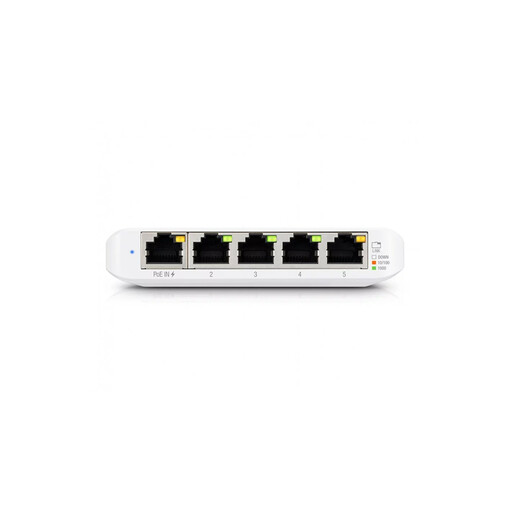 No image available
A good fit if you’re looking for a managed five-port Gigabit switch; first check which management environment and network features your studio needs.
5 Gigabit ports; powered via USB-C or 802.3af/at PoE; 10 Gbit/s switching capacity.
 No image available
An option if you’re looking for a fanless plug-and-play switch with PoE+ for compatible devices; check that the power supply suits the devices you’ll be connecting.
Five Gigabit ports; four PoE+ ports; 60 W PoE budget; fanless metal casing; plug-and-play.
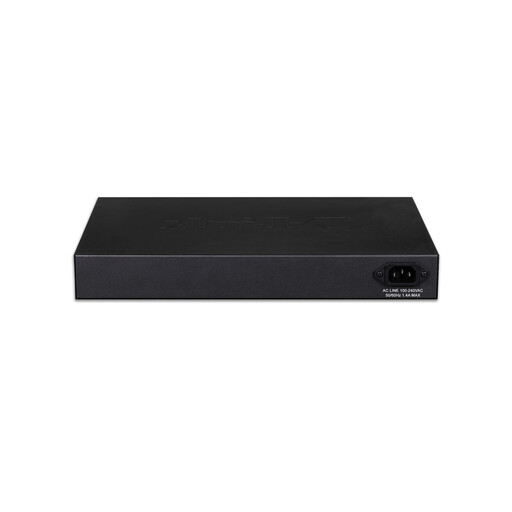 No image available
Could suit a studio with several wired connections and managed features; first check whether it can support the network configuration you need.
Eight Gigabit RJ45 ports and two SFP slots; 20 Gbit/s switching capacity; fanless design.
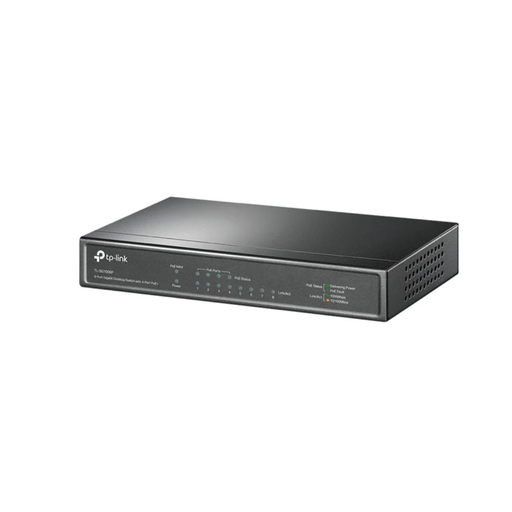 No image available
A possible choice if you need a straightforward Gigabit switch with Power over Ethernet; check the specific port and PoE specifications for your router, streaming box and other devices.
Unmanaged; Gigabit Ethernet; Power over Ethernet.
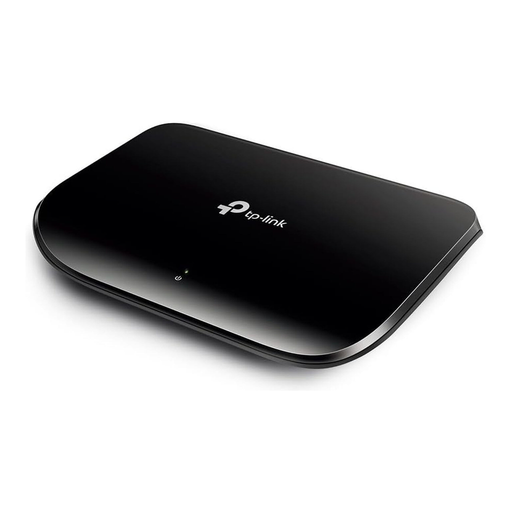 No image available
A good fit for a small wired setup if you’re looking for an easy-to-set-up five-port model; after connecting the router uplink, four ports remain for end devices.
Five Gigabit RJ45 ports; auto-negotiation; Auto-MDI/MDIX; plastic casing.
Connect one switch port to a LAN port on your existing router, then connect the streaming box to another port. First check that the box has an Ethernet port; with a five-port switch, four ports remain for end devices after the router uplink.
You’ll need a managed switch with the right VLAN features and a suitably configured network. Extra ports alone won’t create separate network areas; the router and other network equipment must also support the planned separation (Zyxel Networks; TP-Link).
Not necessarily. This feature is relevant if the service you use relies on IP multicast. D-Link explains that the DGS-105 forwards multicast traffic only to the ports that need it. You can’t tell whether multicast is used just from the fact that you have a streaming box.
If a newly purchased product is faulty, consumers can generally assert their statutory warranty rights against the seller. The Verbraucherzentrale says these rights last for two years from delivery; this is separate from any voluntary manufacturer’s guarantee.
Not necessarily. According to the European Union’s Your Europe website, a CE mark is only required for products covered by relevant harmonised EU rules that explicitly require it. Check the information for the specific switch and power supply against the product rules currently in force.