For extra wired devices, a compact, fanless Gigabit switch is enough if you don’t need faster local transfers or configurable network separation. With a 5-port model, the connection to your router uses one port, leaving four ports for other devices. 2,5 Gbit/s, PoE or VLAN management are most useful when your devices and network actually need these features.
Who are the different switches suitable for?
A desk with too few LAN ports
If you want to connect a computer and other wired devices at a small desk, a simple, fanless switch can provide extra ports. Check how many ports are actually left for your devices once the switch is connected to the router.
A studio with a fast NAS
If you regularly transfer files between your workstation and network storage, check the Ethernet speeds of both devices and the entire connection path. You can only use 2,5-Gbit/s ports if the connected devices support that speed.
A desk with a PoE device
If you want to power a compatible access point, IP camera or IP phone over an Ethernet cable, the PoE standard and power requirements must match the switch.
What should you look for when choosing one?
First, count the ports you need, including the router connection and any spares. Then check whether your setup really needs higher Ethernet speeds, PoE or configurable network features.
| Consideration |
What to check before buying |
Who will find this important? |
| Ports, space and noise |
Count the router uplink and device ports; compare the dimensions and fan information for the specific model. TP-Link Germany lists five Gigabit ports and fanless operation for the LS105G. |
When I’m connecting several devices in a small space, I want enough ports and no fan right next to my desk. Around 39% of consumers prioritise extra LAN ports that are quiet and space-saving when making this purchase. |
| Local 2,5-Gbit/s speeds |
Check the ports on your workstation and NAS, as well as the entire transfer path. TP-Link Germany and D-Link Germany list models with five 2,5-Gbit/s ports; the port specification alone doesn’t predict a specific file transfer speed. |
When I regularly move large files between my workstation and NAS, I need compatible ports on both. Around 31% of consumers prioritise fast local transfers when making this purchase. |
| Power over Ethernet |
Compare the PoE standard and power requirements of all your devices with the PoE ports and total power budget. NETGEAR Germany lists four PoE+ ports and a shared 63 W budget for the GS305EP. |
When I want to power a compatible network device at its installation point without a separate power supply, its requirements must match the switch. Around 15% of consumers make PoE for devices their main priority. |
| VLANs and configuration |
Check whether you actually need to set up VLANs and what management features the specific model offers. TP-Link Germany lists a management interface and five Gigabit ports for the TL-SG105E. |
When I need to assign devices to separate network areas, I need the right management features and must configure them. Around 15% of consumers prioritise configurable network separation. |
Which mistakes should you avoid?
-
Assuming all five ports are free for devices
The connection to your router will usually use one port too. On a 5-port switch, that leaves four ports for other devices once the uplink is connected.
Before buying, count the router connection, your devices and any spare ports you want.
-
Assuming 2,5 Gbit/s guarantees fast file transfers
The port speed doesn’t tell you the throughput you’ll get from a particular studio setup. A slower device port or another part of the connection can limit transfers.
Check your workstation, NAS and the entire transfer path before choosing multi-Gigabit ports.
-
Confusing PoE input with PoE output
The UniFi Flex Mini 2.5G’s documented PoE feature powers the switch itself. By contrast, the NETGEAR GS305EP is listed with four PoE+ ports for powering compatible devices.
Check specifically whether the switch supplies PoE to connected devices, and compare the standard and power output with their requirements.
If a switch can’t power a device over PoE, that device will need its own power supply or a suitable switch with PoE output.
Which brands and model ranges are worth considering?
TP-Link
The models listed cover basic Gigabit ports, 2,5-Gbit/s ports and configurable Gigabit connections.
- TP-Link Germany describes the LS105G as fanless and ready to use without configuration. For the TL-SG105-M2, the manufacturer lists five 2,5-Gbit/s ports.
- According to TP-Link Germany, the TL-SG105E has a management interface, but its ports are Gigabit rather than 2,5 Gbit/s.
D-Link
The DMS-105 is an option for a local 2,5-Gbit/s network with several compatible devices.
- D-Link Germany lists five 2,5-Gbit/s ports and plug-and-play operation.
- The port specification doesn’t guarantee a particular file transfer speed.
NETGEAR
The GS305EP is worth considering for desks where compatible devices need to be powered over Ethernet.
- NETGEAR Germany lists four PoE+ ports and a shared PoE budget of 63 W.
- According to the manufacturer, the five network ports support speeds of up to 1 Gbit/s; check the power requirements of the devices you’ll be powering.
Ubiquiti
The UniFi Flex Mini 2.5G is a compact option for a UniFi network planned to support it.
- According to its technical data sheet, the model has five 2,5-GbE ports.
- For software features, Ubiquiti specifies UniFi Network version 8.6.9 or later. The documented PoE feature powers the switch itself, not connected devices.
Joybuy products for extra LAN ports
The Joybuy models listed here are Gigabit switches for extra LAN ports, including options with PoE or VLAN management.
 No image available
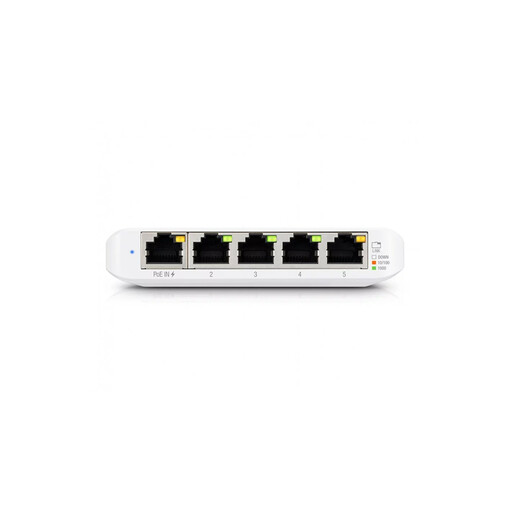
Ubiquiti UniFi Switch Flex Mini USW-FLEX-MINI-EU, 5-port Gigabit switch
For a small workspace where five Gigabit ports are enough and you want to use UniFi network features.
Five Gigabit ports; according to the product name, powered via USB-C or 802.3af/at PoE. The stated switching capacity is 10 Gbit/s.
The PoE feature powers the switch, not connected devices.
View at Joybuy
 No image available
D-Link DGS-1005P/E, 5-port Gigabit desktop switch
For extra LAN ports and compatible devices that need to be powered using PoE+.
Five Gigabit ports, four of which are PoE+ ports; the stated shared PoE budget is 60 W. The product also specifies fanless operation.
The PoE standard and power requirements of your devices must fit within the shared 60-W budget.
View at Joybuy
 No image available
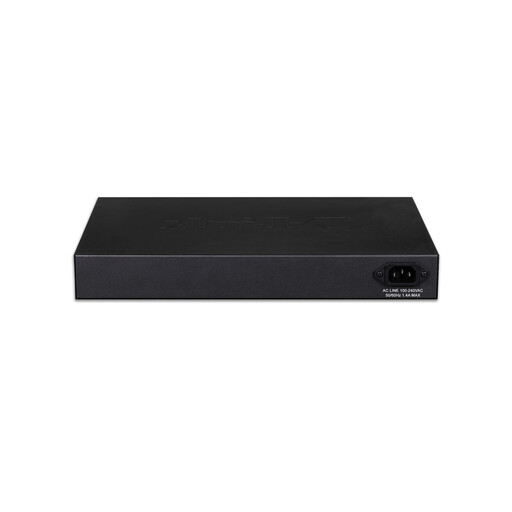
D-Link DGS-1210-10/E, 10-port Gigabit smart managed switch
For a workspace that needs more wired devices or configurable network features.
Eight Gigabit RJ45 ports and two SFP slots; the product name specifies VLAN support and fanless operation.
View at Joybuy
 No image available
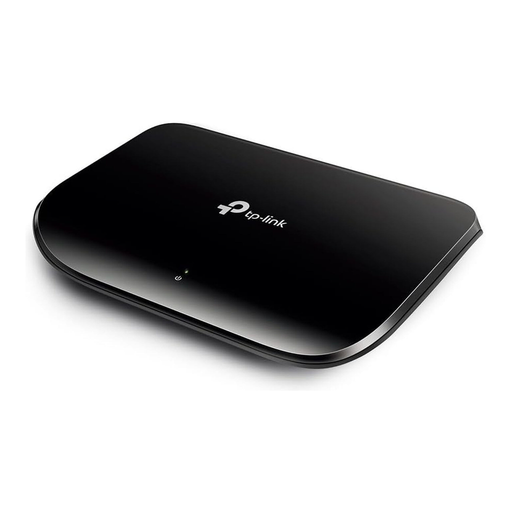
TP-Link TL-SG1005D, 5-port Gigabit desktop switch
For extra wired devices when five Gigabit ports without configuration are all you need.
Five 10/100/1000-Mbit/s RJ45 ports; the product name specifies auto-negotiation and Auto-MDI/MDIX.
View at Joybuy
 No image available
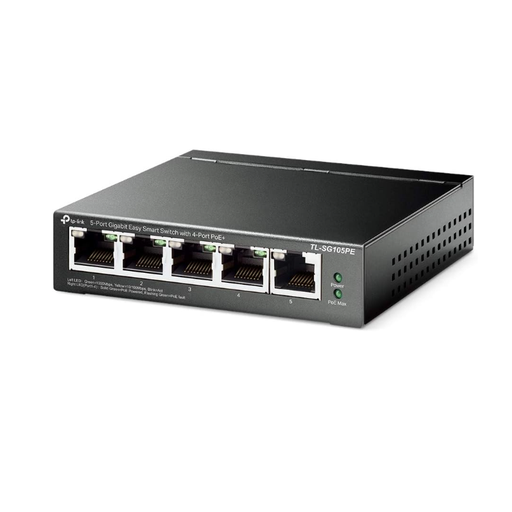
TP-Link TL-SG105PE, 5-port Gigabit Easy Smart switch
For a workspace where you need to power compatible PoE devices and use VLAN features.
Five Gigabit ports, four of which are PoE+ ports with a stated total budget of 65 W; the product name specifies VLAN support and fanless operation.
The PoE standard and power requirements of your devices must fit within the shared 65-W budget.
View at Joybuy
Frequently asked questions
How do I connect a switch at my desk?
Connect one LAN port on the switch to your existing network or router, then connect your wired devices to the remaining ports. With a 5-port switch, one uplink leaves four ports for other devices.
Do I need a 2,5-Gbit/s switch for my studio PC?
Not just because it’s a ‘studio’ PC. Check whether the devices involved have 2,5-Gbit/s ports and whether you regularly transfer large files locally. Gigabit may be enough if you simply need extra ports.
What should I look for with PoE?
Check whether the switch supplies PoE to connected devices, then compare the PoE standard and your devices’ power requirements with the available ports and shared power budget.
What warranty period applies if a switch is faulty?
For consumer purchases in Germany, Your Europe states that the statutory guarantee lasts for at least two years from receipt of the goods. The Verbraucherzentrale distinguishes these statutory rights from a voluntary manufacturer’s or retailer’s guarantee.
How do I dispose of an old switch in Germany?
You must not dispose of an old switch in household waste. The German Environment Agency recommends collecting waste electrical equipment separately; one option is to take it to a local collection point.


