Who can benefit from a switch in a student room?

Users of student accommodation networks

If you want to connect a media server to a network socket in student accommodation, first check how many devices and MAC addresses your specific connection allows. The RPTU states that its accommodation connections are limited to one device and one MAC address; other accommodation providers don’t necessarily have the same rules.

Users who need extra LAN ports

If your own home network needs extra wired connections for a media server, TV or computer, consider how many ports you need and how easy the switch is to set up. Specifications vary between models.

Users with compatible multi-gigabit devices

If you’re planning local transfers between devices with 2.5-gigabit ports, check that a multi-gigabit switch is compatible with the devices involved. QNAP lists five 2.5-gigabit ports for the QSW-1105-5T; the stated port speed alone doesn’t prove a particular data throughput.

What should you look for when buying a switch for a student room?

What matters What to check before buying Who it matters most to
Accommodation network connection Ask the relevant provider about rules on the number of devices, MAC addresses and your own network equipment. If I want to use a switch with a network socket in student accommodation, I need to know whether the provider allows multiple devices. The RPTU limits the accommodation connection it describes to one device and one MAC address. Around 31% of consumers put their accommodation network rules first.
Number of ports Count all wired connections, including the uplink; with five ports, using one for the uplink leaves four for other devices. If I want to connect a media server and other devices by cable at the same time, I need enough available ports. Around 31% of consumers prioritise extra LAN ports.
Quiet, straightforward operation Check whether the specific model is fanless and how it’s set up; consider the power supply and where you’ll place it. If the switch is near my desk or bed, I want to avoid unnecessary fan noise and complicated initial setup. Around 19% of consumers prioritise quiet, straightforward operation.
Local connection speed Check the ports on both devices; don’t assume the link speed guarantees the same application throughput. If I often transfer files locally between compatible devices, I want to know whether both support more than gigabit speeds. Around 13% of consumers prioritise a multi-gigabit connection.
Network management Work out what you need VLANs for and check that your other network components are compatible. If I want to configure a suitable network for a specific purpose, management features may be relevant. Around 6% of consumers put network management first.

Common misconceptions when buying a switch

  • Forgetting to count the uplink port

    The connection to your router or designated uplink also uses a port. With a 5-port switch, that leaves four ports for other devices.

    Plan all the connections you’ll need at the same time, and remember to include the uplink. If you need to connect more devices, check whether a model with more ports or a different cable setup would work better.

  • Assuming a switch is the same as a router

    A switch adds connections to a suitable existing LAN, but it doesn’t replace a router or assign extra IP addresses. A managed accommodation network may also limit the number of devices or MAC addresses you can use.

    Before connecting multiple devices, check the provider’s rules for your specific accommodation network connection.

  • Assuming 2.5 Gigabit guarantees faster streaming

    You can only use the higher port speed if the connected devices also have compatible ports. On its own, it doesn’t guarantee a particular application throughput.

    Check the ports on both devices in an important local connection, and distinguish the negotiated link speed from the application performance you actually get.

  • Thinking VLAN support gets around accommodation network rules

    A VLAN-capable switch won’t change the number of devices or MAC addresses supported by your accommodation provider. VLANs are designed for networks that are configured for that purpose.

    Choose management features to solve a specific need on a network you can configure accordingly, not as a substitute for checking the connection rules.

    Setting up a VLAN requires additional configuration and won’t get around any connection restrictions.

An overview of leading switch brands

TP-Link

The models mentioned include straightforward 5-port gigabit options such as the TL-SG105, LS105G and TL-SG1005D.

  • TP-Link lists IGMP snooping for the TL-SG105, plug-and-play setup for the LS105G and a plastic casing for the TL-SG1005D.
  • These features apply to the specific models mentioned and shouldn’t be assumed to apply to other versions without checking. A switch won’t remove restrictions on an accommodation network connection.

NETGEAR

The GS305v3 is a straightforward 5-port gigabit model, while the GS308E has eight gigabit ports and management features.

  • NETGEAR describes the GS305v3 as unmanaged; the GS308E offers VLAN features.
  • According to the manufacturer, the GS305v3 has no PoE budget. The GS308E’s management features are only relevant if you plan to use them on a suitable network.

D-Link

The DGS-105 is a fanless 5-port gigabit switch for easily expanding a LAN.

  • For revision E1, described on its German product page, D-Link lists plug-and-play setup and IGMP snooping.
  • Check the specific revision when looking at a listing. Manufacturer specifications aren’t an independent performance test.

QNAP

The QSW-1105-5T is an unmanaged 5-port switch with 2.5-gigabit ports for compatible local devices.

  • QNAP lists five 2.5-gigabit ports and fanless operation.
  • The higher stated port speed alone doesn’t prove that a particular media server will achieve higher throughput.

Joybuy switches for media servers and LAN devices

This Joybuy selection includes 5- and 8-port gigabit switches for wired devices. Depending on the model, features listed include PoE+ ports, VLAN functions or straightforward plug-and-play setup.
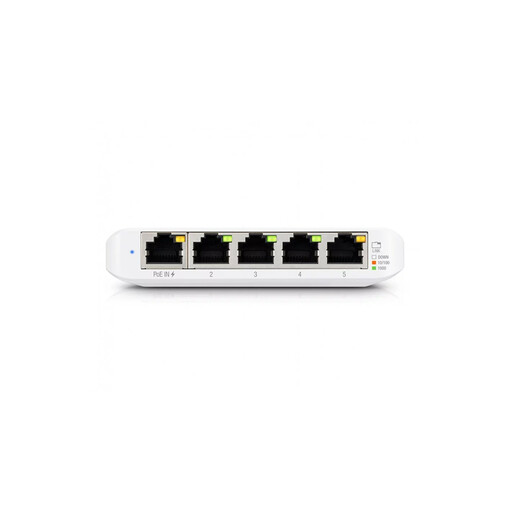
Ubiquiti UniFi Switch Flex Mini USW-FLEX-MINI-EU

Ubiquiti UniFi Switch Flex Mini USW-FLEX-MINI-EU

Designed for an existing LAN with a media server and other wired devices, it has five gigabit RJ45 ports.

Managed through UniFi Network; powered by USB-C or 802.3af/at PoE, according to the product name. Check which power option suits your setup.

Joybuy

D-Link DGS-1005P/E 5-port gigabit switch with PoE+

D-Link DGS-1005P/E 5-port gigabit switch

It has five gigabit ports for a media server and other gigabit devices; with one port used for the uplink, that leaves four for other devices.

It’s listed with four PoE+ ports and a 60 W PoE budget. Check that your connected devices support PoE+ and that the budget meets their requirements.

The product name specifies a fanless metal casing and plug-and-play setup.

Joybuy
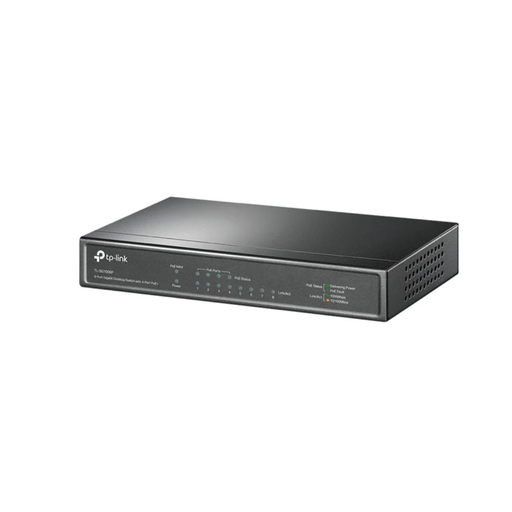
TP-Link TL-SG1008P 8-port gigabit switch

TP-Link TL-SG1008P 8-port gigabit switch

If you need to connect several wired devices as well as a media server, its eight gigabit ports give you more connections than a 5-port model.

It’s listed with four PoE ports and a 55 W PoE budget. Check the power requirements of compatible PoE devices before buying.

Joybuy
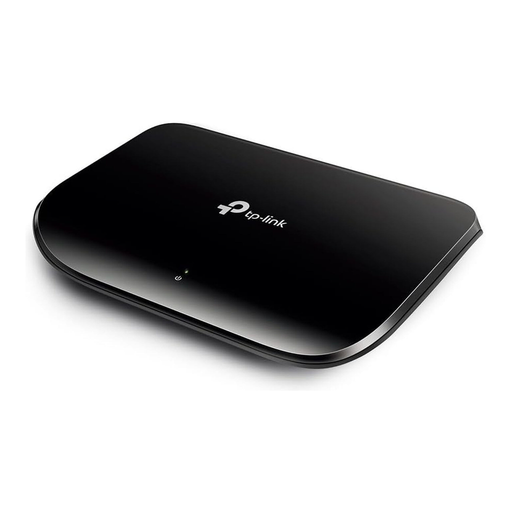
TP-Link TL-SG1005D 5-port gigabit desktop switch

TP-Link TL-SG1005D 5-port gigabit desktop switch

It has five gigabit RJ45 ports for a media server and other wired devices on an existing LAN. With one port used for the uplink, that leaves four for other devices.

The product name lists auto-negotiation, Auto-MDI/MDIX and a plastic casing.

Joybuy
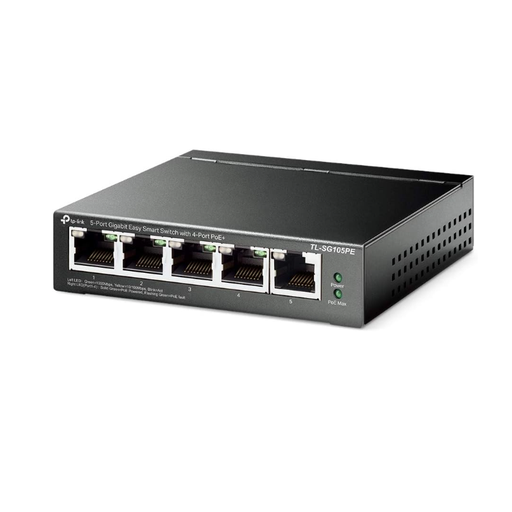
TP-Link TL-SG105PE 5-port gigabit Easy Smart switch

TP-Link TL-SG105PE 5-port gigabit Easy Smart switch

It has five ports for a wired gigabit LAN; with one port used for the uplink, that leaves four for other devices.

Listed features include four PoE+ ports with a 65 W budget, as well as VLAN, QoS and IGMP. These management features are useful if you want to use them for a specific purpose on your network.

The product name specifies a fanless metal design.

Joybuy

Frequently asked questions about network switches

Can I connect a switch directly to the network socket in student accommodation?

It depends on the rules for your specific connection. The accommodation connections described by the RPTU support only one device or MAC address; a standard switch won’t give you any extra assigned addresses. Check your provider’s requirements before connecting a switch.

How do I set up a basic switch on my own LAN?

On a suitable existing LAN, connect a switch port to your router or the designated uplink, then use the other ports for your media server and playback devices. According to their manufacturers, the unmanaged example models mentioned don’t need any configuration for this basic function.

Does a fanless switch use no electricity?

No. Fanless means the device doesn’t have a fan; it still needs a power supply. TP-Link lists a maximum power consumption of 2,776 W for the LS105G at 220 V/50 Hz; actual consumption depends on how it’s used. Also check which power supply is included with the specific listing.

What does CE marking mean when buying in Germany?

According to the European Union, CE marking is only required for products covered by the relevant harmonised EU rules. It isn’t a quality mark awarded by a central EU body. You can’t tell from a general product description alone whether a specific product, and its power supply where applicable, meets the relevant requirements.

What can I do if the product breaks or when I want to dispose of it?

If a product breaks, your statutory rights against the seller and any manufacturer’s warranty are separate options; the Verbraucherzentrale offers guidance based on your circumstances. For returning an old device, Section 17 of the German Electrical and Electronic Equipment Act (ElektroG) sets out take-back obligations subject to certain retailer and device requirements. Check which return option applies to your device and retailer.