
Lieferung heute & morgen

Qualitätsgarantie
App herunterladen
Kategorien
Choosing the right newborn essentials requires expectant parents to weigh functionality, material quality, and safety features. An informed decision is based on analysing technical specifications and compliance with current standards. This article focuses on the objective criteria for selecting sleep and play environments for infants and toddlers, and presents a selection of multifunctional products.
The purchase of nursery furniture should be based on clearly defined parameters. Durability, adaptability, and material quality are key factors.
A safe sleep space for a baby is fundamental for the first few months of life. Products like a bedside sleeper, a bassinet, or an all-in-one crib set differ in their features and use cases.
For flexible use around the home, mobile solutions like a baby lounger or a playpen are ideal.
The following products have been selected for their specific technical features and multifunctional design.
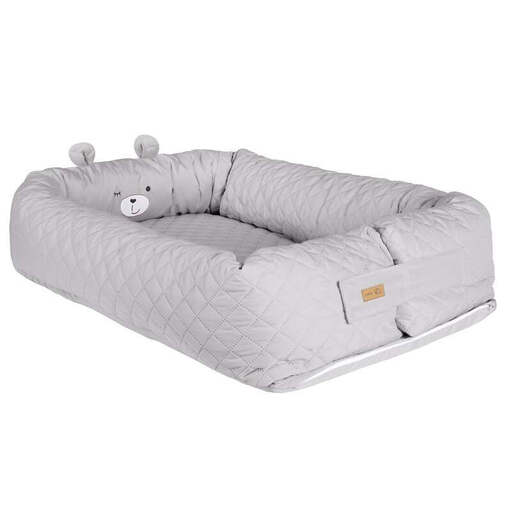
Why we recommend this product: The roba Baby Lounge combines three functions in one product: it serves as a snuggle nest on the sofa, a soft mat on the floor, and a compact travel cot. The quilted microfibre construction and the removable polyester fleece filling, which can be taken out via a zip, allow for easy cleaning at 40°C. The raised edge provides a secure boundary.
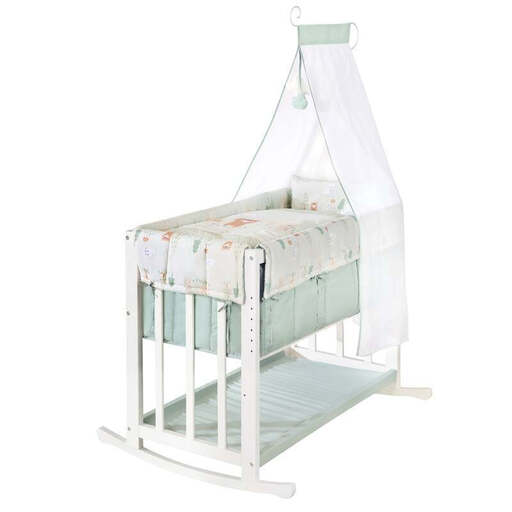
Why we recommend this product: This all-in-one crib set stands out for its durability and adaptability. It functions as a cradle, bedside sleeper, bench, and bassinet. According to the manufacturer, the MDF and plywood construction complies with the EN 1130:2019 safety standard. The six-level height adjustment, starting from 42.5 cm, allows for precise alignment with the parents' mattress height, including box-spring beds. The package includes textiles such as bedding, a bumper, and a canopy.
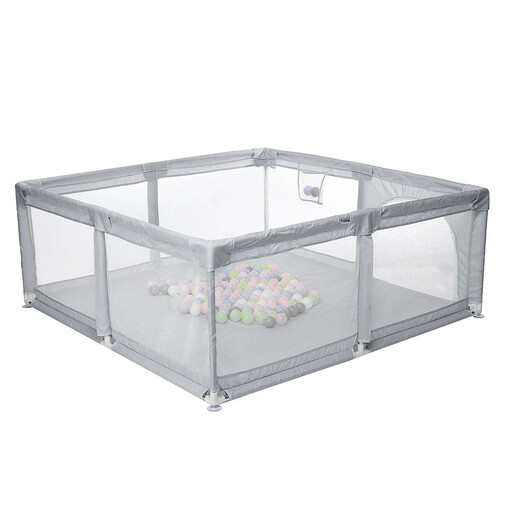
Why we recommend this product: This playpen offers a spacious and secure play area measuring 150 x 150 cm. The construction of stainless steel tubes and ABS plastic connectors ensures stability. The walls, made of Oxford polyester mesh, are durable, easy to clean, and allow for constant visual monitoring of the child. A zipped door provides easy access.
The products featured here cover multifunctional needs. For specific design preferences or to find additional furniture pieces that complete a cohesive room concept, a broader product overview may be useful. An expanded selection of designer beds and matching furniture offers further alternatives.
1. What are the essentials for a baby's sleep space? The basic essentials include a safe bed (e.g., a bedside sleeper, bassinet, or crib), a firm, well-fitting, and breathable mattress, and 2-3 properly sized sleep sacks. For safety reasons, pillows, blankets, and loose soft toys should be avoided during the first year.
2. Up to what age is a baby lounger useful? A baby lounger is typically designed for infants from 0 to 6 months. Its use should be discontinued as soon as the child can roll over independently, reaches the size limit (often around 65 cm in height), or attempts to pull themselves up. It serves as a temporary, supervised resting spot and is not a substitute for a proper crib.
3. How do you secure a bedside sleeper to the parents' bed? A bedside sleeper is typically attached to the frame or slats of the parents' bed using the provided strap system. The strap is wrapped around the adult bed's frame and tightened to ensure there is no gap between the sleeper's mattress and the parents' mattress. The sleeping surface of the bedside sleeper must be adjusted to the exact height of the parents' mattress.