
Lieferung heute & morgen

Qualitätsgarantie

Willkommens-Angebote freischalten: KOSTENLOSE Lieferung | Bis zu 80 % RABATT | Kostenlose 30-Tage-JoyPlus-Testphase
App herunterladen
The search for the right eSports mouse can quickly become overwhelming. Manufacturers advertise ever-higher DPI figures, lower weights, and longer battery life. However, not every innovation provides a real advantage in practice. Many ambitious gamers invest in expensive peripherals only to find they don't suit their playstyle or that advertised features are irrelevant in daily use. Before you make a decision, it's crucial to know the most common marketing traps and understand which technical parameters truly matter.
To make an informed purchasing decision, you should focus on the technical features that directly impact your performance. A professional gaming mouse is distinguished by a combination of thoughtful design and precise technology.
For a lightweight mouse for gamers, a weight of under 65 grams has become the standard in the competitive scene. A low weight reduces inertia, enabling faster reactions and changes in direction, which is particularly advantageous in FPS games. However, more important than the gram count itself is the balance of the mouse. A central centre of gravity ensures a stable and controlled feel with every movement. The form factor is equally critical and a personal choice: Symmetrical (ambidextrous) mice are suitable for various grip styles (Claw, Fingertip), while ergonomic models are specifically optimised for right-handed users and the Palm Grip.
The heart of any gaming mouse is its sensor. A model like the Logitech HERO 25K Sensor is relevant not for its high DPI number, but for its ability to deliver precise 1:1 tracking with zero smoothing, filtering, or acceleration. This means every hand movement is translated exactly to the screen. For a wireless gaming mouse, the connection technology is also decisive. Systems like Logitech LIGHTSPEED guarantee a report rate that rivals wired alternatives, thus causing no perceptible latency.
A gaming mouse with long battery life is essential for uninterrupted sessions. Look for specifications that reflect practical use. A runtime of over 50 hours at a 1000 Hz polling rate is a solid benchmark. Features like intelligent power management, which reduces power consumption during idle periods, also help extend usage time.
Instead of making a one-size-fits-all recommendation, we have identified products tailored to specific player profiles. Each selection considers the pitfalls and core parameters mentioned above.
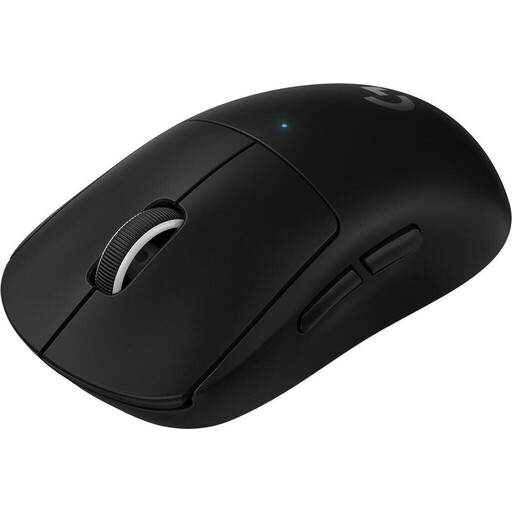
Why it's a match: This model is an established tool in the professional esports scene. Its safe, symmetrical shape and excellent balance make it a reliable choice for players seeking a pure performance device without unnecessary frills.
The weight of under 63 grams is not just a number here, but the result of a design optimised for balance and stability. The HERO 25K Sensor focuses on consistent, flawless performance rather than useless DPI records.
The combination of a proven shape, reliable LIGHTSPEED wireless technology, and a long battery life of up to 70 hours makes it a dependable companion in any competition.
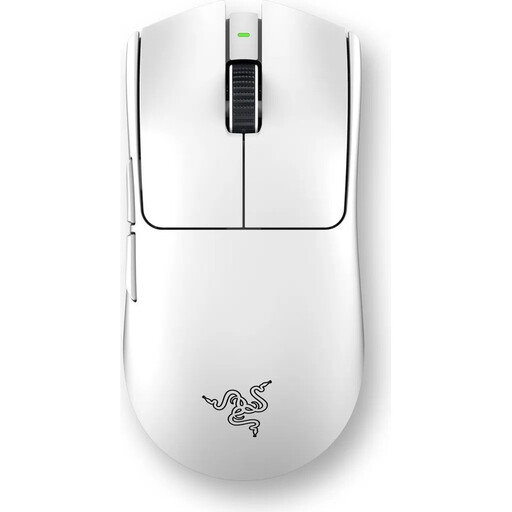
Why it's a match: For players seeking the lowest possible latency and state-of-the-art sensor technology to gain a measurable edge. Ideal for anyone who wants to push technical specifications to their limits.
Instead of just advertising high DPI numbers, this model offers a technologically justified performance boost with its 8000 Hz HyperPolling technology. The low weight of 54g is achieved with a stable, solid shell.
The extremely high 8000 Hz polling rate reduces latency to a minimum, which can be the deciding factor in split-second encounters. The Focus Pro 35K Sensor delivers maximum precision.
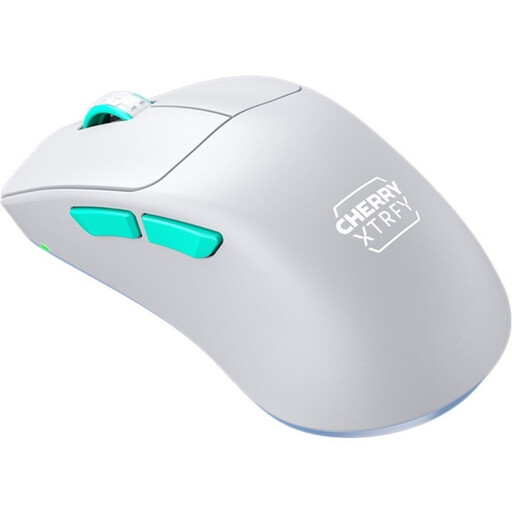
Why it's a match: This model is aimed at right-handed players who value comfort and an optimised hand posture during long gaming sessions. Its special shape is designed for maximum control and precision.
The ergonomic shape is no empty marketing promise here. The unique low-front design offers a concrete, tangible advantage by positioning the fingers closer to the mousepad, thereby improving control.
At just 53 grams, it is extremely light, yet offers stable and precise handling for demanding right-handed players thanks to its thoughtful ergonomics and high-quality Pixart 3395 sensor.
We have compiled a complete, up-to-date list of products that fully meet these strict selection criteria and rigorous safety standards.
Not necessarily. An ultra-lightweight gaming mouse is particularly beneficial for players who use low DPI settings and make large, sweeping arm movements. Players who prefer a higher DPI and aim from the wrist might find a slightly heavier mouse to be more stable. Ultimately, the choice depends on personal preference and grip style.
The standard polling rate of 1000 Hz (1 ms response time) is perfectly sufficient for the vast majority of players, including many professionals. Higher rates like 4000 Hz or 8000 Hz can theoretically reduce latency further, but the perceptible difference is minimal and also requires a powerful PC to process the data. For competitive players at the highest level, it can be a marginal gain.
The mouse is ready to use right after plugging in the receiver. No software is required for basic functions. However, to adjust settings like DPI levels, button assignments, or the polling rate, and to update the firmware, the Logitech G HUB software is needed. A key advantage is that any settings you configure can be saved to the mouse's onboard memory, making them available on any PC without the software installed.