
Lieferung heute & morgen

Qualitätsgarantie
App herunterladen
Kategorien
The card game UNO by Mattel is built on a simple premise: match cards by colour or number. This fundamental mechanic has made it a household name worldwide. In recent years, Mattel has expanded its portfolio with several new variants that modify the core principle and introduce new strategic elements. This article provides an objective analysis of selected new UNO versions to offer an informed purchasing guide based on game mechanics, player count, and target audience.
Choosing the right UNO variant depends on objective factors. The following criteria will help you evaluate the different Mattel card games.
Based on the criteria above, we present three UNO variants that expand upon the classic gameplay in different ways.
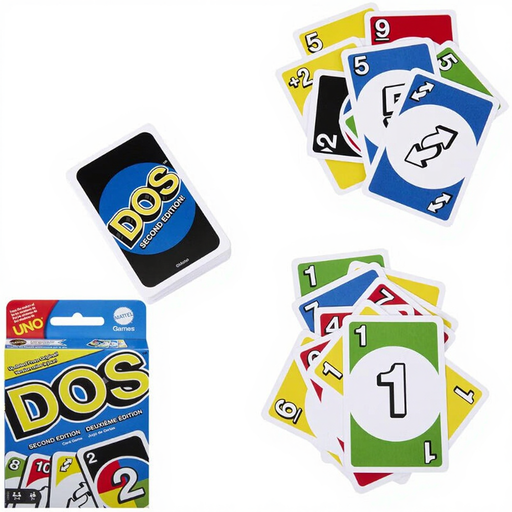
Why We Recommend It: UNO Dos fundamentally modifies the core discarding mechanic by introducing two discard piles instead of one. This doubles the strategic options on every turn and forces players to think further ahead. The requirement to shout "DOS!" with two cards remaining is a logical evolution of the famous "UNO!" call.
Pros:
Best For: This game is perfect for players who appreciate the classic UNO principle but are looking for a new layer of strategy. It's a great family game and an excellent choice for groups wanting a more challenging yet still accessible alternative to the original.
View more details on MATTEL Uno Dos
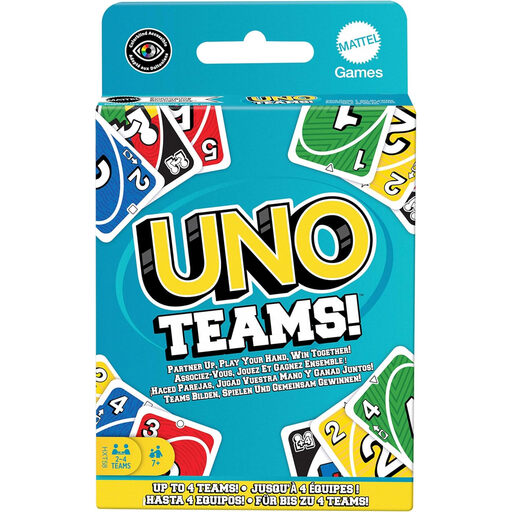
Why We Recommend It: UNO Teams transforms the competitive, individual experience into a cooperative team game. Players work in pairs and win or lose together. Special team cards allow players to swap cards with their partner or prompt them to play, requiring a new level of communication and tactics.
Pros:
Best For: Ideal for a game night with friends or family where the social and cooperative aspects are the main focus. It's an excellent choice for groups that prefer to avoid confrontational games and instead work together towards a common goal.
View more details on MATTEL Uno Teams
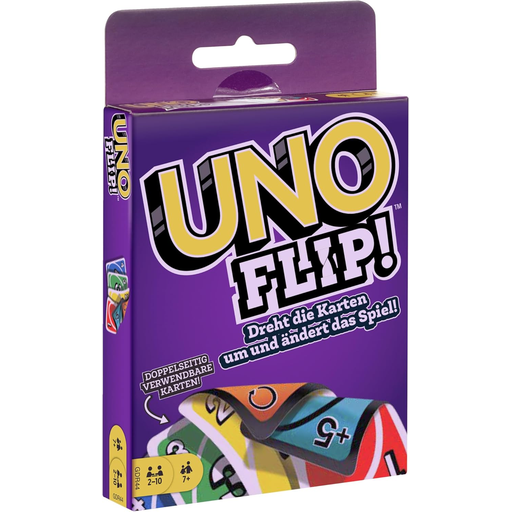
Why We Recommend It: UNO Flip (also known as Flip Side) introduces an element of unpredictability with a double-sided deck. A special "Flip" card switches the game from the "light side" to the "dark side," which features harsher action cards like "Draw 5" or "Skip Everyone." This mechanism can abruptly turn the tide of the game.
Pros:
Best For: This game is designed as a party game for groups that love surprises and a high degree of interaction. It appeals to players who find classic UNO too predictable and are looking for a more dynamic experience.
View more details on MATTEL Uno Flip Side
The variants presented here are just a sample of the game concepts developed by Mattel. For those looking for more options beyond the UNO universe, the market offers a wide range of card and board games. You can find an overview of different formats and game mechanics in our collectible card games category.
1. What distinguishes the new UNO versions from the classic game? The new versions modify the core rules with additional elements. UNO Dos introduces a second discard pile, UNO Teams focuses on cooperative play in pairs, and UNO Flip uses a double-sided deck with different rules and action cards for each side. Each variant changes the strategic demands and game dynamics.
2. What age group are UNO games suitable for? According to the manufacturer, classic UNO is recommended for players aged 7 and up. The variants presented here, such as Dos, Teams, and Flip, are also aimed at this age group. Due to the sometimes increased rule complexity, initial adult supervision may be helpful for younger children. Most versions are well-suited as a card game for kids.
3. How many players can participate in the different UNO variants? The player count varies by version. UNO Dos and UNO Flip are designed for 2 to 10 players, making them highly flexible. UNO Teams requires an even number of participants (e.g., 4, 6, or 8), as it is based on two-player teams. The exact player count is specified on the respective product packaging.