Guests looking for a protein-rich option
You want a crunchy cake with more protein than the classic rice cake in this comparison, and you’re happy to consider lentils, corn or other pulses as the main ingredient.


If protein is a priority for your New Year’s Eve party, the lentil and pulse cakes in this comparison are a better fit than classic rice cakes. REWE lists 25 g of protein per 100 g for its organic lentil cakes and 18.4 g for Verival Organic Protein Cakes; EDEKA lists 8.7 g for its plain organic rice cakes. If you specifically want rice cakes or a simple base for toppings, stick with the rice option and check the ingredients and labelling on the specific pack.
You want a crunchy cake with more protein than the classic rice cake in this comparison, and you’re happy to consider lentils, corn or other pulses as the main ingredient.
You’re looking for cakes to serve plain or with toppings. As well as protein content, you want to know whether the ingredients and flavour will work with the spreads you have planned.
You need to check the recipe, allergens or precautionary allergen information before serving. Whether a cake is made from rice or pulses, or labelled vegan, won’t answer these questions on its own.
A good fit if: protein matters more than having a rice-based product; REWE lists 25 g of protein per 100 g for its organic lentil cakes.
The trade-off: The cake in this comparison is made mostly from red lentils, so it isn’t a rice cake.
A good fit if: you want a cake for toppings with a higher protein content than the rice cake in this comparison; REWE lists 18.4 g per 100 g for Verival Organic Protein Cakes.
The trade-off: According to REWE, the Verival option contains 49% corn and 46% pulses, rather than rice as its main ingredient.
A good fit if: you specifically want a simple rice cake as a base for a range of toppings.
The trade-off: EDEKA lists 8.7 g of protein per 100 g for its plain organic rice cakes; the pack carries a precautionary warning that they may contain traces of sesame.
| Criteria | What to check when buying | Who it matters to |
|---|---|---|
| Protein and main ingredient | Compare protein per 100 g using the same basis, and check whether the cakes are made from rice or pulses. | I mainly want to focus on protein content when choosing New Year’s Eve snacks, and I’m happy to choose a base other than rice. This is the top priority for around 42% of consumers. |
| How you’ll serve them | Choose between a plain cake for toppings and a flavoured option. | If I’m serving a selection of spreads, I want the cakes to work with the toppings I’ve planned. Around 33% of consumers prioritise this. |
| Ingredients and allergens | Read the ingredients, highlighted allergens and precautionary allergen information on the pack you buy. | Before serving, I need to know whether the specific cakes meet my guests’ requirements. This is the most important criterion for around 25% of consumers. |
The cakes with higher protein figures in this comparison are made mostly from lentils, or from corn and pulses. That means they have a different base ingredient.
If you specifically want to offer your guests rice cakes, check the product name and the first ingredients listed.
Protein figures based on different quantities aren’t directly comparable.
Start by comparing the nutritional information per 100 g. Then consider how many of each type of cake you’ll actually be putting on the snack platter.
A recipe claim is no substitute for checking the ingredients and possible traces. For example, EDEKA’s plain organic rice cakes in this comparison may contain traces of sesame.
Check the labelling on each specific pack before serving cakes to guests with relevant requirements.
REWE Bio Lentil Cakes with Sea Salt are a lentil-based option to compare by protein per 100 g.
According to the REWE product page, Organic Protein Cakes are vegan and made with corn and pulses.
Plain rice cakes are a simple rice-based option for a snack platter with a variety of toppings.
Organic rice cakes with salt are another classic rice-based option.
Kallo sells both classic rice cakes and lentil cakes; the figures refer to different products from the brand.
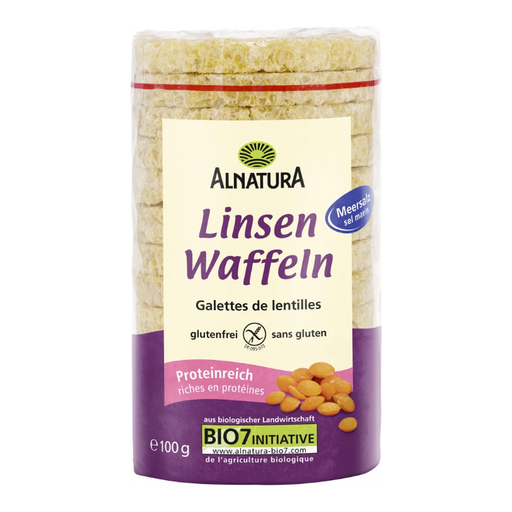
This lentil cake could be a good fit for a New Year’s Eve snack platter if you’re looking for a pulse-based option rather than a classic rice cake.
 No image available
A lentil cake for guests who aren’t expecting a classic rice cake; the pack contains 100 g. The information about soya is contradictory, so if you have a relevant allergy, check the labelling on the specific pack before serving.
No. The term ‘rice cake’ alone doesn’t tell you whether a product is high in protein. EDEKA lists 8.7 g of protein per 100 g for its plain organic rice cakes; REWE lists 25 g for the lentil cakes and 18.4 g for Verival Organic Protein Cakes, both per 100 g. Compare nutritional information on the same basis and bear in mind that the products have different main ingredients.
Not necessarily. The German Nutrition Society explains that adult recreational athletes who train for 30 minutes at a time, four to five times a week, at a moderate intensity don’t need to increase their protein intake. So exercising alone doesn’t mean you need to choose a particular type of cake for your party snack.
For every type of cake you serve, check the ingredients and precautionary allergen information on the specific pack. The German Federal Office of Consumer Protection and Food Safety explains how key allergens are labelled in ingredient lists; EDEKA warns that its plain rice cakes in this comparison may contain traces of sesame. A vegan recipe is no substitute for checking this information.
Keep them dry and reseal opened packs according to the instructions on the packaging. The REWE product page for Verival Organic Protein Cakes advises protecting them from heat and moisture and resealing the pack securely.