When comparing scans, OCR text and record data, choose a monitor to suit your window layout and a scaling setting that keeps everything easy to read. For fine print, a higher pixel density may matter more. Then check that the adjustability and connections suit your workspace. A monitor won’t detect or remove duplicate entries: the Library of Congress describes titles, issues and pages as distinct, linked metadata objects.
Who is this way of working relevant to?
Anyone comparing scans with records
You view a newspaper page, OCR text and record data side by side to check whether they belong together. The Library of Congress treats titles, issues and pages as linked objects, so these details are also relevant when making comparisons.
Anyone checking fine details
You zoom in on small or hard-to-read areas of a scan and need a display that keeps both the image details and the related information legible. The Bavarian State Library describes digital collections of historical newspapers as a resource for working with newspaper scans.
Anyone using a shared workspace
You switch between computers or spend long periods working at a screen. The connections, adjustability and specifics of your workspace all help determine which features make sense for you.
What should you look for when buying a monitor?
First decide whether you need to compare several views side by side or zoom in on small areas of a scan. Then check how the monitor will fit into your workspace and whether it has the connections you need.
| Buying priority |
What to check before you buy |
Who is this particularly important for? |
| Compare views side by side |
Check the window layout and readability at your preferred text size; consider the screen area alongside the space available on your desk. |
If I want to compare a scan, OCR text and record data at the same time, I need a window layout that keeps everything legible. Around 36% of consumers prioritise side-by-side comparison. |
| Check scan details |
Compare the native resolution and pixel density with the level of magnification you need. |
When checking small details in print, I want to zoom in without losing sight of the related information. Around 29% of consumers prioritise checking fine details. |
| Set up the screen to suit you |
Check the tilt, swivel and, where applicable, height adjustment on the exact model; consider where you’ll place it, too. |
If I’m working at a screen for a long time, I want to position the monitor to suit my seating position. Around 21% of consumers put ergonomics first. |
| Connect your computer |
Check the video output, connections you need and charging requirements against the specifications of the exact monitor. |
If I need to switch between computers, I first check that the connections and video signal work with my devices. Around 14% of consumers prioritise connectivity. |
Which buying and working mistakes should you avoid?
-
Assuming a high resolution will automatically detect duplicates
A monitor displays scans and records, but it can’t check for duplicate entries by itself. The Library of Congress describes titles, issues and pages as separate, linked metadata objects.
Test your actual checking layout, and decide separately from your monitor purchase how you’ll flag potential duplicates and verify them against the metadata.
Checking the metadata and visually reviewing the records are still additional steps.
-
Treating similarly named Dell models as the same product
The Dell UltraSharp U3225QE and Dell Pro Plus P3225QE have different full model names. Dell lists the U3225QE as an UltraSharp model; the similarly named Pro Plus is not an identical replacement.
Before you buy, compare the full model number and check that it has the connections and features you need.
-
Planning to dock your laptop without checking compatibility
A stated USB-C charging output alone doesn’t confirm that your computer supports video output or will receive enough power.
Check your laptop’s output, cable and charging requirements against the specifications of your chosen monitor.
Depending on your computer, you may need extra cables, a power adapter or separate docking hardware.
Monitor brands at a glance
EIZO
The FlexScan EV2740X is a 27-inch 4K monitor with docking features, designed for detail-focused work.
- EIZO lists the EV2740X as having 3840 × 2160 pixels, 163 ppi, USB-C docking, KVM and up to 94 W Power Delivery.
- Whether it makes a scan easier to check depends on the scaling and your workflow; the manufacturer’s specifications don’t confirm automatic OCR or duplicate detection.
Lenovo
The ThinkVision P27h-30 is a 27-inch QHD monitor for working with document windows and switching between computers.
- Lenovo lists this model as having 2560 × 1440 pixels, USB-C docking with up to 100 W and KVM.
- It has fewer native pixels than the 4K models mentioned; its features don’t confirm automatic duplicate checking.
Dell
The UltraSharp U3225QE is a larger 31.5-inch 4K monitor with a Thunderbolt hub for viewing several things at once.
- Dell lists the U3225QE as having a 31.5-inch screen, 4K resolution and a Thunderbolt hub.
- The similarly named Pro Plus P3225QE is a different full model and shouldn’t be treated as an identical replacement.
BenQ
The PD2705Q is a 27-inch QHD model with pivot functionality and USB-C Power Delivery.
- BenQ lists this model as having 2560 × 1440 pixels, 109 ppi, pivot functionality and 65 W USB-C Power Delivery.
- Colour space specifications don’t prove that it can detect duplicates in historical newspapers more reliably.
LG
The 27UP850K-W is a 27-inch 4K option with an adjustable stand.
- LG lists a resolution of 3840 × 2160 pixels and a stand that tilts, swivels and adjusts in height.
- Check that the other features suit your workspace and the computer you already have.
Joybuy monitors for comparing records side by side
The Joybuy monitors listed here cover a range of needs: wide, side-by-side views, 4K detail checking and QHD window-based work. The right option depends on readable scaling, your window layout and your computer’s connections; duplicate detection is handled by metadata and your checking process, not the monitor.
 Image unavailable
INNOCN 40C1U, 40 inches, 5120 × 2160
For a wide workspace with several items on screen; PIP and PBP are listed in the product name.
40 inches; 5120 × 2160; IPS; 21:9; USB-C PD 65 W; height-adjustable.
Joybuy
 Image unavailable
INNOCN CB27U1, 27 inches, 4K UHD
For viewing fine details alongside other content, provided the scaling remains easy to read in your workspace.
27 inches; 3840 × 2160; IPS; 120 Hz; PIP and PBP; USB-C with 90 W PD; height-adjustable.
Joybuy
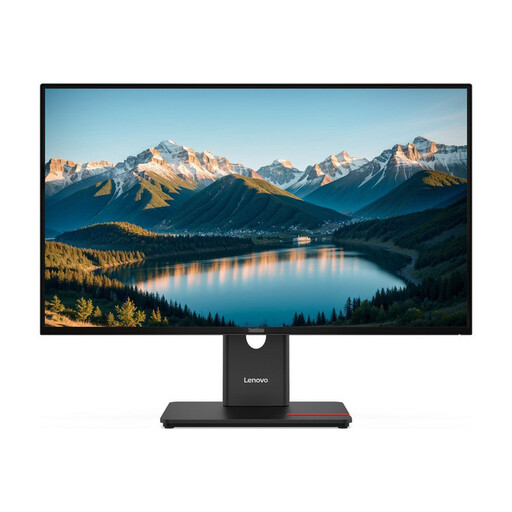 Image unavailable
Lenovo ThinkVision T27Q-40, 27 inches, QHD IPS
For working with scans, OCR text and metadata in resizable windows.
27 inches; QHD; IPS. Compared with 4K, there are fewer native pixels for fine scan details.
Joybuy
 Image unavailable
KTC H27T27, 27 inches, 2560 × 1440 QHD
For comparing several work windows, if QHD is sufficient for your preferred text size.
27 inches; 2560 × 1440; Fast IPS; 120 Hz OC; tilting stand.
Joybuy
 Image unavailable
Philips 345B1C, 34 inches, curved ultrawide
For viewing several things side by side; check whether the resolution is sufficient for fine scan details.
34 inches; 3440 × 1440; 21:9; MultiView PIP/PBP; height-adjustable. Compared with 4K, there are fewer native pixels for viewing fine details.
Joybuy
Frequently asked questions
Can a monitor automatically detect duplicate newspaper issues?
No. Screen size and resolution can help with visual checks, but they don’t replace checking the relationships between the title, issue, page and source. The Library of Congress describes this metadata as distinct, linked objects, so compare records against the collection and your checking process.
What should I consider when setting up a screen-based workstation for work?
First check whether your workplace falls within the scope of the Workplace Ordinance and ASR A6. The Federal Institute for Occupational Safety and Health explains that ASR A6 sets out requirements for work involving screens; responsibility for the specific workplace setup rests with the employer. These workplace requirements don’t automatically apply to a personal archive project.
Is one USB-C cable enough for video, data and charging my laptop?
Only if your computer’s port and the cable support the video signal you need, and the specific monitor’s charging output is suitable for your laptop. EIZO lists a maximum of 94 W at the USB-C upstream port for the EV2740X, while Lenovo lists up to 100 W for the ThinkVision P27h-30. These figures don’t guarantee compatibility in every case.
What are my return rights when buying a monitor online?
In Germany, consumers who buy online generally have a 14-day right to cancel, starting when the goods are received. The consumer advice centre points out that simply returning the goods doesn’t replace notifying the seller that you’re cancelling.


