
Lieferung heute & morgen

Qualitätsgarantie

Willkommens-Angebote freischalten: KOSTENLOSE Lieferung | Bis zu 80 % RABATT | Kostenlose 30-Tage-JoyPlus-Testphase
App herunterladen
As a gardening enthusiast, you know the desire for sun-ripened, homegrown tomatoes is strong, but the local weather can be unpredictable. A tomato greenhouse seems like the ideal solution, especially for balconies and patios. However, the market is flooded with products that over-promise and under-deliver. Before you invest, it's crucial to understand the typical weak points that can quickly turn a supposed garden helper into a disappointment.
This guide will show you what to look for to find a stable and durable solution for your plants, and it highlights the three most common pitfalls to avoid when buying.
Many budget-friendly models quickly prove to be unusable. Pay attention to these three critical points to avoid a bad buy:
To avoid the problems mentioned above, you should carefully check three technical features before buying. These determine the stability, durability, and success of your harvest.
A robust small greenhouse needs a sturdy frame. Look for powder-coated steel tubes with a diameter of at least 16 mm. The powder coating provides essential protection against rust. The included accessories are also crucial for stability. A good set will always include pegs and guy ropes to securely anchor the polytunnel greenhouse in the ground or to a balcony railing, allowing it to withstand stronger winds.
The quality of the cover determines the effectiveness of winter protection for plants and your success in the summer. A tear-proof and durable cover is made of polyethylene (PE) with a material density of at least 130 g/m?. The "UV-resistant" or "UV-stabilised" label is important, as this significantly extends its lifespan under sun exposure. A translucent (semi-transparent) cover is often advantageous because it diffuses sunlight, reducing the risk of leaf scorch while still allowing enough light for photosynthesis.
Good air circulation is essential. A grow tent or nursery should have a large, roll-up door with smooth-running zippers. Models with additional, zip-up ventilation windows with insect mesh offer significantly better control over the internal climate. For ambitious gardeners who want precise temperature control, for instance for propagation or overwintering, an external thermostat controller socket can be a worthwhile addition. Connected to it, a small heater or fan automatically switches on or off when the set temperature limits are reached.
Here you'll find a selection of products tailored to the specific needs of home gardeners, which meet the quality criteria mentioned above.
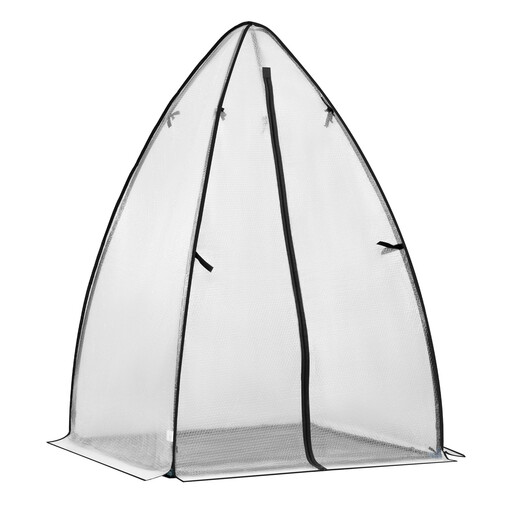
Why This Fits Their Persona: With its compact 120x120 cm footprint, this model fits perfectly on smaller balconies or patios without taking up too much space. The bubble wrap film provides better insulation than standard covers, which extends the growing season.
The 16 mm steel tube construction and the included pegs and ropes counteract the problem of instability. The robust bubble wrap film is more resistant to tearing than simple, thin covers.
Improved thermal insulation thanks to double-sided bubble wrap film. Includes a groundsheet that protects against ground moisture and pests.
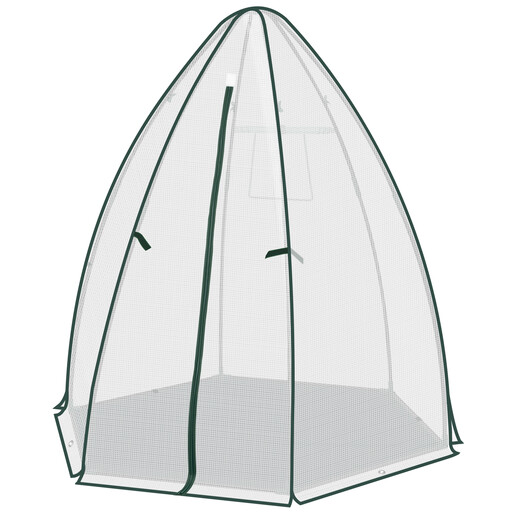
Why This Fits Their Persona: Anyone who values optimal climate management will benefit from this model. The two ventilation windows allow for cross-ventilation, which is crucial for effectively preventing heat buildup and fungal diseases.
Directly addresses the weakness of insufficient ventilation. While basic models only have one door, the two windows here provide superior control over air circulation and humidity.
Two ventilation windows for optimised climate management. The tear-proof 130 g/m? PE cover and the rust-resistant 16 mm steel frame ensure durability.
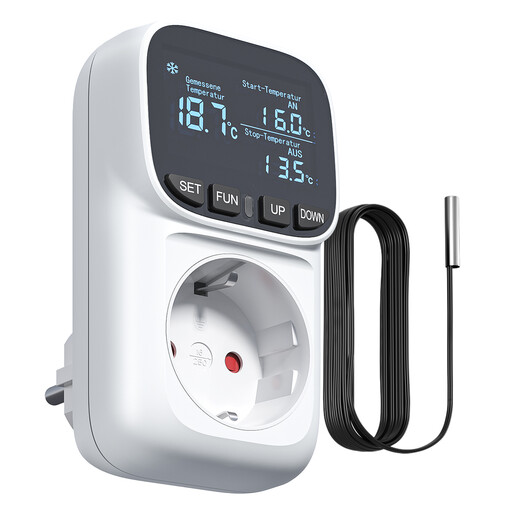
Why This Fits Their Persona: Ideal for gardeners who want to leave nothing to chance. This accessory automates temperature control in any polytunnel greenhouse and is perfect for the delicate task of propagating seedlings or overwintering frost-sensitive plants.
Solves the problem of manual and often inaccurate climate control. It prevents harmful temperature fluctuations caused by sudden weather changes, which can stress or kill plants.
Precise temperature control (heating and cooling modes) with 0.1°C accuracy. A memory function restores settings after a power outage.
We have compiled a complete, up-to-date list of products that fully meet these strict selection criteria and local safety standards.
On a balcony, you can't always use the included pegs. A secure method is to fasten the frame to sturdy elements like the balcony railing using heavy-duty zip ties or weatherproof ropes. Additionally, weigh down the bottom frame from the inside with items like paving slabs or heavy planters to increase stability in windy conditions.
The lifespan of the cover depends directly on its quality, especially its UV resistance. A simple, non-stabilised cover can become brittle after just one season. A high-quality, UV-stabilised PE cover with a density of 130 g/m? or more can last for several years with proper care and seasonal disassembly for winter.
A basic polytunnel greenhouse offers fundamental winter protection for plants against light frost and cold wind. However, it is not a fully-fledged heated greenhouse. For overwintering frost-sensitive plants, you will need additional insulation (e.g., bubble wrap on the inside) and a reliable, thermostat-controlled heat source like a frost guard heater to keep the temperature consistently above freezing.