
Lieferung heute & morgen

Qualitätsgarantie

Willkommens-Angebote freischalten: KOSTENLOSE Lieferung | Bis zu 80 % RABATT | Kostenlose 30-Tage-JoyPlus-Testphase
App herunterladen
An undisturbed night's sleep is fundamental to a child's development and an adult's well-being. However, when overnight leaks disrupt sleep, a frustrating search for the right solution often begins. The market for night diapers is vast, but not every product lives up to its promise. Many buyers fall into common traps that lead to leaky diapers, skin irritation, and unnecessary costs.
The most common mistakes include assuming a regular day diaper is sufficient for nighttime use or focusing solely on advertising claims about absorbency while overlooking the fit. Another critical issue is discretion, especially for diapers for older children or adults. A product that is absorbent but loud or uncomfortable undermines confidence and comfort. This guide will help you avoid these pitfalls and make an informed decision.
To find the right night diaper, don't be swayed by marketing promises; instead, focus on objective criteria. Three factors are crucial for dryness and comfort.
A night diaper must be able to absorb significantly more liquid than a standard diaper. Look for products with a specially reinforced, highly absorbent core, often made of superabsorbent polymers (SAP). This core locks away liquid quickly and reliably. But absorbency alone is not enough. Overnight leak protection is what truly counts. Modern nighttime diapers feature multiple protective mechanisms:
The best absorption technology is useless if the diaper doesn't fit correctly. A poor fit is the most common cause of leaky diapers. The weight recommendation on the packaging is only a guideline. What matters is how the diaper conforms to the body.
The requirements for a night diaper vary significantly depending on age and situation.
Based on these objective criteria, we have selected products for three typical user profiles.
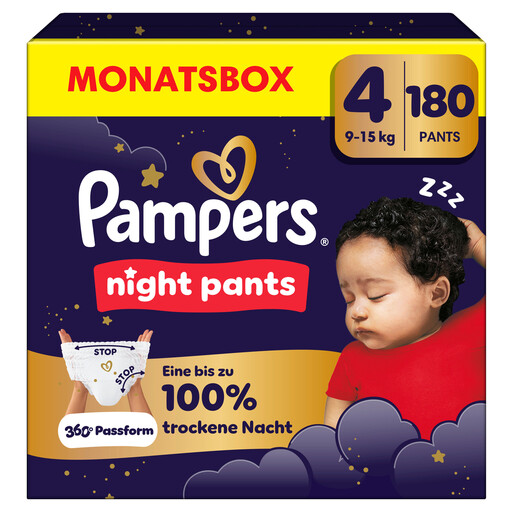
Why This Fits Their Persona: Ideal for parents seeking a reliable and straightforward solution for dry nights. The bulk pack covers a month's supply and offers excellent value, simplifying daily life.
This product is not just a standard day diaper. It features a reinforced absorbent core and the Stop & Protect pocket, which specifically address common nighttime weak points.
According to the manufacturer, it provides up to 12 hours of all-around leak protection. The 360° Fit adapts to the baby's movements, preventing gaps.
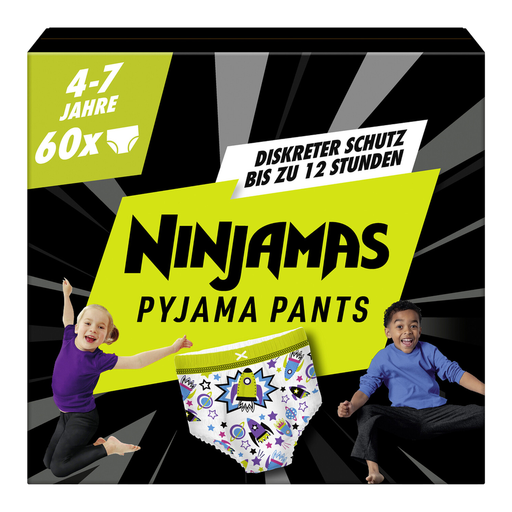
Why This Fits Their Persona: Designed for older children who need a discreet solution. The underwear-like design and low-rustle material boost confidence and allow for inconspicuous use, for example, at sleepovers.
This product avoids the trap of poor discretion. The QuietCloth material minimizes noise, and the 360° FormFit waistband ensures a snug, low-profile fit.
Pampers' Instant-Absorb Technology locks away wetness immediately. The product is dermatologically tested and free of EU perfume allergens.

Why This Fits Their Persona: Designed for adults who require a solution with maximum absorption capacity for overnight use. The focus is on security, dignity, and skin health during extended wear.
This product is specifically engineered for adult needs, not just an upsized baby diaper. It integrates odor control technology, which is often missing from standard products.
Features a maximum capacity core designed for overnight use. Adjustable adhesive tabs allow for a customized and secure fit for both men and women.
We have compiled a complete, up-to-date list of products that fully meet these strict selection criteria and rigorous safety standards.
1. My night diaper still leaks. What can I do? First, check the size and fit. The diaper should be snug at the waist and legs, leaving no gaps. Make sure the leg cuffs are turned outwards. If the problem persists, try a different size or a brand with a different fit, as body shapes vary.
2. How often should a night diaper be changed? Night diapers are designed to be worn for up to 12 hours to avoid interrupting sleep. However, they should be changed as soon as they are soiled or if skin irritation occurs to ensure skin health.
3. Are pajama pants for older children the same as baby diapers? No. Although both are absorbent, pajama pants are specifically designed for the anatomy and needs of older children. They are typically thinner, have an underwear-like design, and are made from low-rustle materials to promote discretion and a normal feel.