
Lieferung heute & morgen

Qualitätsgarantie

Willkommens-Angebote freischalten: KOSTENLOSE Lieferung | Bis zu 80 % RABATT | Kostenlose 30-Tage-JoyPlus-Testphase
App herunterladen
A night light should provide orientation without brightening the room unnecessarily. In a child's bedroom, main bedroom, hallway or on the stairs, different criteria matter compared with a decorative lamp for the living room. Product descriptions often use terms like "smart", "energy-efficient" or "eye-friendly" without clearly stating the crucial technical details.
A night light with a sensor can be controlled using different technologies. A dusk sensor reacts to ambient brightness and switches the lamp on when it gets dark, for example. A night light with a motion detector, on the other hand, responds to movement and usually only lights up for a set period.
For a hallway that needs to stay dimly lit throughout the night, a dusk sensor is generally more practical. For a pantry or wardrobe, a motion sensor can save energy because the light only activates when needed. These terms should not be used interchangeably.
A high lumen count is not automatically an advantage. In the bedroom or as a night light for babies, a very bright lamp can be disruptive. Colour temperature also plays a role: a warm white night light at around 2700 to 3000 Kelvin is often perceived as more subtle than cool white light at around 6500 Kelvin.
The specific suitability depends on the room, the placement and your personal perception. Manufacturer specifications such as lumens, Kelvin and beam angle are more helpful for making a choice than vague marketing claims.
A rechargeable night light is flexible to position but needs regular charging. So check whether the battery capacity, charging port and stated operating time are provided. With a plug-in night light, there is no need to recharge, but the position is tied to a free socket.
For orientation lighting in hallways and children's rooms, low to medium brightness levels are often sufficient. A dimmable night light offers more flexibility if it is to be used both by the bedside and during nappy changes. Look for specific details such as:
An RGB night light or a smart LED lamp is particularly suitable for ambient lighting, gaming and living areas. For navigating at night, a calm, warm white setting can be more practical than changing colours.
With a night light with a dusk sensor, the sensor should remain unobstructed and not be covered by furniture or curtains. Some models specify a concrete threshold value, for example 20 lux. This makes it easier to judge when the light will activate.
With a motion detector, the detection area and range are important. A model with a 3.5-metre range may be suitable for a short hallway, but is not automatically right for every room size. For app or voice control, you should also check whether Wi-Fi, Bluetooth, Matter or a separate gateway is required.
For permanently operated plug-in models, low power consumption is relevant. A device rated at 0.5 watts or 1 watt can be better assessed using this information than with the general label "energy-saving". For battery-powered lamps, capacity and charging method matter.
In a child's bedroom, the product should be stable and not tip over, must not be treated as a toy, and should be kept away from water and heat sources. The protection rating IP20 only indicates intended use in dry indoor spaces. The manufacturer's instructions on cleaning, ventilation and electrical safety must be followed.
The following models represent different requirements. The details are based on the respective product data and do not replace checking your individual installation situation.

Why this product fits the profile: The two-pack is designed for children's rooms, hallways, bathrooms or staircases and offers warm white light at 2700 Kelvin. Three brightness levels allow easy adjustment.
The description specifically states the sensor type, colour temperature and three brightness levels, rather than just advertising a general automatic function.
Two lights, 2700 Kelvin, three dimming levels and a slim plug-in design with 0.5 watt power consumption.
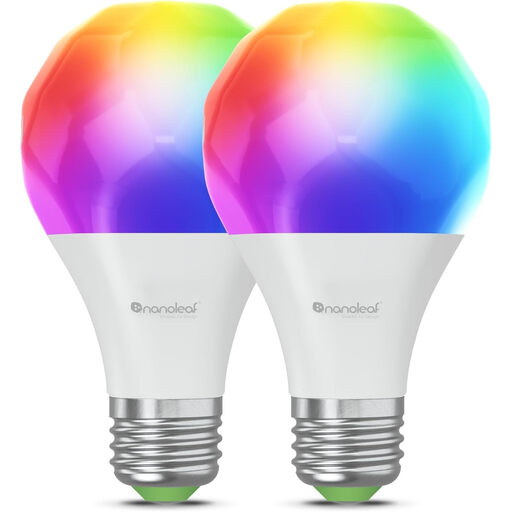
Why this product fits the profile: The two RGBW bulbs are designed for existing E27 lamps, individual schedules and app or voice control.
Compatibility with Matter, Bluetooth and Wi-Fi, as well as the supported voice assistants, are specifically listed.
RGBW colours, dimming function, schedules, voice control and a stated CRI value of 90.
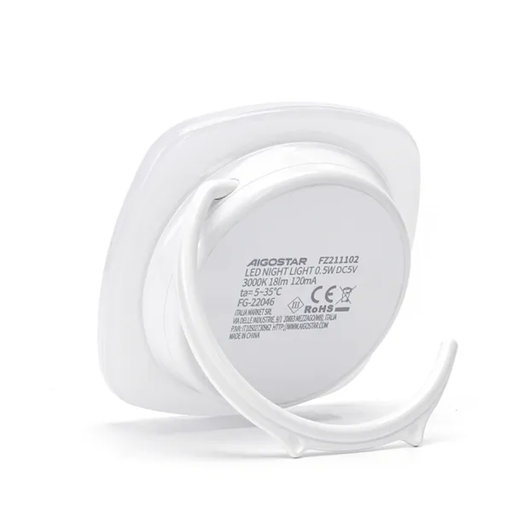
Why this product fits the profile: The rechargeable night light is designed for cupboards, hallways and under-cabinet use, combining motion and dusk detection.
Range, detection angle, battery capacity and colour temperature are all specified. This makes it easier to assess its use before buying.
500 mAh battery, USB charging, 3000 Kelvin, 18 lumens and motion detection up to 3.5 metres according to product specifications.
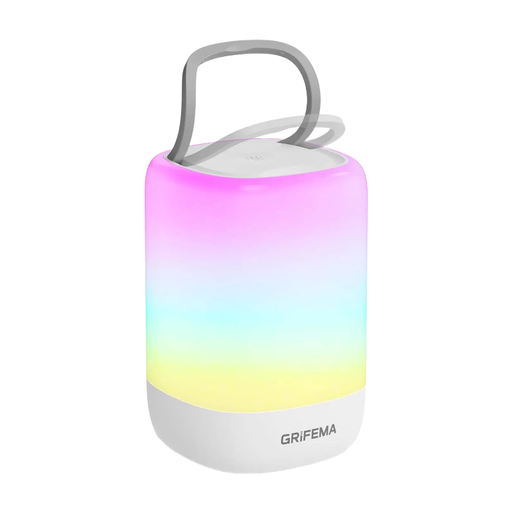
Why this product fits the profile: The portable table lamp can be used in the bedroom, children's room or when camping, and can be adjusted via touch control.
The battery life of up to 15 hours, the USB-C port and the dimming control are all stated in the product data.
Warm white light, seven RGB colours, stepless dimming, 30-minute timer and 1500 mAh lithium-ion battery.
We have put together a complete, regularly updated list of products that fully meet these strict selection criteria and the safety regulations in force in the EU.
For a child's bedroom, warm white models with low brightness and multiple dimming levels are often a good choice. A plug-in night light with a dusk sensor can serve as a permanent orientation light. With young children, the light should be placed safely, protected from water and not treated as a toy.
The consumption depends on the power, operating time and control. Product specifications of 0.3 watts, 0.5 watts or 1 watt allow a rough assessment. An LED night light with a dusk sensor only lights up when the ambient brightness is low. A motion detector can further limit the operating time. The actual usage duration is decisive for the running costs.
For permanently installed LEDs, an assumed lifespan is often stated in hours. This figure is a manufacturer's value and not a guarantee for every usage situation. With battery-powered models, the ageing of the battery is also relevant. Good ventilation, dry indoor spaces and cleaning with a soft, dry cloth can contribute to the intended use.