
Lieferung heute & morgen

Qualitätsgarantie

Willkommens-Angebote freischalten: KOSTENLOSE Lieferung | Bis zu 80 % RABATT | Kostenlose 30-Tage-JoyPlus-Testphase
App herunterladen
A night light should provide orientation without flooding the room with unnecessary brightness. However, the requirements vary significantly depending on where you plan to use it: in a nursery, simple operation and warm light are key; in a hallway, a sensor can be useful; while in the living room, design and colour choice tend to take centre stage.
When buying, three common pitfalls often lead to poor decisions:
For a night light for the bedroom or nursery, colour temperature is an important guide. Warm white light around 2700 to 3000 Kelvin feels less harsh in a room than light at 6500 Kelvin. For navigating a hallway, a higher brightness can be helpful, whereas for night-time feeding or nappy changing, a low, dimmable setting is often sufficient.
Look for specific details:
A dimmable night light with a warm white setting is therefore more versatile than a model with only a fixed light level.
A night light with a dusk sensor switches on when the ambient light falls below a certain level. The Aigostar model in our selection, for example, has a switch-on threshold of below 20 Lux. Such a plug-in night light is ideal for a hallway, staircase or nursery if you want the light to come on automatically for many hours.
A night light with a motion sensor, on the other hand, only lights up when movement is detected. Points to consider include:
For a passageway, a motion sensor can save electricity. For a nursery that needs a constant low light, a dusk sensor may be more suitable.
A rechargeable night light can be used flexibly by the bed, at the changing table or when travelling. When checking, look not only at the battery capacity but also at the runtime at different brightness levels and the charging method. The VAVA VA-CL009, for example, is quoted as offering around seven hours at maximum brightness and up to 100 hours at the lowest setting. The maximum runtime does not apply to every mode.
With plug-in models, there are no batteries to replace and no charging downtime. However, they do require a suitable free socket. For bathrooms or damp rooms, models with IP20 are only of limited suitability, as this protection rating is intended for dry indoor areas. A night light should not be covered, operated near water or splashes, and should be disconnected from the mains before cleaning.
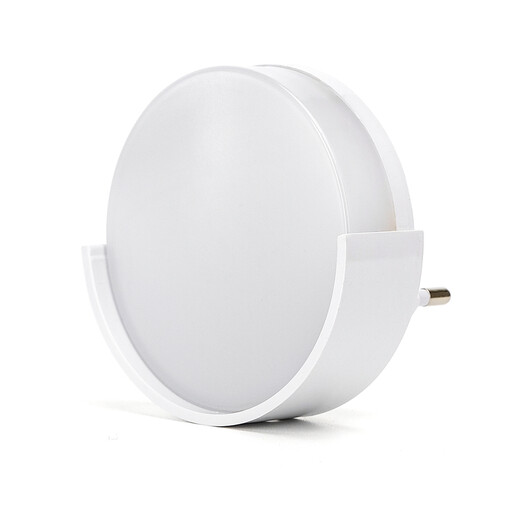
Why this product fits the profile: This plug-in night light requires neither a rechargeable battery nor disposables, and according to the product details, it switches on automatically when the light level drops below 20 Lux.
The stated sensor function is clearly distinguished from a motion detector. With 40 lm and 1 W, this model is designed for orientation rather than full room lighting.
Automatic on/off switching, 6500 K light colour, 220–240 V mains operation and IP20 rating for dry indoor spaces.
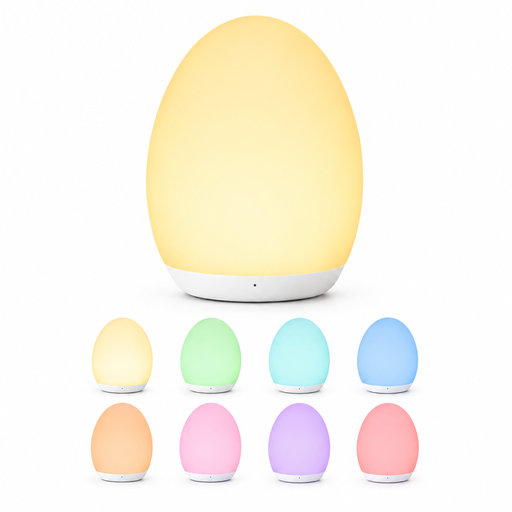
Why this product fits the profile: For night feeds, nappy changes and travel, it combines warm white, dimmable light with touch control, a timer and a memory function.
The runtime is broken down by brightness: around seven hours at maximum brightness and up to 100 hours at the lowest setting.
2000 mAh battery, eight colour modes, one-hour timer, 9.2 × 9.2 × 11 cm and approximately 155 g weight.
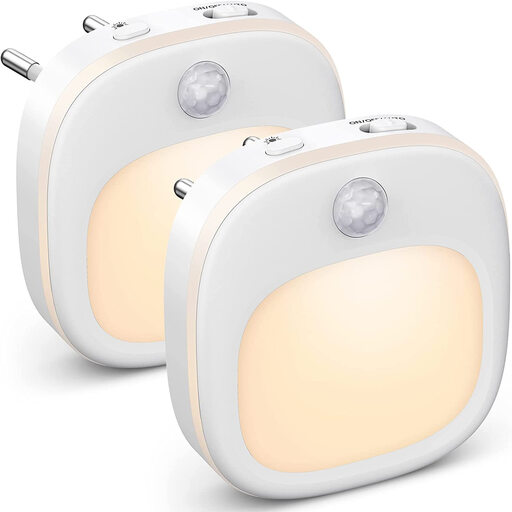
Why this product fits the profile: Two lights allow you to equip a hallway, staircase, bedroom or nursery with motion-activated orientation lighting.
The selection clearly states motion sensors, three colour temperatures and five dimming levels. This makes the intended function clear before purchase.
Two lights in a set, SMD LED at 1 W, five brightness levels and three selectable colour temperatures.
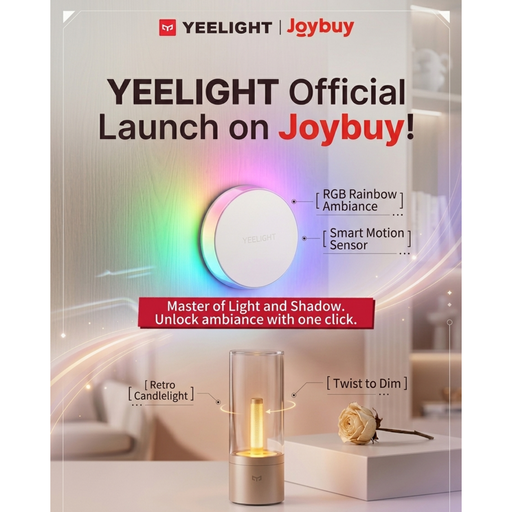
Why this product fits the profile: This RGB night light is aimed at living rooms, bedrooms or gaming areas where decorative colour changes and flexible placement are desired.
The product details mention eleven preset effects, a magnetic mount and USB-C charging. This makes it easy to categorise as ambient lighting rather than a pure orientation light.
RGB colour modes, eleven preset effects, magnetic mount and rechargeable operation via USB-C.
We've put together a full, regularly updated list of products that fully meet these strict selection criteria and the safety regulations in force across the EU.
The consumption depends on the power rating, operating time and sensor usage. A model with 0.5 to 1 W uses less energy during continuous operation than a larger lamp. Motion or dusk sensors can reduce the time the light is on. To calculate your personal cost, multiply the power in kilowatts by the operating hours and your electricity rate.
That depends on the location. A dusk sensor is suitable for constant low-level lighting in darkness. A motion sensor is practical for a hallway, staircase or bathroom where you only need light when passing through. Before buying, check the range, detection angle and shut-off behaviour.
For LED models, a technical lifespan in operating hours is often quoted. The Aigostar plug-in model, for example, is rated at 25,000 hours. This figure describes the light source under intended conditions and isn't automatically the same as the lifespan of the battery, sensor or housing. For rechargeable models, you should also consider battery ageing.