
Lieferung heute & morgen

Qualitätsgarantie

Willkommens-Angebote freischalten: KOSTENLOSE Lieferung | Bis zu 80 % RABATT | Kostenlose 30-Tage-JoyPlus-Testphase
App herunterladen
A night light should provide orientation without unnecessarily brightening the room. For parents, it is also important that the cable, heat generation and controls are suitable for the intended location. The requirements in a hallway differ from those in a child’s bedroom, wardrobe or beside a baby’s cot.
However, choosing the right product is not always straightforward. Terms such as “sensor”, “warm white” and “energy-efficient” do not automatically describe the same function. If you decide based on design alone, you can easily overlook technical details that matter in everyday use.
A dusk sensor night light responds to the brightness of its surroundings. For example, it switches on when it gets dark and off in daylight. A night light with a sensor, on the other hand, may refer to a motion detector. A PIR sensor only activates the light when movement is detected.
A light sensor may be suitable for a hallway where a small amount of continuous guidance is required. In the bathroom or on the stairs, a motion-sensor night light is often more practical because it only illuminates the area when needed. Look for details such as detection range, detection angle and switch-off time.
High brightness is not automatically useful. For night-time breastfeeding, changing a nappy or walking to the toilet, subtle lighting is often sufficient. It is therefore worth checking the luminous flux in lumens (lm) and whether the brightness can be adjusted.
A dimmable night light with a warm white colour temperature of around 2700 to 3000 kelvin is less intrusive in living areas than a noticeably cooler light. White light with a higher colour temperature can be useful in hallways and work areas. The right choice depends on the room and the level of guidance you need.
A plug-in night light does not need charging and is suitable for sockets that remain accessible at all times. If the socket is behind furniture or in a difficult-to-reach location, a rechargeable night light may offer greater flexibility.
With rechargeable models, capacity, charging connection and stated running time are important. A USB-C connection makes charging easier, but you should still check the actual operating time. For battery-powered models, check the battery type and what is included in the package.
An LED night light generally uses little electricity. What matters is the actual power consumption in watts, not just the term “LED”.
When comparing a night light with a sensor, you should check the following points:
A wardrobe light with a motion detector should be as slim as possible and offer suitable mounting options. With self-adhesive models, a clean, dry surface is important. For bathrooms or damp areas, check the stated IP rating. IP20, for example, indicates protection for dry indoor areas, not against splashing water.
For plug-in models, the rated voltage and intended area of use are relevant. For households in Germany, the specifications must be compatible with the standard mains voltage. Information such as CE and RoHS should be clearly provided in the product description; it does not replace the need to follow the operating and safety instructions.
A night light must not be covered, dismantled or used in a damp environment unless the manufacturer expressly permits this. Products with a soft surface or child-friendly shape are not toys and should be supervised appropriately when used by young children.
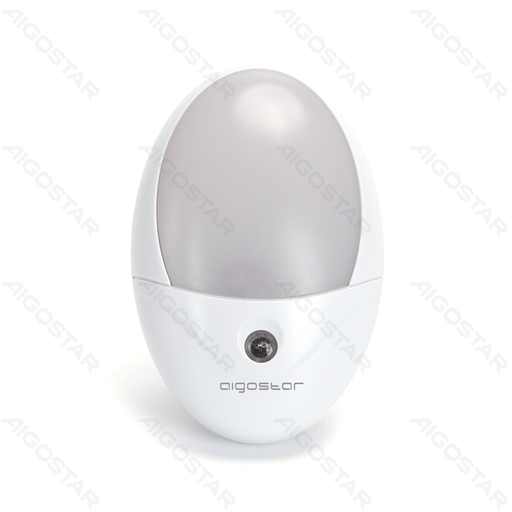
Why this product suits this profile: According to the product details, this plug-in night light needs neither batteries nor charging and is designed for indoor hallways, bedrooms, bathrooms and stairs.
According to the description, the PIR motion sensor works in low light and switches off again when no further movement is detected. This clearly distinguishes its sensor function from that of a dusk sensor alone.
3000 K warm white, 20 lm, detection range of up to 7 m and a 120° detection angle according to the product data.
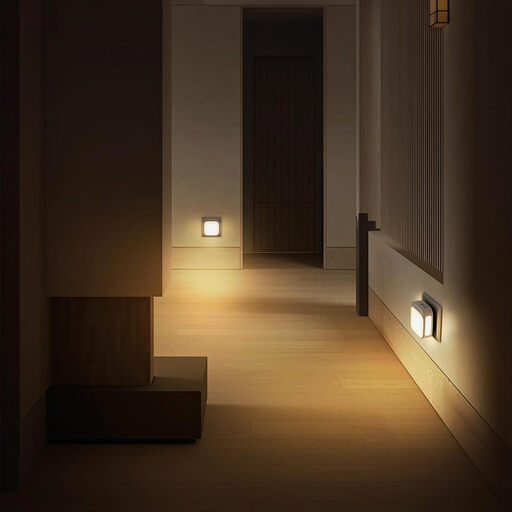
Why this product suits this profile: The two-piece set offers continuously adjustable brightness, making it suitable for several rooms, such as a baby’s room and hallway.
The brightness is not limited to just a few fixed levels. According to the product details, it can be adjusted from 10 to 100 per cent.
0,3 W power consumption, 2800–3000 K warm white, automatic light sensor and two lights in the set.

Why this product suits this profile: As a motion-sensor wardrobe light, this set is designed for kitchen cupboards, shelves, wardrobes and hallways. It can be installed without drilling.
The product data specifies PIR detection, a range of 3–5 m and a rechargeable 800-mAh battery. This eliminates the need for regular battery changes.
Two lights, 20 cm length, three colour temperatures and USB charging according to the product description.
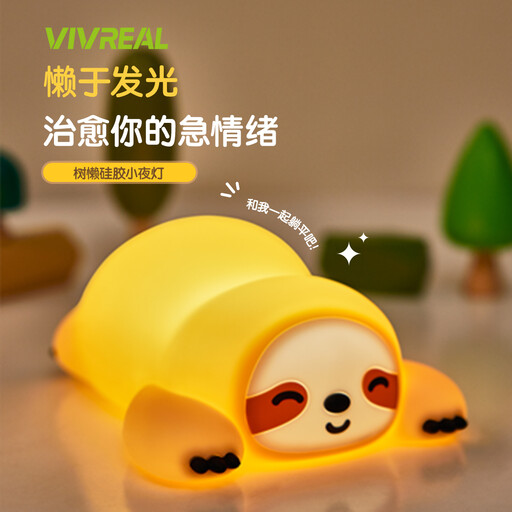
Why this product suits this profile: This compact silicone light is suitable as a portable children’s night light for bedrooms, children’s rooms or changing locations without a nearby socket.
The brightness can be adjusted across three levels. The light is charged via USB-C, so it does not need to remain connected to a socket.
1200-mAh battery, up to six hours of running time at maximum brightness and three brightness levels according to the product data.
We have put together a complete, regularly updated list of products that fully meet these strict selection criteria and the safety regulations applicable in the EU.
This depends on its power consumption and how long it operates. A model rated at 0,5 W uses 0,5 kWh after 1,000 hours of operation in theory. Sensor lights can reduce actual usage if they are only activated in darkness or when movement is detected.
For a night light for children’s rooms, warm white light in the range of around 2700 to 3000 K is often chosen. Low brightness and positioning the light source so that it does not shine directly into the eyes are also important. A baby night light should be placed out of reach or securely fastened.
Its lifespan depends on the LED module, electronics, switching cycles and usage. Plug-in models sometimes state lifespans of 10,000 or 25,000 hours. With a rechargeable night light, battery capacity is also relevant because the battery is a consumable component. You should therefore check the LED lifespan as well as the charging time and stated running time.