
Lieferung heute & morgen

Qualitätsgarantie

Willkommens-Angebote freischalten: KOSTENLOSE Lieferung | Bis zu 80 % RABATT | Kostenlose 30-Tage-JoyPlus-Testphase
App herunterladen
A gentle light in the dark can give children a sense of security and make nighttime disruptions easier for parents. However, choosing a children's night light is fraught with pitfalls that can quickly turn a helpful purchase into a regrettable one. Certain materials, an impractical power source, or the wrong light colour can even negatively impact sleep quality. As your Joybuy Product Recommendation Officer, I'm here to help you navigate these hurdles and make an informed decision.
Before we look at the features of a good model, let's consider the problems that often only become apparent after the purchase.
To avoid these problems, you should check three key aspects before buying. These define the difference between a short-lived gimmick and a genuinely useful sleep aid for children.
Safety is the top priority. Look for products made from BPA-free silicone. This material is soft, flexible, shatterproof, and contains no harmful plasticisers. It's ideal for curious little hands. Additionally, certifications like CE and RoHS indicate that the product meets EU safety standards. A soft touch lamp for the nursery with no sharp edges minimises the risk of injury.
A functional night light must be adaptable. A dimmable LED night light offers the necessary flexibility. It can be used on a brighter setting as a nursing light or for changing nappies, and on its lowest setting, it can glow all night as a gentle slumber light.
The light colour is just as important. Warm white light (similar to a candle, often under 3000 Kelvin) has a calming effect and does not disrupt melatonin production. A colour-changing night light can create a lovely atmosphere, but it should offer slow, gentle transitions and have the option to stop on a warm colour.
A rechargeable night light offers maximum placement flexibility. Look for a sufficient battery capacity (e.g., 1200 mAh or more) for a runtime of at least 8–10 hours at dimmed brightness. A modern USB-C port makes charging easy.
Additional features like a timer function (e.g., 30 or 60 minutes) are extremely practical. The light turns off automatically after the child has fallen asleep, which saves energy and ensures a darker, deeper sleep phase. Simple operation via a touch sensor is more intuitive and quieter than fumbling for small switches in the dark.
Based on these criteria, we have identified a few models that are suitable for different requirements.

Why this model is a good fit: Ideal for the first few months as a baby night light. It's functional, safe, and unobtrusive. The dimming function allows it to be used as a bright nursing light and a gentle slumber light without waking the baby.
The touch controls and dimming function solve the problem of light that's too bright or impractical. The rechargeable battery ensures flexible, cord-free placement.
Combines a 1-hour timer, dimming function, and 8 colour-changing modes in a simple, safe design.

Why this model is a good fit: It combines an appealing design with high safety standards. The soft, squeezable material is perfect for children who also see their night light as a playmate.
Made from food-grade, BPA-free silicone, it completely bypasses the material risk. The 30-minute timer and 3 brightness levels address the issue of improper light control.
The material is waterproof and drop-resistant, significantly increasing its durability for everyday nursery use. The 1200mAh battery provides 8-10 hours of light.
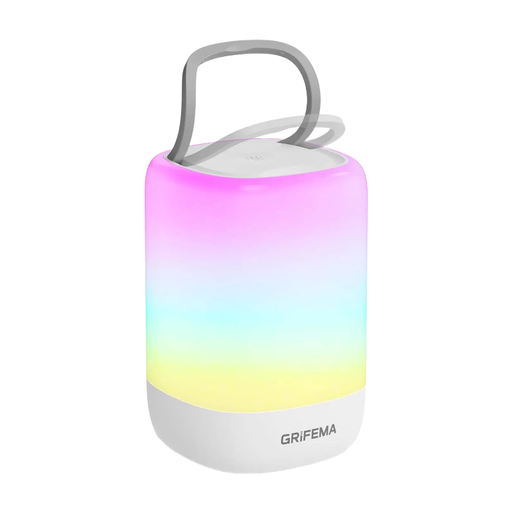
Why this model is a good fit: This model is more than just a night light. It's suitable for older children, as a reading lamp, or even as a portable light for camping. Its versatility justifies its use well beyond the toddler years.
With a 1500mAh battery for up to 15 hours of light and USB-C charging, its power supply is exemplary. Stepless dimming and RGB modes offer full control over the light quality.
The stepless dimming function (5-100%) and the ability to switch between warm white and 7 RGB colours make it extremely adaptable for any situation.
We have compiled a complete, up-to-date list of products that fully meet these strict selection criteria and European safety regulations.
Warm white or reddish light with a colour temperature below 3000 Kelvin is ideal. These light colours do not interfere with the body's natural production of the sleep hormone melatonin and promote a calm sleeping environment. Cool white or blue light should be avoided as it has a stimulating effect.
The battery life depends on the brightness setting. A good model should last at least a full night (approx. 8–10 hours) on its lowest setting. Pay attention to the battery capacity, specified in milliampere-hours (mAh)—values of 1200 mAh or more are a good benchmark. A rechargeable night light with a USB-C port is also practical and future-proof.
Yes, a timer function is highly recommended. It serves as a gentle sleep aid for children by automatically turning off the light after a preset time (e.g., 30 or 60 minutes). This ensures the child continues to sleep in a dark environment, which improves sleep quality, and also saves energy.