
Lieferung heute & morgen

Qualitätsgarantie

Willkommens-Angebote freischalten: KOSTENLOSE Lieferung | Bis zu 80 % RABATT | Kostenlose 30-Tage-JoyPlus-Testphase
App herunterladen
A night light for a children’s room should provide orientation at night without lighting up the room unnecessarily. For parents, there’s more to consider than just a cute design: operation, power supply, cleaning and safe placement all determine whether the light remains truly practical in everyday use.
Claims like “up to 100 hours” often refer to the lowest brightness setting. At full brightness or in colour-changing mode, the runtime can be significantly shorter. Buyers should therefore check which setting the manufacturer’s figure applies to and how long charging takes.
Ceramic, porcelain or hard plastic casings may look good as part of a children’s room decoration. However, they are not automatically suitable as toys. A baby night light should be placed out of reach or securely fixed. For wall-mounted models, cables and sockets should be positioned so that children cannot reach them.
RGB colour changes, timers and various modes are only helpful if they can be operated when half-asleep. A night light with touch control can be practical for night-time feeding or nappy changes. For older children, a clear on/off switch may be more sensible. A timer should not only be present but also easy to set.
For a baby night light or night light for babies, a dimmable night light function with warm light is suitable for many everyday situations. This allows the brightness to be adjusted for feeding, nappy changes, reading aloud or falling asleep. An LED night light for children is generally energy-efficient and, under normal use, generates less heat than traditional bulbs.
Colour-changing can serve as a design feature, but it does not replace a careful check of the brightness levels. At night, the light should not be directed at eye level or towards the child’s face.
A rechargeable night light is flexible for use in the children’s room and when travelling. Pay attention to:
Models with AA batteries do not require a charging port, but they create ongoing running costs. Batteries should always be stored out of children’s reach and removed if the device is not used for a long period.
A night light with a timer can automatically switch off the light after 30 or 60 minutes. This reduces unnecessary operating time once the child has fallen asleep. Also check whether the casing can be easily cleaned with a dry or slightly damp cloth.
For a children’s room, freestanding models, portable lamps and wall lights each suit different needs:
The age recommendation of the specific product remains decisive. A decorative night light is not automatically a toy and should not be left for children to play with or chew on.
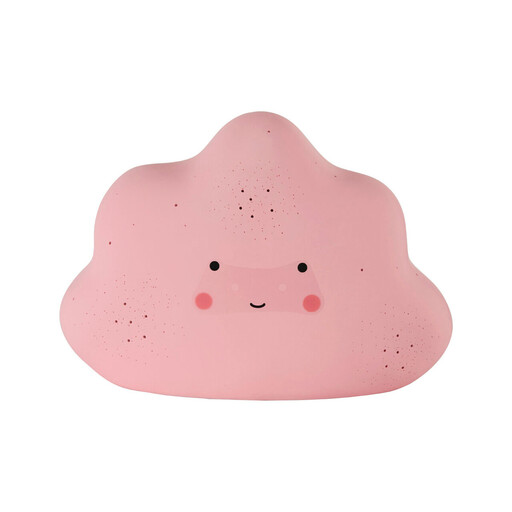
Why this product fits the profile: The cloud-shaped ceramic lamp is designed for decorative, stationary use in a children’s room and requires three AA batteries.
The product data clearly states the material, dimensions and battery type. This allows you to check before purchase whether the fixed location and battery supply suit your household.
Cloud shape, perforated surface for light distribution and wipe-clean ceramic surface; dimensions: 25 × 15 × 18 cm.
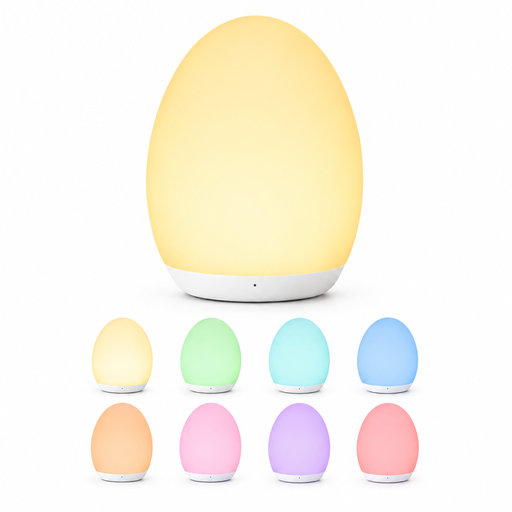
Why this product fits the profile: This model combines warm white, dimmable light with eight colour modes, touch control, a memory function and clearly described battery usage.
The runtime is differentiated by brightness: up to 100 hours at the lowest brightness, around seven hours at maximum brightness. The one-hour timer is listed separately.
2000 mAh battery, USB charging cable, 9.2 × 9.2 × 11 cm, approximately 155 g and no app or Wi-Fi connection required.
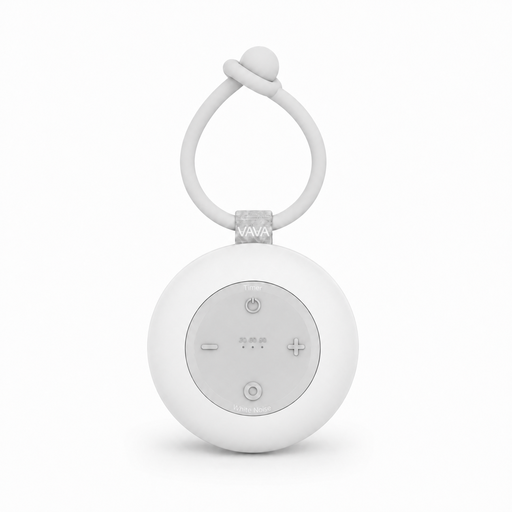
Why this product fits the profile: For families who want to use the night light at home, while travelling or in the pram, this device combines light and sound functions in a portable casing.
The functions can be controlled independently of each other. Additionally, there are timers of 30, 60 or 90 minutes, plus a child lock to prevent accidental button presses.
18 sound options, five light modes, USB-C charging and up to 40 hours of runtime under the stated test setting.
We have compiled a complete, regularly updated list of products that fully meet these strict selection criteria and the safety regulations in force in the EU.
That depends on the purpose. For night-time feeding or nappy changes, a low, warm white brightness is usually sufficient. For reading aloud, the lighting can be stronger. A dimming function makes it easier to adjust without turning on the room light.
The runtime depends on brightness, colour mode and usage. Manufacturer claims should always be read together with the relevant setting. For the VAVA VA-CL009, for example, up to 100 hours is stated at the lowest brightness; at maximum brightness, the product description says around seven hours.
A portable night light should not be placed in the cot if the child can reach it, throw it or damage it. A stable position outside the cot is safer. For devices with a carry strap, follow the manufacturer’s fixing and distance instructions.