
Lieferung heute & morgen

Qualitätsgarantie

Willkommens-Angebote freischalten: KOSTENLOSE Lieferung | Bis zu 80 % RABATT | Kostenlose 30-Tage-JoyPlus-Testphase
App herunterladen
A night light with a motion sensor should help you find your way at night without staying on all the time. In UK homes, it is often used in hallways, children’s bedrooms, bedrooms, bathrooms, on stairs or inside wardrobes. Choosing one may seem straightforward at first, but some details in product descriptions can lead to the wrong purchase.
A motion sensor responds to movement. Without an additional dusk sensor, however, the light may also switch on during the day. In bedrooms and hallways, it’s therefore important to check whether the light only activates when the ambient light is low. A description that simply says ‘automatic’ isn’t enough.
A high lumen rating doesn’t automatically mean the light is suitable for every situation. For a night-time trip to the bathroom, a dimmed warm white night light may be more comfortable than bright, cool white lighting. More brightness may be useful for wardrobes and kitchen worktops, however.
Colour temperature is measured in kelvin:
The battery life of a wireless night light or rechargeable night light depends on its brightness, how often the sensor is triggered and the operating mode. A stated battery capacity, such as 500 mAh or 1,100 mAh, doesn’t tell you how long the light will actually stay on. It’s also worth checking the charging connection, charging time, whether the battery can be replaced and whether the light can still be used with a USB cable when the battery is flat.
Check the stated detection angle and range. A sensor with a 120-degree angle covers a wide area, while a range of 3 to 5 metres is enough for many hallways, stair landings and wardrobe areas. A large range isn’t necessarily needed for a small bedside table, though.
The automatic switch-off time affects both energy use and everyday convenience. A model with a 60-second run-on time is suitable for quick trips. A longer lighting period may be more practical in a stairwell or when looking for something in a wardrobe.
A plug-in model is ready to use straight away and doesn’t need batteries or recharging. It’s suitable as a hallway night light, or for a bedroom or bathroom, provided the area is dry and the product is approved for that use.
A USB light offers more flexibility when it comes to installation. Magnetic mounts and adhesive strips let you fit one without drilling. When installing LED wardrobe lighting with a motion sensor, make sure the surface is clean, dry and sturdy enough to support it. A light that isn’t securely attached could fall or have its sensor blocked.
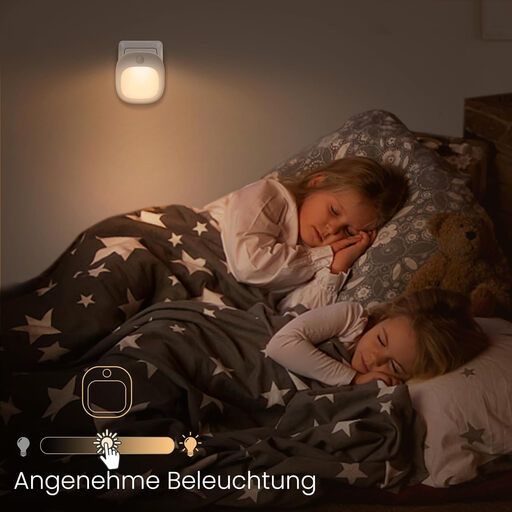
A dimmable night light gives you more control than a simple on-off model. Check whether the brightness can be adjusted in steps or continuously, and whether your chosen setting is saved. A low setting may be useful in a child’s bedroom, while a brighter light may be needed in a hallway or on the stairs.
For lights used around children or babies, take cables, small parts and accessible sockets into account. These products aren’t toys. Read the manufacturer’s safety and installation instructions before use.
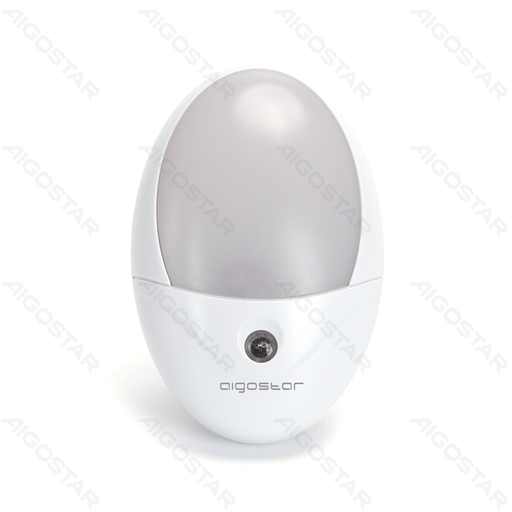
Why it’s a good fit: This plug-in model needs neither batteries nor USB charging, and is designed for indoor use in hallways, bathrooms, bedrooms and on stairs.
The product details specify PIR detection, a dusk sensor, 3,000 kelvin and 20 lumens. This makes the sensor type, light colour and brightness clear.
Plug-and-play installation, a 120-degree detection angle and a stated power rating of 1 watt.
Why it’s a good fit: This set combines USB charging, three colour temperatures and five brightness levels. It can be used in a bedroom, nursery or hallway without needing a fixed socket nearby.
You’re not limited to a single brightness level. The product details also specify the sensor range, activation in low light and a battery life of up to 10 hours in sensor mode.
500 mAh battery, 5-volt USB charging, 30 lumens, CRI above 85 and five dimming levels.

Why it’s a good fit: This two-piece set is designed for kitchens, wardrobes, shelving and hallways. At 30 centimetres long, each light spreads illumination along narrow surfaces.
Rather than leaving installation unclear, the product comes with adhesive strips for fitting without drilling. You can also choose between three colour temperatures.
41 LEDs, a PIR range of 3 to 5 metres, a 1,100 mAh battery and 5-volt USB charging for each light.

Why it’s a good fit: This plug-in night light is designed for children’s bedrooms, hallways, stairs, kitchens and bedrooms. It’s a good choice for households looking to use the same model in several areas.
Five brightness levels mean you’re not limited to a setting that’s either too bright or too dim. The dusk sensor ensures automatic activation is limited to dark conditions.
Warm white 2700-kelvin LED light, brightness adjustable from 20 to 100 per cent, detection up to 3 metres at 120 degrees and a 60-second switch-off delay.
We’ve put together a complete, regularly updated list of products that meet these strict selection criteria and fully comply with the safety regulations in force in the EU.
Position the light so that the sensor covers your usual route and isn’t blocked by furniture, curtains or covers. In a hallway, it’s best to place it at a height where it can detect movement. For adhesive lights, make sure the surface is dry, free from grease and sturdy enough to hold the light. Don’t use plug-in models in areas that the manufacturer hasn’t approved them for.
Battery life depends on the battery, brightness setting, how often the sensor is triggered and the operating mode. For example, a model with a 500 mAh battery is stated to last for up to 10 hours in sensor mode; other models have 800 or 1,100 mAh batteries. These are manufacturer claims, and actual results may vary at home. If the light becomes noticeably dimmer, recharge the battery. Don’t continue using it if it’s damaged.
Plug-in models rated at 0.5 to 1 watt use relatively little power when operating. A sensor can reduce energy use further by activating the light only when it detects movement and the ambient light is low. For rechargeable models, most electricity is used during regular USB charging. So, it’s not just the wattage that matters: how long the light stays on and the brightness setting you choose are important too.