
Lieferung heute & morgen

Qualitätsgarantie

Willkommens-Angebote freischalten: KOSTENLOSE Lieferung | Bis zu 80 % RABATT | Kostenlose 30-Tage-JoyPlus-Testphase
App herunterladen
A nightstand is more than just a surface for your alarm clock and a glass of water. It's a central element in the bedroom that creates order and highlights your personal style. However, the sheer number of options can quickly become overwhelming. Many models look good at first glance but prove to be impractical or unstable in daily use. This guide will help you avoid common purchasing pitfalls and understand the criteria essential for a durable and functional choice.
Before you decide on a model, you should be aware of the typical weaknesses that often only become apparent after the purchase.
To make an informed decision, focus on the following three aspects. These are the primary factors that determine the functionality and longevity of your new nightstand.
The choice of material influences both the aesthetics and the stability.
Consider what you want to store at your bedside. This will determine the ideal configuration.
The right size and shape are crucial for a harmonious overall look and practical use.
Here are some models tailored to specific needs and living situations.
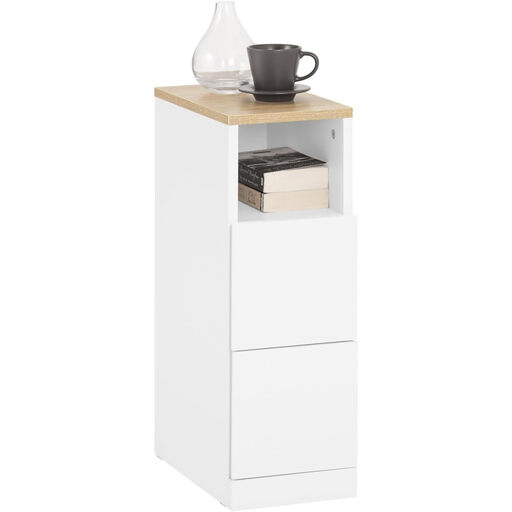
Why this model works: Perfect for small bedrooms, tight niches next to the bed, or to complement tall box spring beds where every centimetre counts.
This model solves the problem of impractical dimensions by being specifically designed for narrow spaces, yet still offering functional storage with two drawers and an open shelf.
Its ultra-slim width of just 20 cm makes it a solution for challenging spaces without sacrificing enclosed storage.

Why this model works: For anyone who wants to charge their smartphone, tablet, and other devices overnight and appreciates modern, ambient lighting.
This model directly integrates modern features, avoiding cable clutter and the need for extra power strips. The construction of metal and engineered wood ensures the necessary stability.
Each table includes a built-in strip with 2 power outlets and 2 USB ports. The remote-controlled LED lighting adds extra atmosphere.

Why this model works: Ideal for couples or anyone looking to create a harmonious and organised look in the bedroom by placing identical nightstands on both sides of the bed.
The pitfall of unstable construction is avoided here with legs made of solid wood and a body of sturdy MDF panels. Floor protectors on the feet also prevent scratches and ensure a secure footing.
The set offers excellent value for a coordinated, modern design. The combination of a drawer and an open shelf is highly versatile.
We have compiled a complete, up-to-date list of products that fully meet these strict selection criteria and relevant safety regulations.
1. How high should a nightstand be? Ideally, the top surface of the nightstand should be level with or a few centimetres below the top of the mattress. This makes it easy to reach your alarm clock, lamp, or a glass of water from bed without having to strain.
2. What is the difference between a nightstand and a night cabinet? The terms nightstand and night cabinet are largely used interchangeably today. Historically, a night cabinet referred to a small, enclosed piece of furniture with a door or drawers, while a nightstand could also be a more open, table-like structure. In modern interior design, the lines are blurred.
3. How do you securely mount a floating nightstand? A floating nightstand must be mounted with anchors and screws appropriate for the specific wall type. Standard anchors are suitable for solid concrete or brick walls, while special hollow-wall anchors are required for drywall. It is crucial to follow the manufacturer's installation instructions precisely and not to exceed the specified maximum load capacity to ensure a secure and lasting installation.