
Lieferung heute & morgen

Qualitätsgarantie

Willkommens-Angebote freischalten: KOSTENLOSE Lieferung | Bis zu 80 % RABATT | Kostenlose 30-Tage-JoyPlus-Testphase
App herunterladen
A nightstand might seem like a simple purchase. But between wobbly designs, scratch-prone surfaces, and impractical storage, several pitfalls can quickly turn a supposed helper into a daily annoyance. A well-chosen nightstand is more than just a surface—it's a functional piece of furniture that creates order and enhances your bedroom's aesthetic.
Before you make a decision, you should be aware of three common problems that often only become apparent after the purchase:
To avoid these problems, it helps to focus on three core parameters. These will determine whether a side table is truly suitable for your bedroom.
The material affects not only the appearance but also the durability and maintenance required.
The stability of a nightstand is non-negotiable. Check the specifications for the maximum load capacity of the tabletop and drawers. A solid construction with well-secured legs or a stable base is essential. For taller models, especially a nightstand with a drawer, an anti-tip device for securing it to the wall is an important safety measure to prevent it from tipping over.
Measure the available space next to your bed accurately before you decide. The ideal height for a nightstand is approximately level with the top of your mattress.
Based on these criteria, we have put together a few models for different requirements and interior styles.
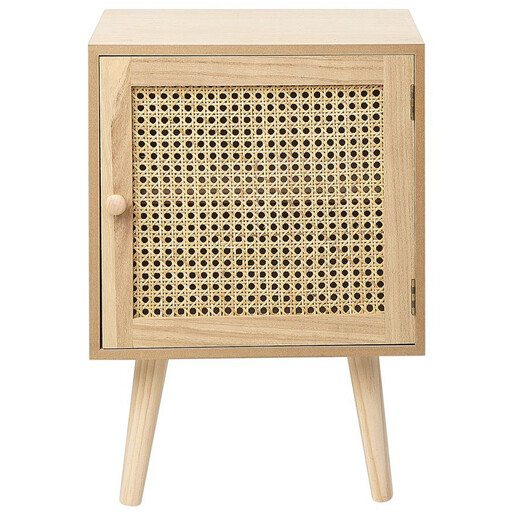
Why This Fits Their Persona: Ideal for anyone who appreciates a boho or country-house style. The combination of a light wood look and a rattan front brings a natural, warm atmosphere to the bedroom without sacrificing modern convenience.
The MDF surface with a Paulownia wood veneer is easier to care for than untreated solid wood, thus avoiding the "impractical surfaces" trap. Storage is concealed behind a door, ensuring a calm, uncluttered look.
Striking design thanks to the rattan front; enclosed storage with an internal shelf for better organisation.
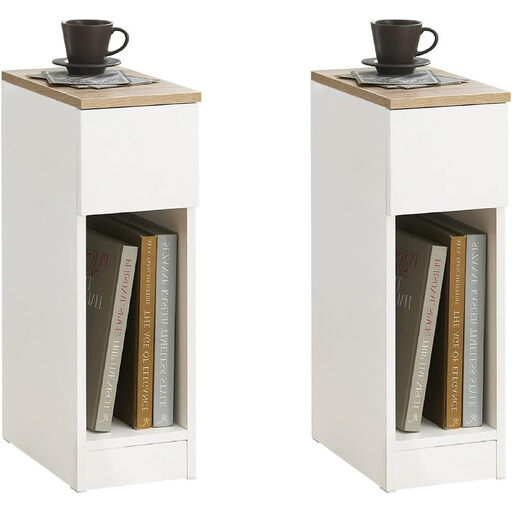
Why This Fits Their Persona: Perfect for city apartment dwellers or small bedrooms where every inch counts. The set of two allows for a symmetrical setup and offers a thoughtful storage solution despite its narrow footprint.
At just 20 cm wide, this model specifically solves the problem of limited space. It combines a drawer with an open shelf, avoiding the trap of impractical storage in a tight area.
Extremely space-saving design; delivered as a practical set of two for a harmonious bedroom layout; good load capacity of 20 kg per table.
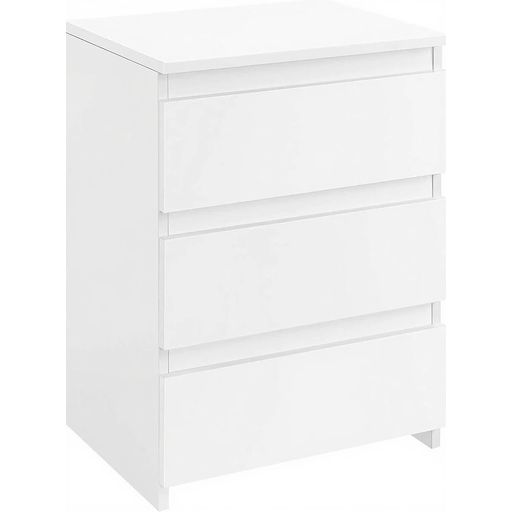
Why This Fits Their Persona: For those who value a tidy bedroom and require maximum enclosed storage. The simple, modern design fits into many decor styles and keeps everything from books to charging cables out of sight.
This model counters the "misleading storage" trap with three full-sized drawers. The included anti-tip device is essential and proactively addresses the stability problem common in taller cabinets.
Maximum storage space with three drawers; high total load capacity of 45 kg; made from E1-rated MDF boards.
We have compiled a complete, up-to-date list of products that fully meet these strict selection criteria and safety standards.
As a rule of thumb, the top of the nightstand should be about level with the top of your mattress. This allows for easy access to an alarm clock, lamp, or glass of water without you having to sit up or stretch in bed. A deviation of a few centimetres up or down is fine, depending on personal preference.
In common usage, the terms bedside table and nightstand are often used interchangeably. Traditionally, a "table" implies a more open design with legs and a tabletop, while a "cabinet" or "stand" suggests a more enclosed form with doors or drawers. Today, the lines are blurred, and many modern nightstands combine both elements.
An anti-tip device is not mandatory for every nightstand, but it is highly recommended, especially for models that are taller than 60 cm and have drawers. Pulling out drawers shifts the centre of gravity and can cause unloaded or lightweight cabinets to tip over. In households with children, installing the supplied anti-tip device is an essential safety precaution.