
Lieferung heute & morgen

Qualitätsgarantie

Willkommens-Angebote freischalten: KOSTENLOSE Lieferung | Bis zu 80 % RABATT | Kostenlose 30-Tage-JoyPlus-Testphase
App herunterladen
A nightstand might seem like a simple purchase, but the reality is often quite different. A wobbly frame, a height that's too low for your new box-spring bed, or a surface that shows scratches after just a few weeks—many buyers get frustrated by details that only become apparent with daily use. The goal is to find a functional, durable companion for your bed that perfectly suits your needs.
This guide will show you the three most common pitfalls to watch out for and which core features truly matter. This way, you can make an informed decision instead of being swayed by marketing promises.
Before we dive into the ideal features, it's important to know the typical flaws that often lead to disappointment.
To avoid the problems mentioned above, focus on the following three objective parameters.
The material determines not only the look but also the durability and maintenance effort.
The right size is crucial for both the functionality and the aesthetics of the room.
Consider what you want to have within reach of your bed.
Here are some models tailored to specific needs and living situations.

Why This Fits Their Persona: Ideal for a first apartment or budget-conscious buyers looking to create a uniform look in the bedroom. The simple, Scandinavian design complements many interior styles.
The solid wood legs and non-slip floor protectors counteract the problem of instability. Although made of MDF, the set offers great value for its price.
Comes as a practical set of 2 nightstands. With one drawer and one open shelf, it offers a good mix of concealed and open storage.

Why This Fits Their Persona: Perfect for anyone who needs to charge multiple devices at the bedside while avoiding cable clutter. The integrated tech makes separate power strips and lamps redundant.
The construction is designed for a total load of 40 kg, ensuring high stability. The scratch-resistant and water-repellent surface is low-maintenance and durable.
A nightstand with a power outlet and USB (2 AC, 2 USB) as well as controllable LED lighting. Two drawers and an open compartment provide ample storage.

Why This Fits Their Persona: The ideal solution for small bedrooms or for lovers of a clean, floating aesthetic. The clear floor space makes the room feel larger and more airy.
Completely bypasses the problem of awkward floor dimensions. The melamine surface is scratch-resistant and water-repellent, making it significantly more robust than simple foil finishes.
A wall-mounted nightstand in a set of 2. The combination of a drawer and an open compartment offers flexible storage options. When installed correctly, wall mounting ensures high stability.
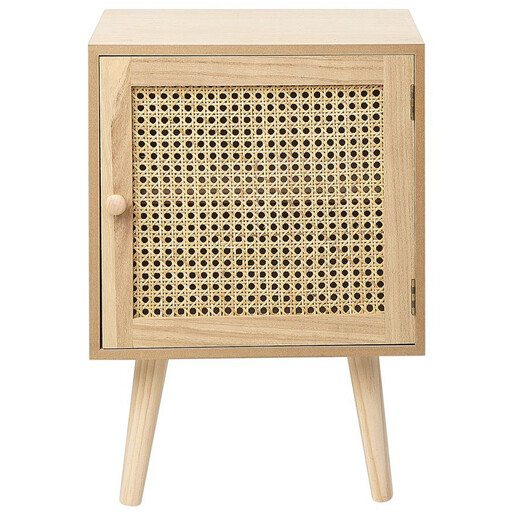
Why This Fits Their Persona: For anyone seeking a piece of furniture with character that is more than just functional. The rattan front adds a warm, natural accent and fits perfectly with a Boho or Scandinavian style.
Instead of a cheap foil, this uses a real wood veneer and genuine rattan, ensuring a high-quality look and feel. The solid legs provide a stable base.
Unique design with woven rattan as a focal point. Offers concealed storage behind the door and an additional top surface.
We've compiled a complete, up-to-date list of products that fully meet these strict selection criteria.
1. How high should a nightstand be? The ideal height for a nightstand is level with the top of your mattress or up to 5 cm below it. This ensures you can comfortably reach items without having to stretch or bend too much. Before buying, measure the height from the floor to the top of your mattress.
2. What is the difference between a nightstand, bedside chest, and night cabinet? In common usage, these terms are often used interchangeably. Traditionally, a bedside chest refers to a piece with multiple drawers, thus offering more storage. A night cabinet is a classic term for a small cabinet next to the bed. The term nightstand is the most general and encompasses all variations. Functionally, they all serve the same purpose.
3. How do I care for a wooden or MDF nightstand? For MDF panels with a melamine or lacquer finish, a soft, slightly damp cloth is usually sufficient. Wipe the surface dry immediately afterward. Avoid harsh cleaning agents. You should regularly dust a wooden nightstand (solid wood) and occasionally treat it with a suitable wood care product. Always use coasters to prevent water or heat marks.