
Lieferung heute & morgen

Qualitätsgarantie

Willkommens-Angebote freischalten: KOSTENLOSE Lieferung | Bis zu 80 % RABATT | Kostenlose 30-Tage-JoyPlus-Testphase
App herunterladen
A nightstand is more than just a surface next to your bed. It's a central element in the bedroom that creates order and keeps important items within reach. However, the sheer number of options can quickly become overwhelming and lead to poor purchasing decisions. Certain design flaws or exaggerated marketing promises often mean that a seemingly perfect nightstand no longer meets your needs after just a few months. This guide will help you recognise the common pitfalls and make an informed decision.
Many buyers focus primarily on design, overlooking crucial functional aspects. This often leads to daily frustration. Watch out for these three common problems:
To avoid making a bad purchase, you should check a few objective criteria before deciding. These parameters determine whether a nightstand will suit your needs in the long run.
The ideal height for a nightstand is level with the top of your mattress or a few centimetres above it. This allows for comfortable access without you having to strain. Therefore, before you buy, measure the height from the floor to the top of your mattress.
For small rooms or narrow niches next to the bed, a slim nightstand with a width of 20 to 30 cm is a smart solution. It provides enough space for the essentials without taking up valuable room. In larger bedrooms, a wider model or a nightstand set of 2 can create a symmetrical and harmonious look.
Consider what you want to store on and in your nightstand:
The material affects not only the look but also the durability. A solid wooden nightstand is robust, while models made of MDF or particleboard are often more budget-friendly and available in a wide variety of designs. Pay attention to solid craftsmanship and stable connections.
Modern demands have also led to new features. A floating nightstand creates a light, airy look and makes cleaning the floor easier. A nightstand with a power outlet and USB is particularly practical, allowing you to charge devices directly at the bed and avoiding cable clutter.
Instead of an overwhelming list, we present a few models here that are tailored to specific living situations and needs.
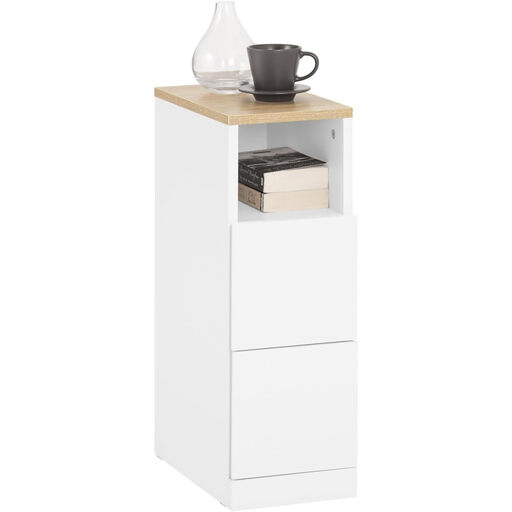
Why This Fits Their Persona: Ideal for those in small apartments or for niches next to wide box spring beds where every centimetre counts. This small nightstand maximises utility in a minimal footprint.
Directly solves the problem of impractical proportions. At just 20 cm wide, it fits into gaps where standard models are too large, without sacrificing storage.
Combines two drawers with an open shelf, offering flexible storage options. Felt pads protect the floor.

Why This Fits Their Persona: For anyone who wants to conveniently charge their smartphone, tablet, and other devices overnight without creating a mess of cables and power strips.
Fixes the problem of inadequate storage for tech gadgets. The integrated charging function makes external extension cords obsolete and keeps things tidy.
Each table features a charging station with 2 power outlets and 2 USB ports. The customisable LED lighting adds extra ambiance.

Why This Fits Their Persona: Perfect for anyone who prefers a minimalist, modern look and wants to keep the floor clear. This not only makes vacuuming easier but also makes the room feel larger.
Bypasses the problem of instability with a secure wall mount. Instead of standing on wobbly legs, the body is firmly attached to the wall (assuming appropriate mounting hardware is used).
The floating design (wall-mounted nightstand) creates a clean aesthetic. The combination of a drawer and an open shelf offers versatile storage.
We've compiled a complete, up-to-date list of products that fully meet these strict selection criteria and German safety regulations.
As a rule of thumb, the top of the nightstand should be about level with the top of your mattress. A deviation of 5 to 10 cm above or below is also acceptable. This height ensures you can comfortably reach items whether you are sitting up or lying down in bed.
With a wall-mounted nightstand, two things are crucial: the structure of your wall and the maximum load capacity of the furniture. Make sure you use the correct wall plugs and screws for your wall type (e.g., drywall, concrete, brick). Never exceed the manufacturer's specified maximum load capacity to ensure the nightstand remains securely attached to the wall.
Not necessarily. A nightstand with a drawer is excellent for hiding clutter and keeping private items stored away from dust. However, if you want frequently used items like books, your tablet, or the remote control to be quickly accessible, a model with open shelves or a combination of both may be the more practical choice. The decision depends on your personal organisational habits.