
Lieferung heute & morgen

Qualitätsgarantie

Willkommens-Angebote freischalten: KOSTENLOSE Lieferung | Bis zu 80 % RABATT | Kostenlose 30-Tage-JoyPlus-Testphase
App herunterladen
Muesli with no added sugar may seem clear at first glance. However, the description does not automatically mean that a product is sugar-free or low in calories. Dried fruit, milk ingredients and alternative sweeteners can significantly affect both flavour and nutritional values. By interpreting packaging information correctly, you can avoid disappointing purchases and find a breakfast that suits your dietary goals.
Muesli may be described as “no added sugar” if no additional mono- or disaccharides, or sweetening foods such as honey or syrup, have been added. However, the natural sugar from raisins, apples or bananas is still included in the nutrition table.
A fruit muesli with no added sugar may therefore contain significantly more sugar per 100 g than a plain oat-flake muesli. For example, Kölln 50% Fruit Muesli No Added Sugar lists 22 g of sugar per 100 g. According to the product information, this value comes from its high fruit content.
Many varieties, including certain crunchy mueslis, use maltitol, maltitol syrup or steviol glycosides instead of household sugar. This can reduce the sugar content, but it does not automatically change the energy density. In addition, product information for sweeteners such as maltitol may warn of a possible laxative effect if consumed excessively.
The ingredients list is therefore just as important as the nutrition table. If you have a sensitive digestive system, start with a small portion.
“Wholegrain”, “organic”, “high in protein” and “high in fibre” describe different properties. An organic muesli meets requirements for organic production, but it is not automatically particularly low in sugar. A high-protein muesli may also contain sweeteners or chocolate.
The Nutri-Score is also only a guide. It does not replace checking the ingredients, allergens and portion size.
Ingredients are listed in descending order by weight. If oats or other wholegrain cereals appear at the beginning, they form the basis of the product. Sugar, glucose syrup, honey, maltodextrin or fruit juice concentrate should be considered carefully if you are following a reduced-sugar diet.
For products containing chocolate, it is worth checking the actual cocoa and chocolate content. “Chocolate muesli with no added sugar”, for example, may be made with maltitol-based chocolate and still have a relatively high fat and energy content.
Always compare products based on 100 g, rather than relying solely on a small portion size. As a practical guide:
According to the product information, Kölln Oat Bran contains 17.5 g of protein and 2 g of sugar per 100 g. It can be added in portions to yoghurt, smoothies or a homemade muesli mix.
Oats, wheat, spelt, milk, soya and nuts must be highlighted in the ingredients list. Not every oat flake is suitable for people with coeliac disease. Look for clear gluten-free labelling and information about possible traces. According to the product description, Gluten-Free Kölln Tender Rolled Oats are made from gluten-free wholegrain oats and contain no added sugar.
For children, age recommendations and consistency are also important. According to the supplier, HiPP Fruit & Cereal Apple, Banana, Muesli is suitable from 8 months and contains milk and oats. It is not a traditional dry muesli for adults, but a portioned baby food product.
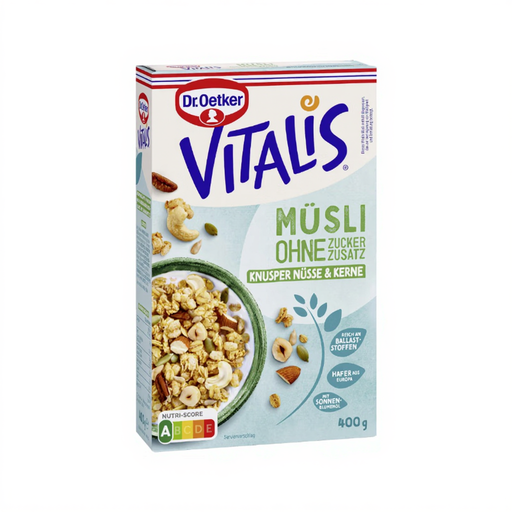
Why this product suits the profile: The 400 g pack is ideal for trying a nutty crunchy muesli with no added sugar. It contains 2 g of sugar and 13 g of protein per 100 g, according to the product information.
The product description states that no sugar has been added and lists the sugar content separately. However, sweeteners such as maltitol and steviol glycosides should still be checked in the ingredients list.
13% nuts and 6% seeds according to the product information; 400 g pack and 2 g of sugar per 100 g.
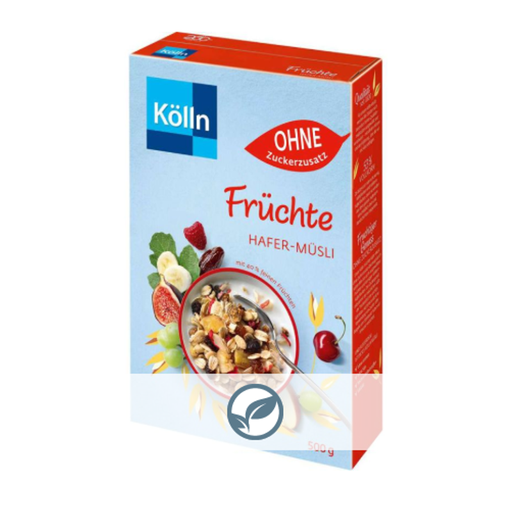
Why this product suits the profile: Its clearly stated high fruit content appeals to buyers who like to compare ingredient quantities transparently and prefer a fruity breakfast.
The no-added-sugar description is not confused with being low in sugar: the product data lists 22 g of sugar, most of which comes from fruit.
51% wholegrain oats, 7.8 g of fibre and 9.5 g of protein per 100 g according to the product information.

Why this product suits the profile: The 500 g pack, made from 100% gluten-free wholegrain oats, can be used for muesli, porridge and baking recipes.
According to the product description, the ingredients list consists of 100% wholegrain oats. However, allergy sufferers should still check the current packaging and trace information.
14 g of protein, 1.2 g of sugar and 11 g of fibre per 100 g according to the stated nutritional values; vegan and with no added sugar.
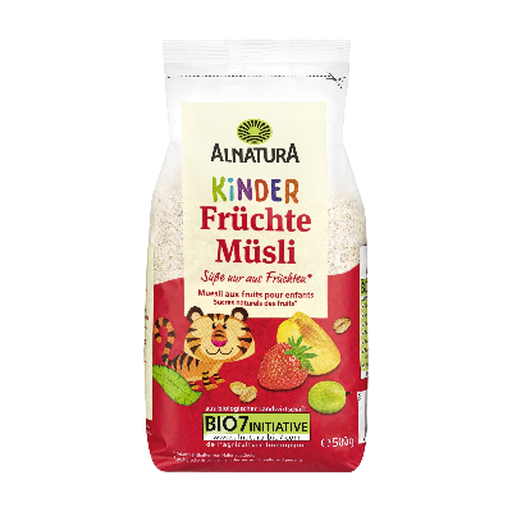
Why this product suits the profile: The blend contains wholegrain oats, spelt, raisins and other fruit from organic farming. It is designed for family breakfasts.
According to the product description, it contains no added sugar. At the same time, the fruit means that the nutrition table lists 12 g of sugar per 100 g.
500 g pack, organic ingredients and 57% wholegrain oats according to the ingredients list. Contains gluten from oats and spelt.
If you have little time in the morning or are looking for a post-workout snack, you could choose a protein bar instead of a bowl of muesli. According to the product data, Maxi Nutrition Muesli Nut Butter Protein Wafer Bar contains 9.7 g of protein per 39 g bar, 1.7 g of sugar and no added sugar. The pack contains 12 individual bars.
This is not breakfast muesli, but a portioned snack. The product contains wheat, milk, soya and hazelnuts, among other ingredients. The packaging also warns of possible laxative effects from maltitol if consumed excessively.
We have put together a complete, regularly updated list of products that fully meet these strict selection criteria and the safety regulations applicable in the EU.
No. Dried fruit contains natural sugar, which is included in the nutrition table. For a low-sugar muesli, you should also check the “sugar per 100 g” value and compare products containing large amounts of raisins, dates or bananas.
A portion of around 40 to 60 g is a practical starting point. With very energy-dense crunchy blends, a smaller amount may be sufficient. Oat flakes, natural yoghurt, milk or unsweetened plant-based alternatives can complement breakfast without additional sweeteners.
Store the pack in a dry place at room temperature. Once opened, the inner bag should be sealed tightly or the muesli transferred to an airtight container. Moisture can significantly affect its crunchy texture.