
Lieferung heute & morgen

Qualitätsgarantie
App herunterladen
Kategorien
Installing sun protection in rented apartments or on modern windows often presents a challenge, as drilling into window frames is frequently undesirable or prohibited by contract. A no-drill blackout blind offers a functional and damage-free alternative. These systems typically use clamp or adhesive mechanisms that allow for installation and removal without leaving any residue. This makes them ideal for tenants, as well as for homeowners who wish to keep their window frames pristine.
Selecting the right model depends on your specific technical needs and the characteristics of your window. The following criteria are essential for making an informed decision.
The most common method for drill-free installation is the clamp-fit blind. This involves attaching adjustable clamp brackets directly onto the window sash.
An alternative is mounting with adhesive strips. This option is suitable for windows where clamp mounting isn't possible, but it requires a clean, grease-free surface for optimal adhesion.
The blind's material is crucial for its function, whether as a privacy blind, a heat protection blind, or for complete blackout.
The degree of blackout is determined by the opacity of the material. For bedrooms or children's rooms, a 100% blackout fabric is recommended. For offices or living rooms, a dim-out fabric may be sufficient.
There are two main types of operation:
Based on technical specifications and practical benefits, we present three models that cater to different needs.
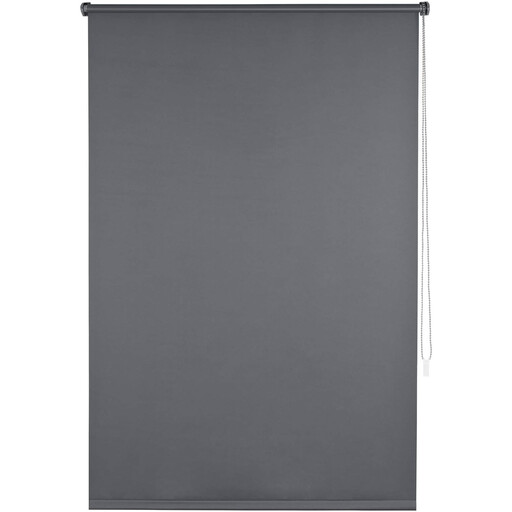
Why we recommend this product: This blind combines a full blackout function with thermal properties. The 100% polyester fabric, featuring an aluminium coating on the back, effectively blocks all incoming light. A key feature is its colour-coordinated design: the front, the back coating, and the mounting accessories all come in a uniform anthracite tone, ensuring a seamless look from both inside and out.
Advantages:
Who it's for: This model is perfect for bedrooms, children's rooms, and for light-sensitive individuals like shift workers. Its dual mounting options make it suitable for both tenants and homeowners seeking either a permanent or a flexible solution.
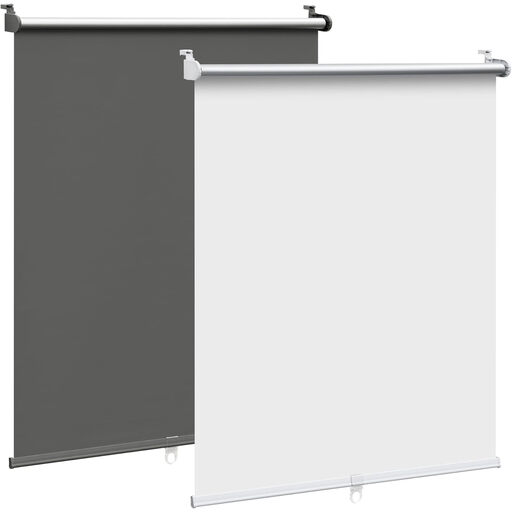
Why we recommend this product: The standout feature of this blind is its cordless operation, which provides a high level of safety. The height is adjusted using a handle on the bottom rail, eliminating the risk of strangulation from cords. The material (200 g/m² polyester) is Oeko-Tex certified and has a silver backing for 100% blackout and sun protection.
Advantages:
Who it's for: Highly recommended for families with young children and safety-conscious users. Its durable and low-maintenance nature makes it a versatile solution for almost any room, including the kitchen and bathroom.
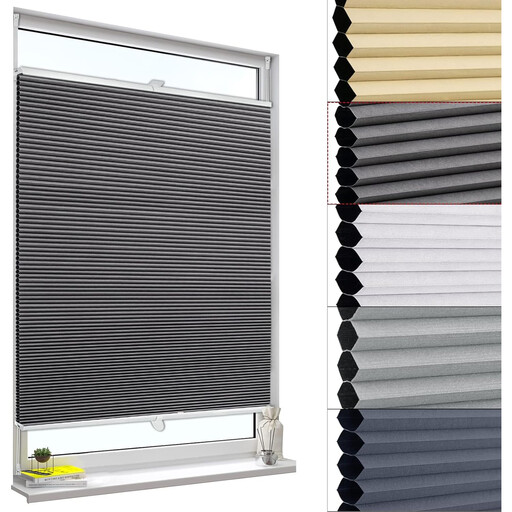
Why we recommend this product: This blackout pleated blind uses a honeycomb structure to achieve superior thermal and acoustic insulation. The air pockets inside the double-layered polyester fabric act as a buffer against external temperatures and sound. An internal aluminium coating ensures complete blackout. It is operated cordlessly via handles on the top and bottom rails, allowing for flexible positioning of the blind.
Advantages:
Who it's for: Ideal for energy-conscious homeowners and tenants who value temperature regulation and noise reduction. Its flexible adjustability makes it an excellent choice for living rooms and offices where both privacy and natural light are desired.
If the models presented here don't perfectly match your requirements for size, colour, or mechanism, you can find a more extensive selection of solutions for interior window sun protection in our main category.
Go to Category: Protective Curtains
1. How does a no-drill blackout blind work? Most models use a clamp-fit system. This involves clamping adjustable brackets onto the top edge of the window sash. The blind is then clipped into these brackets. No tools or drill holes in the window frame or wall are required.
2. Does a clamp-fit blind really hold securely on the window? When installed correctly and within the manufacturer's specified maximum frame thickness, clamp-fit systems provide a stable and secure hold for everyday use. The brackets are designed to press firmly against the frame without damaging it.
3. What is the difference between a blackout blind and a thermal blind? A standard blackout blind primarily blocks light with a dense, opaque fabric. A thermal blind has an additional special coating on the back (usually silver or white) that reflects sunlight. This coating provides extra heat protection in the summer and a slight insulating effect in the winter. Many blackout blinds today come with thermal properties as a standard feature.