
Lieferung heute & morgen

Qualitätsgarantie

Willkommens-Angebote freischalten: KOSTENLOSE Lieferung | Bis zu 80 % RABATT | Kostenlose 30-Tage-JoyPlus-Testphase
App herunterladen
For many people, a dark room is essential for restful sleep—whether for shift workers who sleep during the day, parents of young children, or simply light-sensitive individuals. In rental apartments, this often raises a question: How can you effectively darken a window without damaging the frame with drill holes? A no-drill blackout pleated blind seems to be the ideal solution. However, the market is flooded with products whose promises often fall short in practice.
As your Joybuy Product Recommendation Officer, I will help you identify the common pitfalls and make an informed decision. We will focus on the objective features that distinguish a quality product from an inadequate one.
The Most Common Traps When Buying Blackout Pleated Blinds:
To avoid a bad purchase, you should check three core technical parameters. These determine the functionality, longevity, and effectiveness of your new privacy screen.
A simple, single-layer polyester fabric is not sufficient for complete blackout. Look for products explicitly described as "blackout" or "100% light-blocking." This is typically achieved through two methods:
The "no-drill" feature's success depends entirely on the quality of the mounting system. You can identify a reliable clip-fit pleated blind by the following features:
Even the best blackout pleated blind is ineffective if light seeps in from the sides. Correct measurement is therefore essential.
Based on these objective criteria, we have identified several products that are particularly well-suited for specific requirement profiles in UK households.
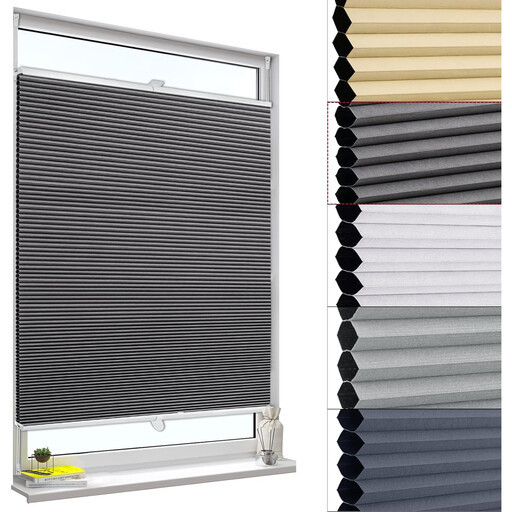
Why This Fits Their Persona: Ideal for bedrooms and nurseries where maximum blackout is required. The cordless operation minimises risks for children and pets, while the honeycomb structure ensures a quiet environment.
The dual-layer honeycomb construction made of 100% polyester with an integrated aluminium coating blocks light completely, going far beyond the effect of a merely opaque fabric.
Infinitely adjustable positioning with handles at the top and bottom. In addition to blackout, it provides noticeable thermal and acoustic insulation.
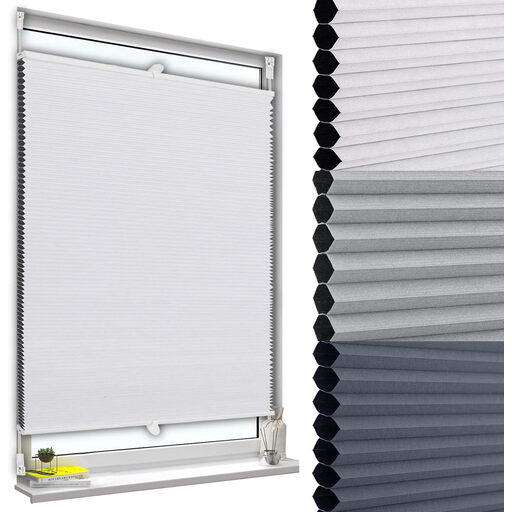
Why This Fits Their Persona: Perfect for users who value energy efficiency in addition to blackout functionality. The honeycomb structure acts as an insulation barrier and can help reduce heating and cooling costs.
Unlike empty thermal promises, the physical honeycomb structure provides a demonstrable insulating effect by creating an air cushion between the window and the room.
Reduces heat exchange at the window and dampens external noise. The white exterior effectively reflects sunlight in the summer.
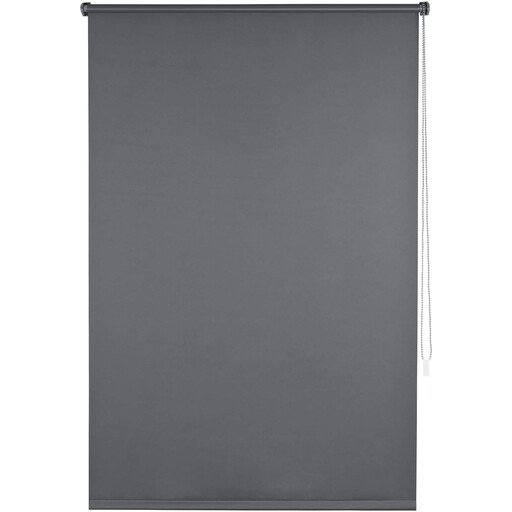
Why This Fits Their Persona: A cost-effective and straightforward alternative to a pleated blind. This **no-drill roller blind** provides reliable blackout and is ideal for rental apartments, offices, or teen bedrooms.
The clip-fit system is designed for standard window frames and provides a stable hold. The aluminium coating on the back ensures true blackout, not just privacy.
Simple operation via a side-pull chain (can be mounted on the left or right). All accessories are colour-matched to the fabric for a uniform look.
We have compiled a complete, up-to-date list of products that fully meet these strict selection criteria and UK safety regulations.
Yes, a high-quality clip-fit pleated blind is very reliable when correctly installed on a suitable window frame (usually uPVC). It is important that the clamp brackets are firmly attached to the frame and the tension cords are properly tightened. These systems are generally not suitable for wooden or aluminium windows, nor for skylights.
A standard blackout pleated blind consists of a single layer of blackout fabric. A honeycomb pleated blind, on the other hand, has two layers of fabric that form honeycomb-shaped air pockets. These pockets provide significantly better thermal and acoustic insulation than a single layer of fabric and often block light even more effectively, as the tension cords run inside the honeycombs, leaving no visible holes in the fabric.
First, measure the width of the glass pane itself. Add about 2 cm to this measurement on each side to ensure a good overlap and minimise light leakage from the sides. The total width you calculate is your order width. For the height, measure the entire height of the window sash, from the top edge to the bottom edge. This is your order height.