
Lieferung heute & morgen

Qualitätsgarantie

Willkommens-Angebote freischalten: KOSTENLOSE Lieferung | Bis zu 80 % RABATT | Kostenlose 30-Tage-JoyPlus-Testphase
App herunterladen
As a renter or homeowner, you often face the challenge of installing effective sun and privacy screening without damaging window frames or walls. A no-drill pleated blind seems like the ideal solution. However, the market is flooded with products of widely varying quality. Before you make a decision, it's crucial to understand the common pitfalls that can lead to frustration and unnecessary expense.
Many buyers report three central problems:
This guide will help you navigate these issues and make an informed choice that meets your needs for both function and style.
To ensure your new pleated blind fits perfectly and performs as expected, you should carefully check three core parameters. These details are critical for the longevity and practical use of your sun protection.
The term "no-drill" encompasses several different fastening systems. Choosing the right one depends on your window type.
Fabric descriptions can be confusing. A clear distinction helps in making the right choice for every room.
Incorrect measurements are the most common reason for returns. Follow a systematic approach when measuring:
Instead of making a blanket recommendation, we have identified products tailored to specific living situations and requirements.
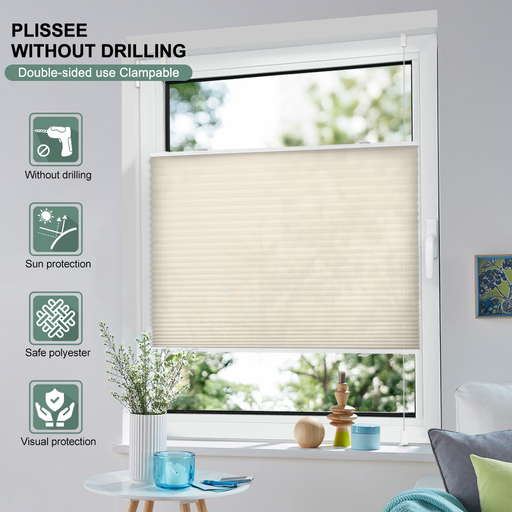
Why This Fits Their Persona: A straightforward and cost-effective solution for standard windows in rental properties. The tool-free clamp-fit installation prevents damage to the window frame, which is crucial when moving out. The opaque fabric provides the necessary privacy for living rooms or bedrooms.
The system is designed for simple clamp-on installation, bypassing the pitfall of a complicated "Easy-Fix" manual. The fabric is specified as opaque and reliably fulfils this function.
Tool-free installation without damaging the window frame. Offers great value for money for basic privacy and sun protection.
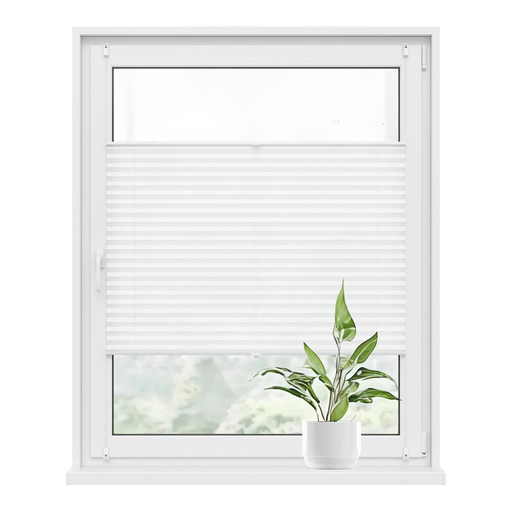
Why This Fits Their Persona: For homeowners who value a durable and stable construction. This model features clamp brackets with a metal core, which promise greater stability than all-plastic versions. The light-filtering property is ideal for living areas where you want to combine brightness with privacy.
The use of clamp brackets with a metal core directly addresses the weakness of flimsy plastic mounts, ensuring a permanently secure hold on the window sash.
Robust construction thanks to a metal core in the brackets. It also offers the ability to adjust the width if needed, ensuring a perfect fit.
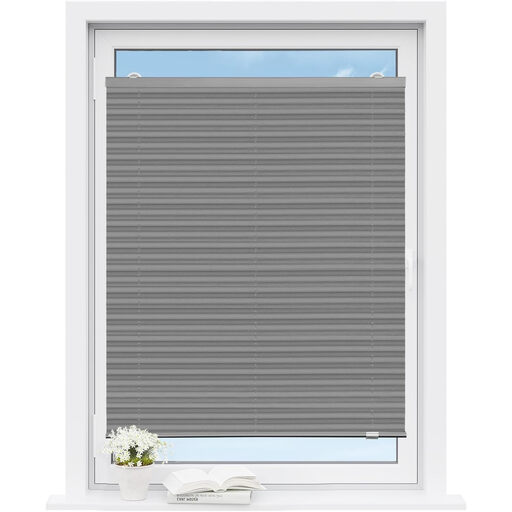
Why This Fits Their Persona: The perfect solution for windows where clamp-fit mounting is not possible. This includes fixed-pane windows, skylights, or glass doors. The suction cup installation is flexible and damages neither the glass nor the frame.
This product offers a specific solution for a problem where standard clamp-fit systems fail. It prevents the mistaken purchase of an unsuitable product for non-standard windows.
Flexible mounting on smooth glass surfaces without a window sash. According to the manufacturer WOLTU, the fabric filters UV radiation while providing a soft light diffusion.
We've compiled a complete, up-to-date list of products that fully meet these strict selection criteria.
Measure the width of the glass pane and add 1 to 2 cm on both sides to allow the fabric to extend beyond the edge of the glass. This minimises light gaps. The height corresponds to the total height of the window sash. Always compare your measurements with the manufacturer's specifications.
Yes, when installed correctly on a suitable window frame, a clamp-fit pleated blind is very stable. The clamp brackets are tightened firmly onto the frame and hold the blind securely in position, even with daily use or when the window is tilted. For very wide or heavy blinds, models with additional support cords or more robust metal brackets may be a good idea.
No. A privacy blind correctly classified as "opaque" prevents silhouettes or movements from being seen from the outside when the lights are on inside. It completely protects your privacy. However, unlike a blackout fabric, it still allows a certain amount of diffuse light to pass through, so the room does not become pitch black.