Joybuy Insights

No-Drill Pleated Blinds: A Buyer's Guide

As a renter or the owner of a new-build apartment, you often face the same problem: you need effective privacy and sun protection but don't want to damage the window frames with drill holes. A no-drill pleated blind seems like the ideal solution. However, the market is flooded with products of widely varying quality. Before you make a decision, you should be aware of the most common pitfalls that lead to frustration and unnecessary expenses.

Many buyers report three central problems:

  1. Unstable Mounts: Clamp brackets that give way after a few weeks or adhesive strips that detach in sunlight are a common annoyance.
  2. Misleading Fabric Descriptions: A blind advertised as "blackout" often still lets in a significant amount of light and is unsuitable for bedrooms.
  3. Improper Fit: Misunderstood measurements lead to unsightly light gaps at the sides or an unstable installation.

This guide will help you avoid these mistakes and make an informed choice that meets your requirements for both function and durability.

What Really Matters: The Decisive Product Features

To find a suitable product that will satisfy you in the long run, you should carefully examine three core aspects: the mounting method, the fabric properties, and the correct measurements.

1. Mounting System: Clamp, Adhesive, or Suction Cup?

The type of installation is the heart of any drill-free system. The most common variants are clamp-on and adhesive systems.

  • Clamp-On Pleated Blinds: With this method, adjustable brackets are clamped directly onto the window sash. This system is very stable and can be removed without a trace. The crucial factor here is the frame thickness of the window. Most clamp brackets are designed for standard uPVC windows with a rebate depth of 15 to 23 mm. Measure the thickness of your window sash (excluding the rubber seal) before buying a clamp-on pleated blind.
  • Adhesive Mounting: Models with adhesive strips or plates are glued directly onto the cleaned window frame or the glass pane. This method is also suitable for windows that cannot be opened. The quality of the adhesive is critical for durability.
  • Suction Cup Systems: A less common but flexible option, particularly suitable for smooth surfaces like the glass on balcony doors or in conservatories.

2. Fabric Type and Function: From Privacy to Blackout

The choice of fabric determines how much light enters the room and what additional functions the pleated blind serves.

  • Translucent/Sheer: Offers a light no-drill privacy screen for windows but lets in plenty of daylight. Ideal for living rooms or kitchens.
  • Dimout/Room-Darkening: Significantly reduces light entry and creates a dim atmosphere. Well-suited for home offices or living rooms.
  • Blackout: A no-drill blackout blind has a special coating on the back (often silver-coloured) that lets almost no light through. This feature is essential for bedrooms and children's rooms.
  • Thermal Blinds / Honeycomb Shades: A honeycomb pleated blind consists of two fabric panels that form an insulating air pocket. This structure helps keep heat out in the summer and warmth in during the winter. This can contribute to lowering energy costs and also dampens external noise.

3. Determining the Right Size: Avoid Measurement Errors

An incorrect size is the most common reason for dissatisfaction. Pay close attention to the manufacturer's instructions. As a general rule:

  • Order Width: Measure the width of the glass pane and add the desired overlap on each side (usually 1-2 cm per side) to minimise side light gaps. Make sure the blind does not interfere with the window handle. The fabric width is usually about 4 cm narrower than the total width of the product.
  • Order Height: Measure the height of the entire window sash (from the top of the frame to the bottom of the frame). The height of the pleated blind should match or slightly exceed this measurement.

Our Picks by Use

Based on the criteria mentioned, we have compiled a selection of products for various needs and living situations.
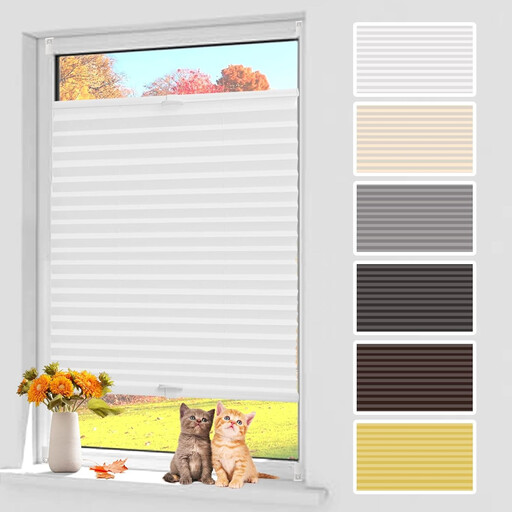
MATCH FOR: Budget-Conscious Renters
Dream-seeker Pleated Blind 70x120cm White - No-Drill Clamp/Stick Mount, Blackout 1 Piece

Dream-seeker Pleated Blind 70x120cm White - No-Drill, Blackout

Why This Fits Their Persona: Ideal for renters looking for a straightforward and affordable solution for the bedroom or children's room. The adhesive mounting is quick and leaves no residue on the window frame.

How It Avoids the Trap

This model avoids the 'false blackout' trap. The fabric is described as opaque and room-darkening, making it genuinely suitable for rooms where darkness is desired.

Key Advantage & Pros

Simple adhesive mounting without tools; blackout function for maximum privacy and light protection.
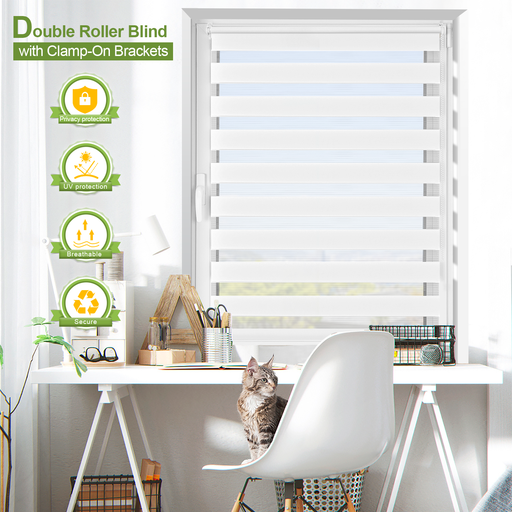
MATCH FOR: Flexible Everyday Users
EcoHue DuoRollo Clamp-On Double Roller Blind, No Drilling Required, with Clamp Brackets, for Windows and Doors, White, W 90 cm x H 150 cm,1PC

EcoHue DuoRollo Clamp-On Double Roller Blind, No-Drill, 90x150 cm

Why This Fits Their Persona: Perfect for living and work areas where lighting conditions need to be flexibly adjusted. The no-drill dual roller blind allows for a seamless transition between sheer and opaque.

How It Avoids the Trap

The sturdy clamp-on system is designed for common window frames, preventing the problem of unstable brackets. Installation is tool-free and protects the window frame.

Key Advantage & Pros

Two fabric layers for variable light control; easy clamp-on installation without damaging the window.

MATCH FOR: Energy-Conscious Peace-Seekers
WOLTU Honeycomb Pleated Blind without Drilling Blackout Thermal Double Pleated Blind Clip Fix Two-Tone 50x130cm White-White

WOLTU Honeycomb Pleated Blind, No-Drill, Thermal & Blackout

Why This Fits Their Persona: For anyone who values energy efficiency and a quiet living atmosphere. The honeycomb structure provides demonstrable thermal insulation and dampens outside noise—ideal for bedrooms on busy streets.

How It Avoids the Trap

This product offers more than just a simple fabric. Its special honeycomb construction delivers real added value in the form of thermal and sound insulation, going beyond the function of a standard blind.

Key Advantage & Pros

Insulating honeycomb structure for thermal and sound protection; infinitely adjustable from both the top and bottom for flexible light control.

Looking for More Options?

We have compiled a complete, up-to-date list of products that fully meet these strict selection criteria and German safety regulations.

Frequently Asked Questions (FAQ)

1. How long do clamp-on or adhesive mounts last?

Durability heavily depends on the product's quality and correct installation. High-quality clamp-on systems made of metal or robust plastic can last for many years with normal use. For adhesive systems, it is crucial to thoroughly clean the surface before application (free of grease and dust). The lifespan of adhesives can vary with intense sun exposure and high-temperature fluctuations.

2. Can a no-drill pleated blind completely darken a room?

Yes, but only if you choose a true no-drill blackout blind or a honeycomb blind with a blackout function. Look for an opaque fabric quality with a light-blocking coating. For maximum darkness, it is also important that the blind is slightly wider than the glass pane to minimise light entry from the sides.

3. What is the difference between a pleated blind, a roller blind, and a dual roller blind?

  • Pleated Blind: Consists of a fabric folded into pleats, which compresses like an accordion. It often has a very slim profile and can usually be operated from both the top and bottom.
  • Roller Blind: A smooth panel of fabric that is rolled up and down onto a tube.
  • Dual Roller Blind (also Zebra Blind): Consists of two parallel fabric panels with alternating sheer and opaque stripes. By shifting the panels, the amount of light can be seamlessly adjusted.