
Lieferung heute & morgen

Qualitätsgarantie

Willkommens-Angebote freischalten: KOSTENLOSE Lieferung | Bis zu 80 % RABATT | Kostenlose 30-Tage-JoyPlus-Testphase
App herunterladen
A no-drill pleated blind is an attractive solution for modern privacy and sun protection, especially in rental properties where damaging the window frame must be avoided. While installation seems straightforward, small mistakes in practice often lead to frustration: the blind won't stay up, doesn't provide the desired privacy, or simply doesn't fit.
As your Joybuy Product Recommendation Officer, I'm here to help you navigate the common pitfalls. We'll focus on the three most frequent sources of error that occur when selecting and installing a no-drill pleated blind, and how you can avoid them from the start.
Many products promise a simple solution, but the devil is in the details. Pay attention to these three points to avoid a poor investment.
To avoid the mistakes mentioned above, you should check three core aspects before buying. These will determine the functionality and longevity of your new sun protection.
The choice of mounting method depends on your window type and your needs.
Choose the fabric based on the room and the desired level of privacy and light control.
The most important rule is: Follow the manufacturer's measuring instructions exactly. As a general rule for clamp-fit pleated blinds:
Here are some product recommendations tailored to different needs and living situations.
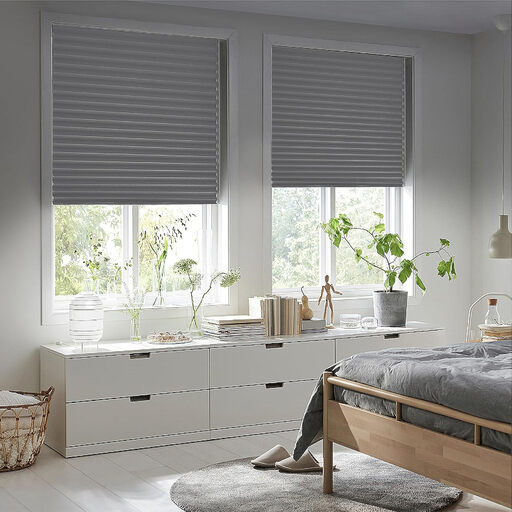
Why This Fits Their Persona: A straightforward and flexible solution for typical rental apartments. The combination of clamp and adhesive mounting offers an adaptable installation for the most common window frames, with no drilling required.
The adjustable clamp brackets are designed for a window sash depth of 10-23 mm, covering the most common standard. The clear measuring guide (glass width + 2-4 cm) prevents ordering mistakes.
The semi-translucent fabric offers a good compromise between privacy and light ingress. The handle bar operation allows for stepless positioning from both the top and bottom.
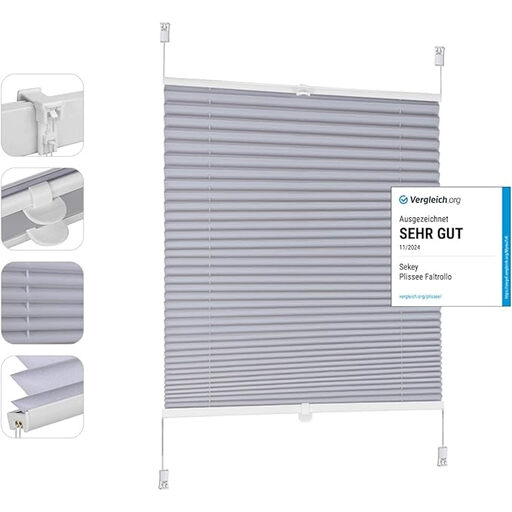
Why This Fits Their Persona: Ideal for users who need maximum privacy and light blockage. Perfect for bedrooms to darken the room for a restful sleep, or for ground-floor bathrooms.
The "Blackout" product name and the opaque polyester fabric ensure the material delivers on its promise. There are no false expectations regarding light transmission.
Complete light and UV blockage. According to the manufacturer, the material is designed to resist yellowing from sun exposure.
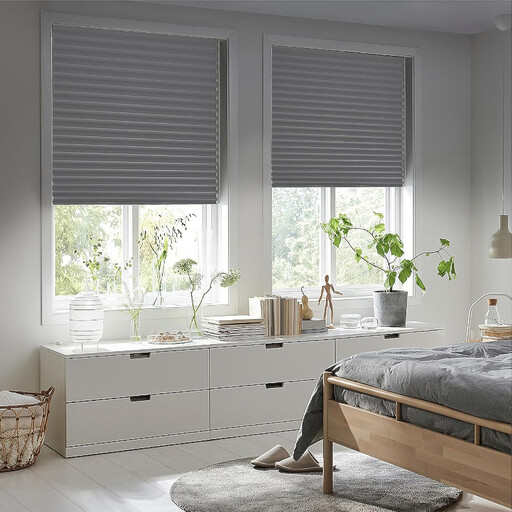
Why This Fits Their Persona: Specifically for tall windows or glass doors where a drill-free solution is needed. The 200 cm length covers most standard balcony doors in modern apartments.
This model offers the necessary length that is often missing from standard pleated blinds. The clamp-fit mounting ensures a secure hold on the door frame even at this size, without causing damage.
Suitable for tall windows and doors. The semi-translucent fabric provides privacy without completely darkening the room, which is an advantage for large glass surfaces.
We've compiled a complete, up-to-date list of products that fully meet these strict selection criteria.
1. How do I correctly measure my window for a no-drill pleated blind? Measure the width of the glass pane and add 1 to 2 cm on each side to minimise light gaps. The total width must not obstruct the window handle. For the height, measure the entire height of the window sash, from the top edge to the bottom edge. Always compare your measurements with the product's specific measuring guide.
2. Are clamp-fit pleated blinds really durable? When installed correctly and on a window sash of a compatible depth, clamp-fit systems are very reliable and long-lasting. The brackets clamp firmly onto the frame and hold the blind securely in place, even with daily use. It's important not to overtighten the clamp brackets to avoid damaging the frame or its seals.
3. Can I also install a no-drill pleated blind on a wooden window? Yes, that's possible. Clamp-fit systems generally work on wooden windows, as long as the shape of the window sash allows the brackets to be mounted and the sash depth is compatible. With painted wooden windows, you should be careful not to scratch the paint. Alternatively, adhesive systems can be a good option, provided the wood surface is smooth, clean, and not oiled.