
Lieferung heute & morgen

Qualitätsgarantie

Willkommens-Angebote freischalten: KOSTENLOSE Lieferung | Bis zu 80 % RABATT | Kostenlose 30-Tage-JoyPlus-Testphase
App herunterladen
As a renter or homeowner who values hassle-free solutions, you face a common challenge: How do you achieve effective privacy and sun protection without permanently damaging window frames with drill holes? A no-drill pleated blind seems like the ideal answer. However, the market is flooded with products of widely varying quality. Before you make a decision, it's crucial to understand the most common pitfalls that can lead to disappointment and unnecessary expense.
Many buyers report three central problems:
This guide will help you navigate these issues and make an informed choice that meets your needs for both function and durability.
To find a suitable and long-lasting product, you should carefully examine three technical features. These determine the functionality and your satisfaction with your new privacy screen.
The mounting method is the core feature of a no-drill pleated blind. The two most common systems are clamp brackets and adhesive plates.
Some models offer both mounting options, giving you maximum flexibility.
The fabric's description indicates how much light and prying eyes it blocks. Pay attention to precise terminology to get the desired function.
A perfectly fitting clamp-fit folding blind or clamp-on blind depends on the right measurements. Proceed as follows to avoid incorrect purchases:
Instead of an overwhelming list, we present specific product suggestions tailored to typical user profiles.
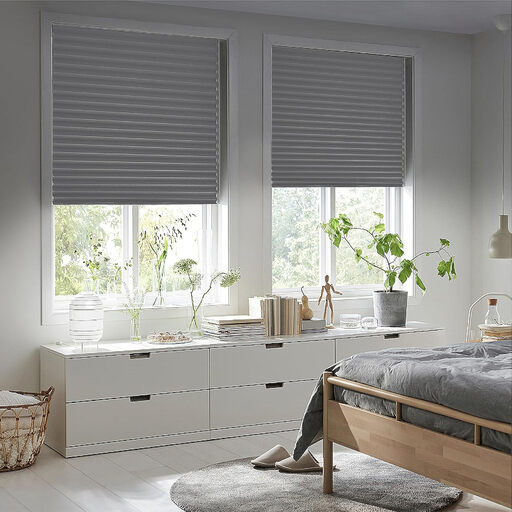
Why This Fits Their Persona: Ideal for renters seeking a functional, budget-friendly, and above all, damage-free solution for standard windows in living rooms or offices. The simple handling and installation require no DIY skills.
The product description includes a clear recommendation for determining the size (glass width + 4 cm), which prevents common measurement errors and resulting light gaps.
Offers two mounting options in the box: clamp and adhesive brackets. The blind can be positioned seamlessly using a handle directly on the rail.
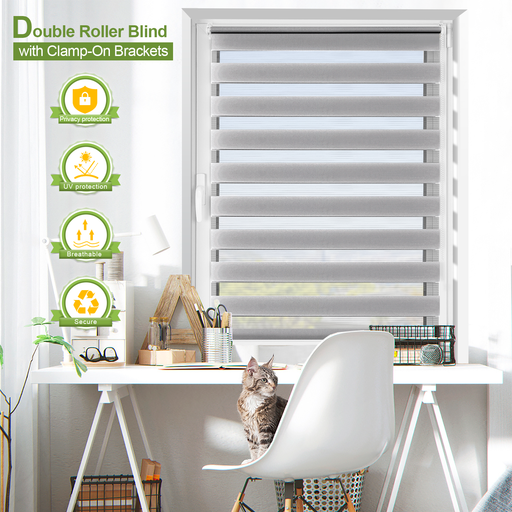
Why This Fits Their Persona: For users who want more than just simple privacy. The modern design of the double roller blind, with its alternating transparent and opaque stripes, allows for precise light control and adds a stylish accent.
Unlike vaguely defined "semi-transparent" fabrics, this blind offers a clear functional distinction: either a clear view through the transparent segments or effective privacy with the opaque ones.
Allows for seamless adjustment of light and privacy by shifting the two parallel fabric layers. Installation is tool-free using clamp brackets.
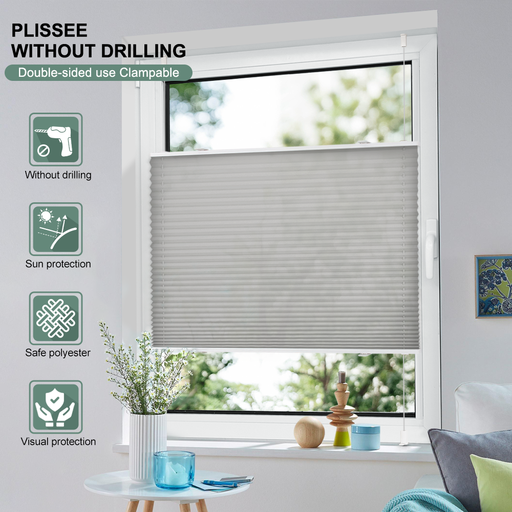
Why This Fits Their Persona: Specifically for individuals who need maximum room darkening for restful sleep or a home cinema experience. Functionality is the clear priority here.
This product is explicitly described as "Blackout (opaque)," which promises a near-total light blockade. This clearly distinguishes it from merely privacy-enhancing fabrics that are often incorrectly marketed as blackout.
The special fabric coating ensures a high degree of darkening. The clamp-fit mounting system is tool-free and protects the window frame.
We have compiled a complete, up-to-date list of products that fully meet these strict selection criteria and German safety regulations.
The lifespan of a clamp-fit pleated blind largely depends on the material quality of the clamp brackets and how it's handled. Models with brackets made of high-quality, flexible plastic or metal can easily last for several years with normal use. Avoid constantly installing and removing the blinds to preserve the tension of the brackets.
The clamp-fit system is primarily designed for modern uPVC windows with a standardized edge shape. On wooden windows, the shape of the window sash can vary. Check if the edge is flat enough for the clamp bracket to grip securely. An alternative can be adhesive mounting. However, it is advisable to test the adhesive strength and any potential effects on the paint in an inconspicuous area before final installation.
High-quality adhesive strips, like those used in brand-name products, can usually be removed without leaving residue. It often helps to gently warm the adhesive strip with a hairdryer before peeling it off to soften the glue. In contrast, cheap adhesives can leave stubborn residues that must be removed with a special cleaning agent. Thoroughly cleaning the surface before application not only improves adhesion but also makes subsequent removal easier.