
Lieferung heute & morgen

Qualitätsgarantie

Willkommens-Angebote freischalten: KOSTENLOSE Lieferung | Bis zu 80 % RABATT | Kostenlose 30-Tage-JoyPlus-Testphase
App herunterladen
A no-drill pleated blind is a practical and modern solution for privacy and sun protection, especially suited for rental properties or for anyone who wants to keep their window frames undamaged. Installation without tools or permanent marks is making this type of window treatment increasingly popular. This article serves as a guide to help you find the right drill-free pleated blind solution for your windows and needs. We will explore various mounting types, materials, and features, and present a selection of top models.
The decision for a pleated blind depends on several factors. The following points will help you make an informed choice.
The most common methods for a no-drill pleated blind are clamp-fit and adhesive mounting.
The fabric of the pleated blind determines its function as a light, privacy, and thermal shield.
Measure your window precisely to ensure a perfect fit. Measure the width and height of the glass pane, including the rubber seals. When ordering, the width of the blind should ideally overlap the glazing beads by a few millimetres to minimise light leakage from the sides, without obstructing the window handle. Always follow the measurement instructions provided by the respective manufacturer.
Here is a selection of products that meet different requirements for installation and function.
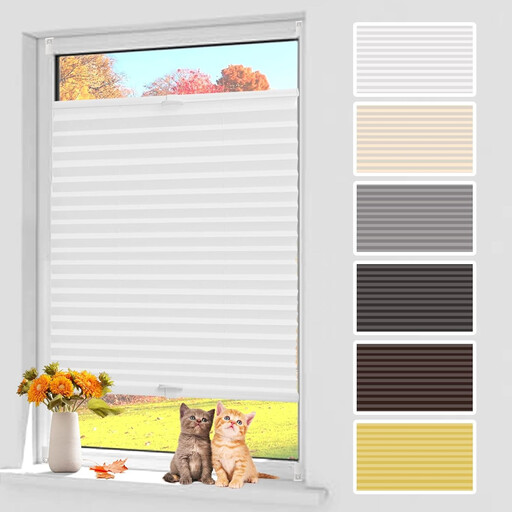
Why it stands out: This model combines a full blackout function with a straightforward adhesive mounting, making it a highly flexible solution.
Pros:
Who is it for? For those who need maximum blackout in a bedroom or child's room and prefer mounting directly on the pane or frame, especially in rental properties.
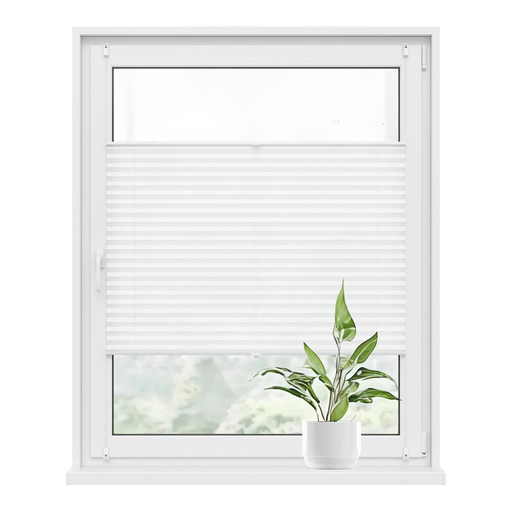
Why it stands out: This clamp-fit pleated blind offers reliable mounting on the window sash and a great balance between privacy and natural light.
Pros:
Who is it for? For users looking for reliable privacy in a living room, kitchen, or office without sacrificing natural daylight. Ideal for standard uPVC windows that can be opened.
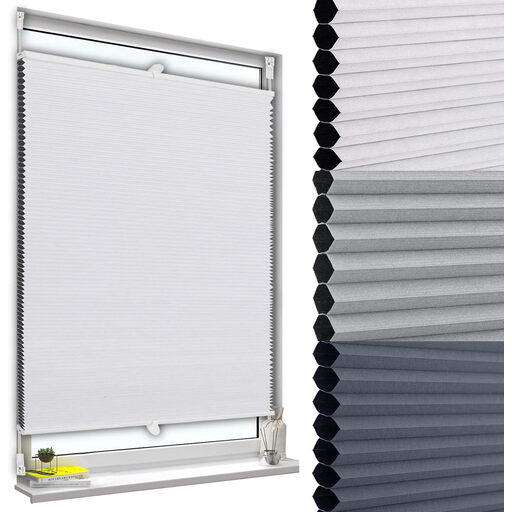
Why it stands out: As a honeycomb blind, this model offers thermal and sound-dampening properties in addition to blackout, making it a multifunctional solution.
Pros:
Who is it for? For energy-conscious buyers and individuals who value maximum blackout, privacy, and added comfort through thermal and sound insulation, for example, in bedrooms or rooms facing busy streets.
Haven't found the right model for your window pleated blind yet, or are you looking for other colour options? A wide range of designs and sizes offers additional choices.
? Discover more White Pleated Blinds here.
1. How does a no-drill pleated blind stay up? A no-drill pleated blind is either secured with clamp brackets on the window sash (clamp-fit) or attached with adhesive strips directly to the window pane or frame. Both methods are designed to provide a stable hold without damaging the window frame.
2. Can a clamp-fit pleated blind be installed on any window? No, clamp-fit mounting is primarily suitable for windows that open (tilt-and-turn windows) and have a compatible frame thickness (usually 1.5 to 2.3 cm). For fixed-pane windows, sliding doors, or wooden windows with rounded edges, adhesive mounting is often the better alternative.
3. What is the difference between a standard pleated blind and a honeycomb blind? A standard pleated blind consists of a single, zigzag-pleated fabric panel. A honeycomb blind, on the other hand, is made of two fabric panels joined in the middle to form honeycomb-shaped air pockets. This structure provides better insulation against heat and cold and can also slightly dampen sound. The tension cords on honeycomb blinds run inside the structure, so there are no visible holes in the fabric, which improves the blackout performance.