
Lieferung heute & morgen

Qualitätsgarantie

Willkommens-Angebote freischalten: KOSTENLOSE Lieferung | Bis zu 80 % RABATT | Kostenlose 30-Tage-JoyPlus-Testphase
App herunterladen
A no-drill pleated blind is a practical solution for privacy and sun protection, especially in rental apartments where damaging the window frame must be avoided. Installation using clamps or adhesive is straightforward and requires no DIY skills. However, the market offers an overwhelming variety, and not every product delivers on its promise. Before you make a decision, you should be aware of the most common pitfalls that can lead to frustration and unnecessary expenses.
Two common problems when choosing are:
This guide will help you avoid these mistakes and find a no-drill folding blind that meets your requirements for both function and durability.
To find the right pleated roller blind, you should carefully examine three core aspects: the mounting type, the fabric properties, and the correct measurements.
Drill-free installation is primarily done using two systems: clamping or sticking.
The function of your pleated blind depends directly on the chosen fabric. There are generally three levels of transparency:
A common mistake is inaccurate measuring. Take your time and use a rigid tape measure.
Based on the criteria mentioned, we have compiled a few models for different needs and for pleated blinds for windows and doors.
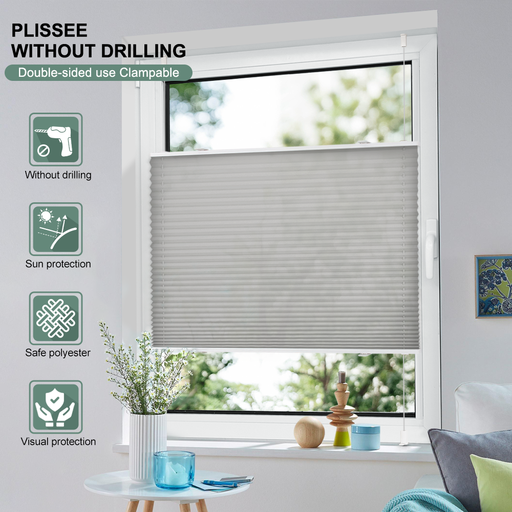
Why This Fits Their Persona: Ideal for renters looking for a straightforward and cost-effective solution for standard windows. The tool-free clamp-fit installation protects the window frame and allows for quick setup without leaving permanent marks.
The product relies on a proven clamp-fit system designed for common window frame thicknesses, thus avoiding the pitfall of unstable brackets.
The opaque fabric quality offers a good balance of privacy and light filtering, suitable for living areas. The installation is tool-free and leaves no residue.

Why This Fits Their Persona: Perfect for bedrooms and children's rooms where effective light blocking and a quiet environment are important. The honeycomb structure provides additional thermal and acoustic insulation, enhancing sleep comfort.
This model is explicitly designed as a blackout pleated blind with a honeycomb structure. It bypasses the trap of misleading labels by ensuring high light-blocking capability through its construction.
The honeycomb structure provides effective blackout and insulates against heat, cold, and sound. Installation is also drill-free via clamp brackets.
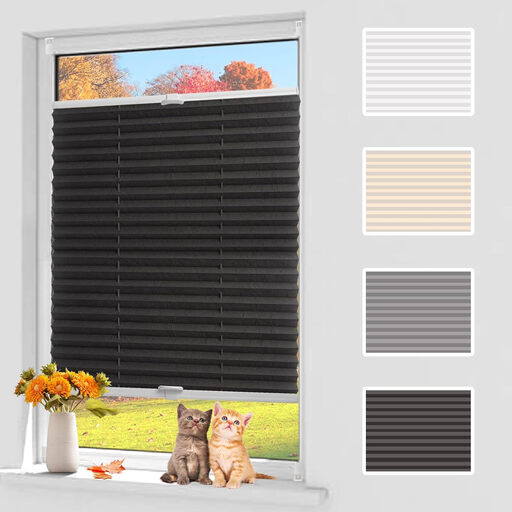
Why This Fits Their Persona: Suitable for users with floor-to-ceiling windows or patio doors who need wide and tall coverage. The continuously adjustable positioning offers flexible light control for large glass surfaces.
With its generous dimensions and adaptable clamp-fit system, this pleated blind is specifically designed for larger formats where standard sizes often provide insufficient coverage.
Provides coverage for large areas up to 200 cm in height. The opaque fabric ensures privacy and glare protection, while the installation is drill-free.
We have compiled a complete, up-to-date list of products that fully meet these strict selection criteria and UK safety regulations.
1. How long do clamp-fit pleated blinds last? The lifespan of a clamp-fit pleated blind depends heavily on the quality of the brackets and the fabric. High-quality models with sturdy brackets made of robust plastic or with metal reinforcement can last for several years. Cheaper models can lose their stability after just one season due to UV radiation. Regular, careful operation also contributes to their longevity.
2. Can you attach a no-drill pleated blind to wooden windows? Attaching to wooden windows is possible but requires careful consideration. The clamp-fit system is often not ideal as it could damage the wood surface or may not fit due to the frame's shape. In this case, adhesive mounting is often the better choice. It is important to use an adhesive suitable for wood and to thoroughly clean the surface beforehand. Test the adhesive on an inconspicuous area to ensure it does not damage the paint.
3. Do adhesive pleated blinds leave residue on the window frame? Whether adhesive pleated blinds leave residue depends on the quality of the adhesive strips and the duration of attachment. High-quality adhesive strips can often be removed without a trace even after a long time, possibly with the help of a hairdryer to gently warm the adhesive. Cheap adhesives, on the other hand, can leave stubborn residues that can only be removed with special solvents. It is advisable to follow the manufacturer's instructions for removal carefully.