
Lieferung heute & morgen

Qualitätsgarantie

Willkommens-Angebote freischalten: KOSTENLOSE Lieferung | Bis zu 80 % RABATT | Kostenlose 30-Tage-JoyPlus-Testphase
App herunterladen
A no-drill double roller blind offers a modern and flexible solution for privacy and sun protection without causing permanent damage to window frames or walls. This simple installation using clamp brackets is an especially attractive option for rental properties. However, not every model delivers on its promise. Before you make a decision, it's crucial to understand the most common weaknesses, which often only become apparent after your purchase.
As your Joybuy Product Recommendation Officer, I'm here to help you distinguish quality from compromise. This guide will walk you through the critical features to look for and present ideal solutions for various needs.
Many products on the market look identical at first glance, but they differ in crucial details that determine their durability and functionality.
To avoid these problems, you should check three core aspects before buying. These will determine whether a blind will meet your needs in the long run.
Drill-free installation is typically done with adjustable clamp brackets that are fitted onto the window sash. The critical factor here is the window frame thickness.
A blind's functionality is determined by the nature of its fabric. A zebra blind, as the double roller blind is also known, combines alternating transparent and opaque stripes. By shifting the two fabric layers, you can seamlessly regulate the amount of incoming light.
This is where most mistakes happen. The specified width (order width) is not the fabric width.
Based on these criteria, we have selected a few products from our range that are suitable for different needs.
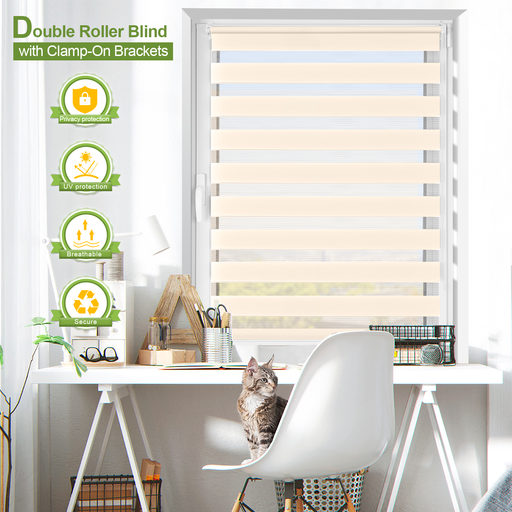
Why This Fits Their Persona: Ideal for renters looking for a straightforward, reliable, and budget-friendly solution for standard windows. The tool-free installation leaves no marks, which is crucial when moving out. The neutral beige tone complements many interior design styles.
The clamp-on system is designed for common window frame thicknesses and provides a solid hold, bypassing the problem of unstable brackets. The clear measurement guidelines help prevent light gaps.
Simple, no-drill installation. Seamless light control with the zebra design. Excellent value for money.
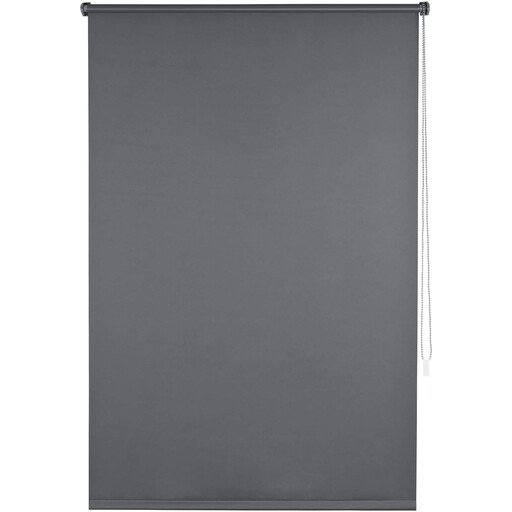
Why This Fits Their Persona: Perfect for those who prioritise complete darkness in a bedroom or home cinema and also want to benefit from thermal insulation. The modern anthracite colour fits well with contemporary interior styles.
The special aluminium coating on the back provides nearly 100% blackout, countering the problem of insufficient light blockage. The robust aluminium profile and smooth side-pull mechanism prevent mechanical issues.
Effective blackout and thermal insulation. Flexible installation (clamp or drill). Smooth pull chain, can be mounted on either side.
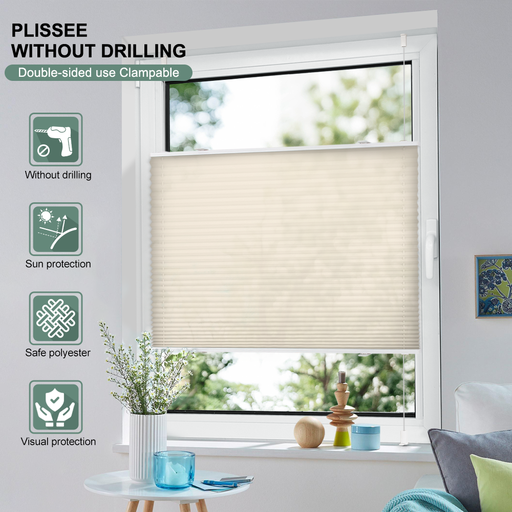
Why This Fits Their Persona: An excellent alternative to a double roller blind for anyone who wants maximum flexibility in light control. It's ideal for ground-floor apartments or bathrooms where you might only need privacy on the lower part of the window while letting full daylight in from the top.
Unlike a roller blind that only operates from top to bottom, this no-drill pleated blind is freely adjustable. It bypasses the functional limitations of a standard blind, offering a tailored solution for privacy and light control.
Can be operated from both the top and bottom for flexible positioning. Tool-free clamp-on installation. Available in blackout and translucent versions.
We have compiled a complete, up-to-date list of products that fully meet these strict selection criteria and all relevant safety standards.
Measure the width of the glass pane and add 4 cm to get the recommended order width. This ensures a good overlap and minimises light gaps on the sides. The order height should correspond to the height of the entire window sash. Always check the manufacturer's specific measurement instructions before ordering.
Yes, when installed correctly on a compatible window frame thickness, high-quality clamp-on systems provide a very secure hold. It's important that the clamp brackets are pushed firmly onto the frame and locked in place. For very large or heavy blinds, using the often-included adhesive pads for extra support can further increase stability.
A double roller blind consists of two parallel layers of fabric with alternating transparent and opaque stripes. Light is controlled by shifting these layers relative to each other. A no-drill pleated blind consists of a single, pleated panel of fabric. Its advantage lies in its flexibility: it can be freely moved up and down the window to cover specific areas as needed.