
Lieferung heute & morgen

Qualitätsgarantie

Willkommens-Angebote freischalten: KOSTENLOSE Lieferung | Bis zu 80 % RABATT | Kostenlose 30-Tage-JoyPlus-Testphase
App herunterladen
As a Joybuy Product Recommendation Officer, I see the vast number of options available for window privacy and sun protection every day. For many renters and homeowners, a no-drill pleated blind is the ideal solution: it's quick to install, leaves no damage, and has a modern look. However, the market is flooded with products of widely varying quality. Before you make a decision, you should be aware of the common pitfalls that often only become apparent after the purchase.
Many buyers find themselves frustrated by three main issues:
This guide will help you avoid these problems and make an informed choice.
To avoid disappointment, you should carefully examine three technical features. These determine the durability and functionality of your new privacy screen.
The mounting method is the core of any no-drill pleated blind. The most common systems have specific advantages and disadvantages:
The fabric determines not only the look but also the function as interior window sun protection. The terminology can often be confusing, but it's easy to categorise:
A high-quality fabric is usually made of polyester, which retains its shape and is easy to clean.
A perfectly fitting pleated blind is no accident. The most common source of error is incorrect measurement. Strictly follow the manufacturer's instructions. A widespread and proven formula for mounting within the window frame is:
Instead of presenting an overwhelming list, we have selected products for three typical user profiles.
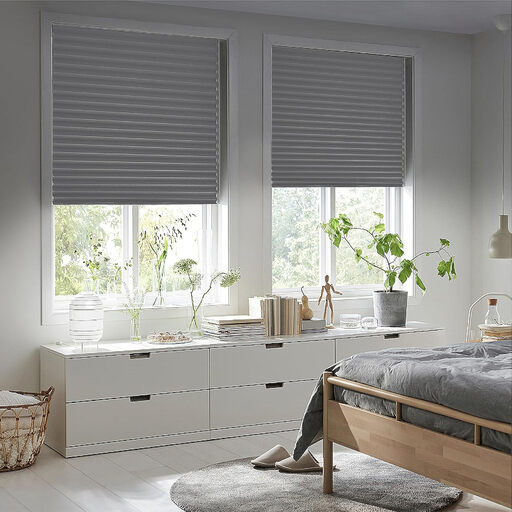
Why This Fits Their Persona: Ideal for tenants looking for a straightforward and residue-free removable solution. The combination of clamp and adhesive options offers flexibility for various window types in a typical German rental apartment.
The product comes with both clamp brackets and adhesive mounts. If one method doesn't hold optimally on the window, an alternative is available, which minimises the risk of a bad purchase.
Versatile Mounting: Suitable for almost all common uPVC windows. Light-Filtering Fabric: Provides good privacy without darkening the room.
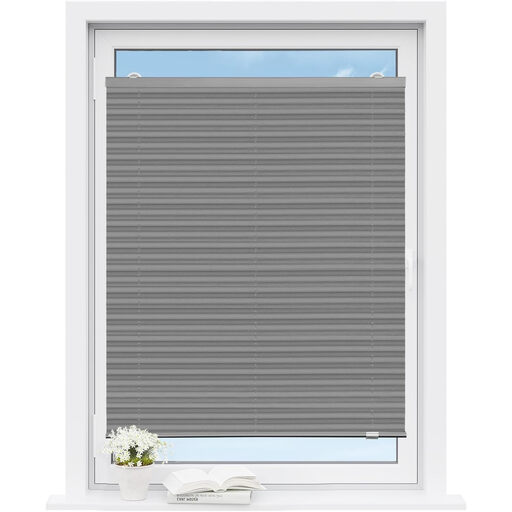
Why This Fits Their Persona: Perfect for users with special requirements like sloped attic windows, conservatories, or fixed glass panels where clamp brackets cannot be installed.
It solves the problem of unstable mounts on unsuitable surfaces by offering an alternative system (suction cups) for smooth surfaces, specifically designed for this purpose.
Mounts on Glass: Holds directly on the pane, making it suitable for sloped windows. UV Protection: According to the manufacturer, the fabric filters a large portion of UV radiation, protecting furniture from fading.
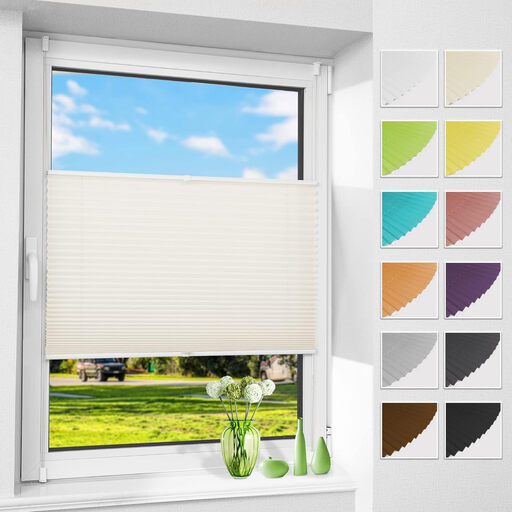
Why This Fits Their Persona: For homeowners or long-term tenants who value robust construction and are willing to invest in higher material quality. Suitable for daily, heavy use.
It addresses the weakness of unstable mounts with patented clamp brackets and an aluminium rod that prevents sagging or breaking—a clear feature for a longer lifespan.
Robust Materials: The combination of 100% polyester and an aluminium rod promises shape retention. Precise Clamp Brackets: Adjustable for frame thicknesses of 10–23 mm for a perfect fit.
We have compiled a complete, up-to-date list of products that fully meet these strict selection criteria and German safety regulations.
Reliability depends on two factors: the quality of the adhesive and proper surface preparation. A clean, dry, and grease-free surface is essential. High-quality adhesive systems can last for years, while cheap versions can lose their grip, especially with direct sun exposure and the associated temperature fluctuations.
This is generally not recommended. The clamp brackets are designed for the standardised profiles of uPVC windows. On wooden windows, there is a risk that the clamping mechanism could damage the paint or the wood itself. Some manufacturers explicitly state that their products are not suitable for wooden windows. For wooden windows, screwing the blind into the frame is often the safer method.
Although both serve as privacy and sun protection, the main difference lies in the material and operation. A pleated shade consists of a single, folded piece of fabric. A no-drill venetian blind, on the other hand, consists of individual, horizontal slats (usually made of aluminium, PVC, or wood) whose angle can be adjusted to precisely control the amount of light coming in.