
Lieferung heute & morgen

Qualitätsgarantie

Willkommens-Angebote freischalten: KOSTENLOSE Lieferung | Bis zu 80 % RABATT | Kostenlose 30-Tage-JoyPlus-Testphase
App herunterladen
A no-drill clip-in pleated blind can be a practical alternative to screw-fixed blinds in rented homes, offices or refurbished rooms. It attaches directly to the window frame, often avoiding drill holes and permanent alterations. However, not every clip-in pleated blind will fit every window.
Common buying mistakes usually come down to three things:
Before ordering, measure the glass area, window frame and existing window rebate separately. For many models, the recommended width is around 3 to 4 cm wider than the glass. For example, a pleated blind measuring 55 cm wide may be suitable for glass that is 51 cm wide.
It’s also important to:
Not every pleated blind for windows and doors is suitable for roof windows, sliding windows or sloping windows. Check these limitations before buying.
A light-filtering pleated blind diffuses daylight and can reduce glare, depending on the fabric. However, it won’t necessarily darken the room. An opaque pleated blind can limit the view from outside while still allowing daylight into the room.
Use these pointers to help you choose:
With a clip-in pleated blind, the brackets attach to the window sash. This suits many rented homes, provided the frame thickness and design are compatible. Adhesive fittings, on the other hand, need a clean, dry and preferably smooth surface. They may leave residue when removed later, or may not be suitable for delicate surfaces.
Ease of use is another consideration. Models with handles on the top and bottom rails can be moved from either side. For cord-operated versions, make sure the cord is securely fastened and follow the instructions for safe use. Keep products out of the reach of children.
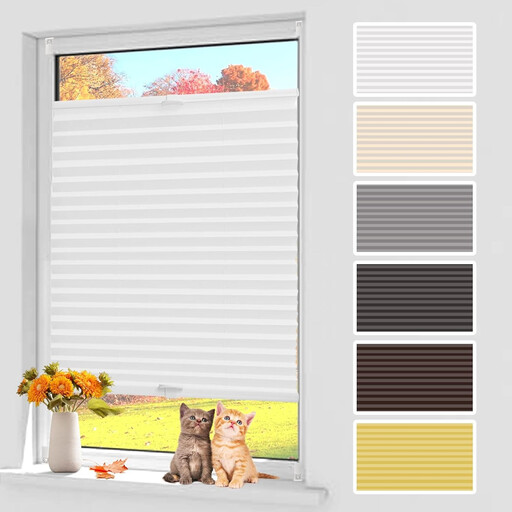
Why this product suits this profile: Its compact size is suitable for smaller standard windows. According to the product details, it can be fitted without drilling using clip-on or adhesive brackets.
The product description gives the dimensions as 65 × 100 cm and describes the blind as light-filtering and privacy-enhancing. This makes it easier to understand how it will affect the light before you buy.
Polyester fabric, adjustable-height operation and cleaning with a damp cloth, according to the product details.
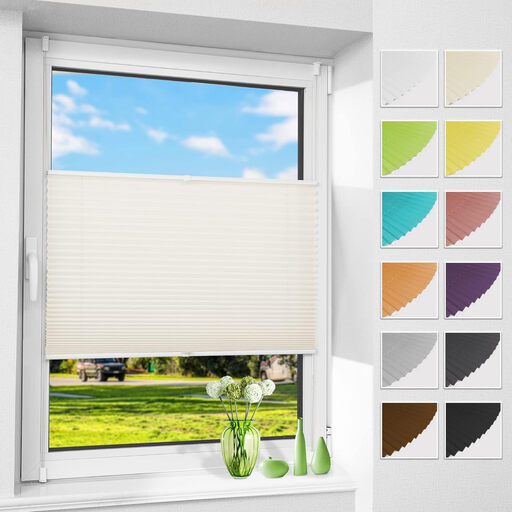
Why this product suits this profile: According to the product description, the adjustable brackets are designed for frame thicknesses of 10 to 23 mm and are suitable for rectangular tilt-and-turn windows.
The fitting requirements are clearly set out, along with a warning not to cut the blind to size. This reduces the risk of making an unsuitable adjustment.
Polyester fabric with an aluminium rail, operation using the top and bottom rails, and cleaning with a damp cloth.

Why this product suits this profile: Its honeycomb structure and clip-on brackets for frame thicknesses of 10 to 23 mm are designed to provide light protection and flexible use indoors.
The description specifies that it is for indoor use and is not suitable for roof windows. It also advises leaving clearance around window handles.
Honeycomb polyester fabric, top and bottom handles, and a surface that can be wiped with a damp cloth, according to the product description.
A no-drill pleated blind will stay looking its best for longer if you clean the fabric regularly with a soft cloth or gently with a brush. Harsh cleaning products and abrasive sponges can damage polyester. Only expose the fabric to moisture as recommended, as most of the fabrics mentioned are not waterproof.
Before use, check that all clip-on or adhesive brackets are secure. If your blind is cord-operated, follow the manufacturer’s safety instructions. Don’t force the blind to move. If you open and close the window frequently, make sure the fabric doesn’t rub against the handle or seal.
We’ve put together a complete, regularly updated list of products that meet these strict selection criteria and fully comply with the safety regulations in force in the EU.
Position the clip-on brackets on the window sash and secure them according to the instructions. First, check the frame thickness, surface and the window’s range of movement. If you’re using adhesive brackets, the surface must be clean, dry and preferably smooth.
Its lifespan depends on the fabric, brackets, sun exposure and how it’s operated. With clip-in systems, it can be worth tightening or checking the brackets regularly. For adhesive fittings, temperature, moisture and the condition of the frame can all affect how well they stay in place.
A manual pleated blind doesn’t need electricity, so there are no ongoing running costs. However, how well it provides privacy or sun protection depends on the fabric, which way the window faces, the fitting distance and any gaps at the sides.