
Same-day & Next-day Delivery

Quality Guaranteed

Unlock Your Welcome Offers: FREE Delivery | Up to 80% OFF | Free 30-day JoyPlus trial
Download the APP
A no-drill day and night blind is a practical choice for rented homes, children’s rooms, offices and many other indoor spaces. It attaches to the window sash without leaving plugs or drill holes behind. Alternating sheer and opaque fabric strips let you adjust the light to suit your needs.
However, a few common assumptions can lead to ordering the wrong blind. It’s not just colour and price that matter: window measurements, rebate thickness, fabric width and safe operation are all important.
The stated blind width usually refers to the overall width of the complete blind. On the WOLTU models described here, the fabric is around 4 to 5 cm narrower. If you only measure the glass and don’t allow for the difference, you may not get enough privacy at the sides.
For a rough guide with many options:
Always follow the fitting instructions for the specific model.
A no-drill clamp-fit blind is typically hooked onto the window sash. The WOLTU options featured here are designed for a rebate or frame thickness of around 13 to 23 mm; some product details specify 1.3 to 2 cm. Before buying, compare your window construction with the information on the product page.
Not every window is suitable for this type of fitting. Several options are specifically not suitable for roof windows or wooden windows. Sliding windows, fixed glazing and windows with handles in awkward positions may also be unsuitable.
A day and night blind, also known as a zebra blind, duo blind or day and night roller blind, has alternating sheer and opaque strips. The strips move over one another when you use the chain:
With a free-hanging window blind, some light may still come through at the sides. If you want to keep a bedroom as dark as possible, also consider the overall dimensions, the blind’s position and the light sources in the room. A privacy blind does not automatically provide complete blackout.
Measure the width of the glass and the height of the window sash in several places. If the measurements vary considerably, use the smaller or technically appropriate measurement. The blind must not block the window handle. The same principles apply to doors, but you’ll need to pay particular attention to the area of movement and the position of the handle.
The options are available in a range of sizes, including W60 x H150 cm, W80 x H130 cm, W90 x H150 cm, W110 x H150 cm and W120 x H120 cm. The right size always depends on the specific window or door.
A no-drill blind with clamp brackets is particularly suitable for rented homes. Some models also include accessories for screw fitting to a wall or ceiling. This may be an alternative in rooms where the blind will be used long term, but it does change the fitting requirements.
On several WOLTU models, the side pull or chain can be fitted on the left or right. This makes it easier to work around the window handle, furniture and room layout. The chain must be secured safely and kept out of the reach of young children.
The models mentioned are made from 100% polyester. Some have thermally cut fabric edges to help prevent fraying. For regular care, a soft brush, dry cloth or slightly damp cloth is recommended. Machine washing is not suitable for this product range.
In kitchens and bathrooms, an easy-care material that can be wiped clean with a damp cloth may be a good choice. However, harsh cleaning products, vigorous rubbing and soaking the fabric may damage its surface or mechanism.
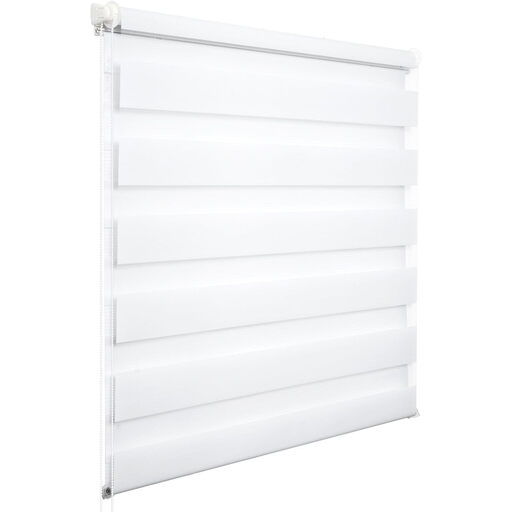
Why this product is a good fit: Its narrow width makes it suitable for smaller standard windows in rented homes, home offices or guest rooms.
The product details specify the suitable frame thickness of 1.3 to 2 cm and the narrower fabric width, making it easier to check your measurements.
100% polyester, chain operation on the left or right, and two light settings thanks to the sheer and opaque strips.
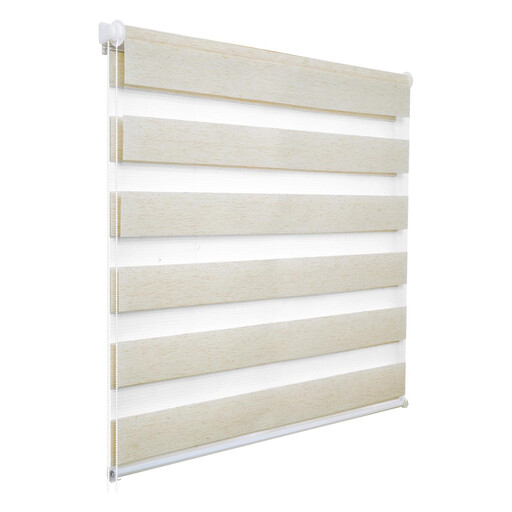
Why this product is a good fit: Its wider design pairs a warm wood effect with adjustable light control for larger windows.
The product details clearly state the frame thickness of 1.3 to 2 cm and the approximate fabric width, and note that it is not suitable for fitting to roof or wooden windows.
100% polyester, a surface that can be wiped clean with a damp cloth, chain operation and a child safety device included, according to the product description.
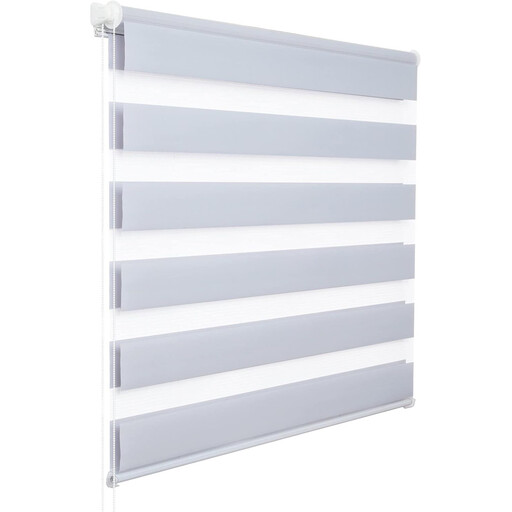
Why this product is a good fit: Its extra height makes it worth considering for tall windows, balcony doors and selected patio doors, provided the measurements and handle position are suitable.
The product description explains the limits of clamp fitting, notes the narrower fabric width and states that it is not suitable for roof or wooden windows.
Clamp brackets for 13–23-mm frames, a chain that can be fitted on the left or right, and moisture-resistant polyester according to the supplier’s information.
We’ve put together a complete, regularly updated list of products that meet these strict selection criteria and fully comply with the safety regulations in force in the EU.
A chain-operated roller blind can provide many years of everyday use when it fits correctly. However, its actual lifespan depends on how it is fitted and operated, exposure to sunlight and how well it is cared for.
The blind is attached to the window sash using clamp brackets. The frame or rebate thickness must be within the range specified by the manufacturer. The options mentioned here are often designed for 13 to 23 mm. Depending on the model, screw fitting may also be possible.
Some models are sold for both windows and doors. However, you’ll need to check the door’s width and height, handle position and area of movement before buying. The blind must not catch when the door is opened or closed. The no-drill clamp-fit options mentioned here are not designed for roof windows or certain wooden windows.
There’s no single answer that applies to every blind. Polyester fabric, thermally cut edges and careful use of the chain can all help it stand up to everyday use. Regular dusting, secure fitting and avoiding excessive pulling can reduce common wear and tear.