
Lieferung heute & morgen

Qualitätsgarantie

Willkommens-Angebote freischalten: KOSTENLOSE Lieferung | Bis zu 80 % RABATT | Kostenlose 30-Tage-JoyPlus-Testphase
App herunterladen
As a Joybuy Product Recommendation Officer, I see every day how the right product choice can significantly improve home comfort. Especially in rental apartments, where structural alterations are often not permitted, installing privacy and sun protection presents a challenge. A no-drill double roller blind is a popular solution for this. However, the market is flooded with products of widely varying quality. This guide will help you navigate the common pitfalls and make an informed decision.
Many buyers focus solely on price or appearance, overlooking critical technical flaws that severely limit functionality.
duo blind relies on the precise interaction of two fabric panels. On low-quality products, the stripes are poorly cut, or the fabric is so thin that too much light still shines through even in the darkened position.To avoid a bad purchase, you should check three technical parameters before making your choice. These determine the product's durability, fit, and functionality.
No-drill installation is typically done using adjustable clamp brackets that are fitted onto the window sash. Compatibility with your window sash thickness is crucial here. Most systems are designed for a standard thickness of 13 to 23 mm. Measure the thickness of your window sash (excluding the rubber seal) before you order. Also, check the manufacturer's specifications for any restrictions; many clamp-fit blinds are not suitable for skylights or solid wood window frames.
A double roller blind, also known as a zebra blind or day and night blind, consists of alternating transparent and opaque fabric segments. Using a side chain, these panels can be shifted against each other to seamlessly adjust the light level from translucent to dim-out.
Pay attention to the material. 100% Polyester is a common standard as it is dimensionally stable, easy to clean, and suitable for humid rooms. A key quality indicator is the finish of the edges: edges sealed with hot-cut technology prevent the fabric from fraying.
This is the most critical point for ensuring complete coverage. By design, the fabric width is always narrower than the order width (the total width including the mounting system). This difference is typically 4 to 5 cm.
How to Measure Correctly:
Based on the quality criteria mentioned, we have selected a few products for typical use cases.
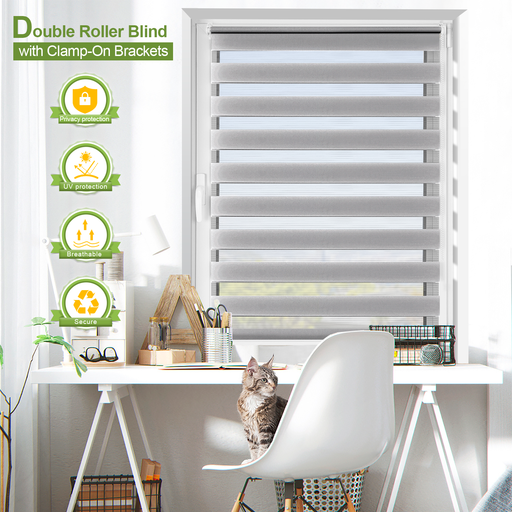
Why This Fits Their Persona: Ideal for renters looking for a straightforward, functional, and budget-friendly solution for standard windows. The neutral colour and simple installation make it a practical starter kit.
The clamp-fit system is designed for common window frame thicknesses and provides a stable, tool-free attachment without the risk of wobbly brackets.
Infinitely variable light control thanks to the dual-layer design; easy-care polyester material.
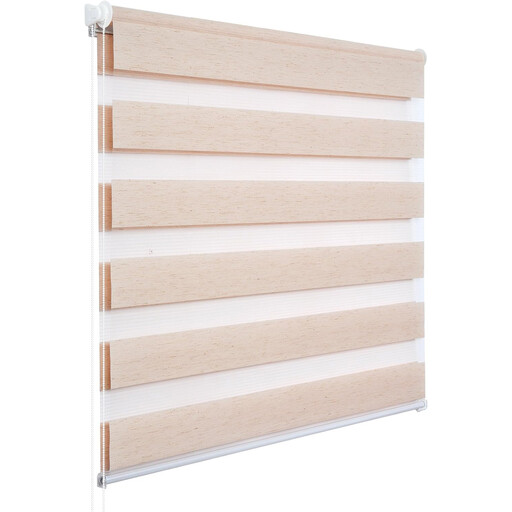
Why This Fits Their Persona: For users who want a blind that is not only functional but also a decorative element. The natural wood look blends harmoniously into interior designs with wood elements, creating a warm atmosphere.
It combines appealing aesthetics with robust mechanics and high-quality fabric, avoiding the look of a cheap plastic blind.
Unique wood-look as a design feature; the chain pull can be flexibly mounted on the left or right side.
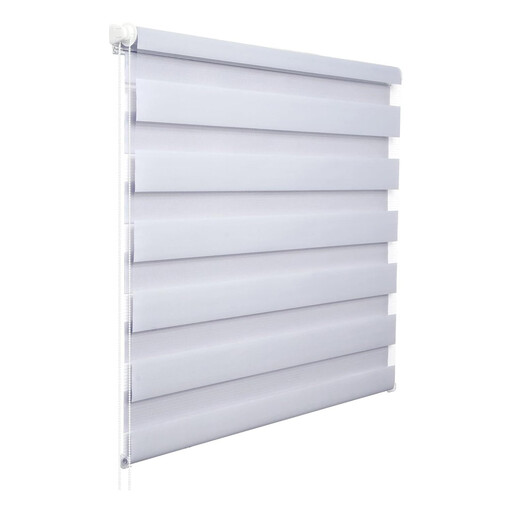
Why This Fits Their Persona: Suitable for living rooms or offices with wider windows where stability and a uniform appearance across the entire surface are crucial. The 110 cm width reliably covers even larger glass areas.
The sturdy overall construction is designed to prevent the roller tube from sagging, even at wider widths—a common problem with oversized, cheap models.
Robust structure for wide windows; accessories for optional drill-mounting are included for added stability.
Measure the width of the glass pane itself and add 4 cm to determine the optimal order width. For the height, measure the entire height of the window sash. Compare these measurements with the manufacturer's specifications and note the difference between the order width and the fabric width.
Yes, when installed correctly on a suitable window sash (usually 13-23 mm thick), high-quality clamp brackets provide a secure and stable hold for daily use. However, they are not designed for heavy pulling forces or for installation on sloped ceilings or skylights.
The transparency is adjustable. When the transparent stripes of both fabric panels are aligned, some visibility is possible, allowing for daylight. If you shift the panels so that the opaque stripes cover the transparent ones, an effective privacy blind effect is achieved, ensuring privacy.