
Lieferung heute & morgen

Qualitätsgarantie

Willkommens-Angebote freischalten: KOSTENLOSE Lieferung | Bis zu 80 % RABATT | Kostenlose 30-Tage-JoyPlus-Testphase
App herunterladen
The search for suitable privacy and sun protection for rental apartments or offices often ends with one key requirement: no drilling allowed. A no-drill double roller blind seems like the ideal solution. It promises simple installation, flexible light control, and a modern design. However, the market is flooded with products of widely varying quality. Many buyers only realise after installation that the blind doesn't live up to its promises.
This guide highlights the three most common weaknesses that can lead to disappointment with a clamp-on blind and explains which technical features you should look for to make an informed purchasing decision.
Before you make a decision, it's important to know the typical flaws that often only become apparent during everyday use.
To avoid the problems mentioned above, you should check three core parameters. These define the functionality and longevity of your new blind.
The quality of the clamp brackets determines how well the blind holds. Look for adjustable brackets that can adapt to different window frame thicknesses. A common and reliable range for frame thickness is between 13 and 23 mm. The brackets should be made of robust plastic or metal and allow for a firm yet damage-free grip on the window sash. A good clamp-on blind sits securely and doesn't wobble, even with daily use.
Depending on the room and your needs, the required level of light protection will vary. Fabrics can be divided into three categories:
With a double roller blind, the fabric panels must be precisely manufactured to ensure a seamless overlap for the blackout effect. As an alternative, a no-drill pleated blind often offers even more flexible adjustment options for privacy.
Measuring correctly is essential. Follow this simple formula:
Order Width = Width of the glass pane + approx. 4 cm overlap (2 cm per side)
This overlap ensures that the fabric completely covers the glass pane and minimises light leakage from the sides. Measure the height of the entire window sash (including the frame) to determine the correct length. Make sure the total width of the blind does not interfere with the window handle.
Here are some product recommendations tailored to different needs and use cases.
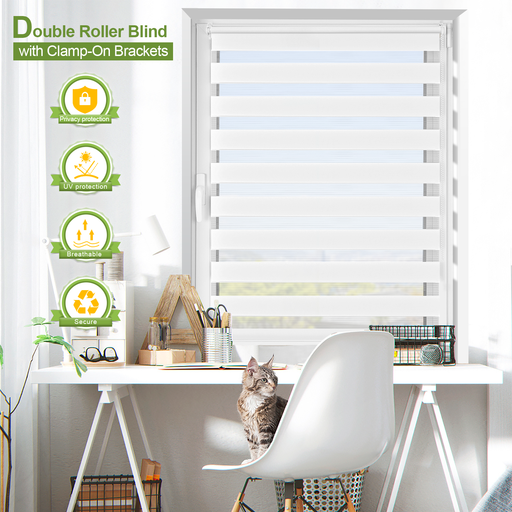
Why This Fits Their Persona: Ideal for tenants looking for a straightforward and functional standard solution for living rooms or offices. The neutral colour and common size fit many interior design styles.
The included clamp brackets are designed for standard window frames and provide a reliable hold. The polyester fabric ensures even light filtering without the messy stripes found on lower-quality products.
Tool-free installation and stepless adjustment of light and privacy via the chain pull.
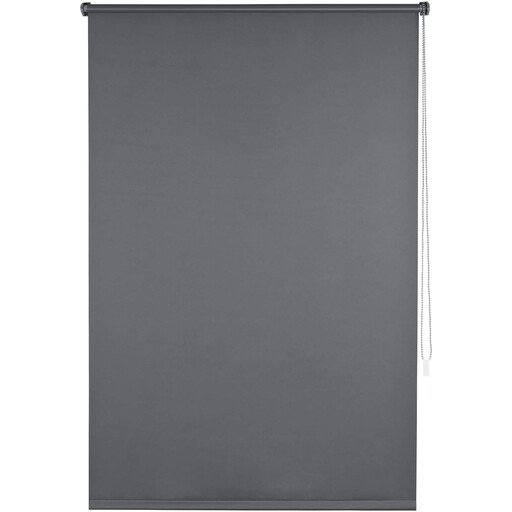
Why This Fits Their Persona: Perfect for bedrooms, children's rooms, or home cinemas where near-total darkness is required. The thermal function is an added benefit for regulating room temperature.
This blind is not a double roller but a specialised blackout blind. It bypasses the 'imprecise light control' trap by using a special aluminium coating on the back, which the manufacturer claims blocks light.
The thermal coating reflects sun rays in the summer and helps retain heat in the winter. Dual mounting system (clamp or drill) for maximum flexibility.
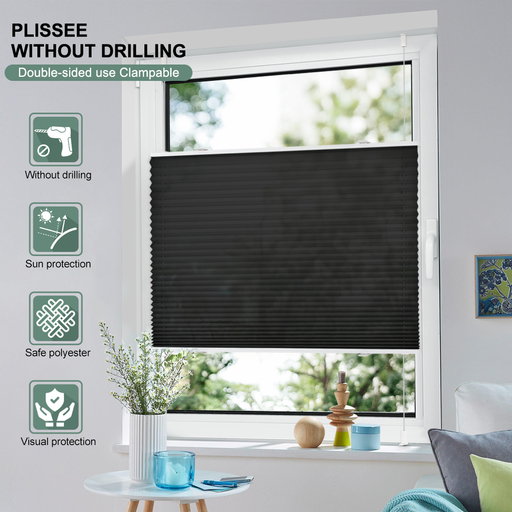
Why This Fits Their Persona: An excellent alternative for anyone who wants more than just up-and-down movement. Ideal for ground-floor apartments or bathrooms where privacy is only needed in the lower part of the window.
As a pleated blind, it avoids the typical problems of double roller blinds, such as uneven stripes. The clamp-on installation is also designed for stability in daily use.
The pleated blind is freely adjustable on the window and can be opened from both the top and the bottom. This allows for precise control over light and privacy.
We have compiled a complete, up-to-date list of products that fully meet these strict selection criteria.
Measure the width of the glass pane (not the entire window). Add approximately 4 cm to this measurement (2 cm on each side) to determine the order width. This overlap prevents light from entering at the sides. Check that the resulting total width of the blind does not obstruct the window handle.
Clamp-on systems are designed for most standard uPVC windows with a sash thickness of about 13 to 23 mm. They are generally not suitable for skylights, fixed windows (that cannot be opened), or wooden windows with very wide or ornate frames. Before purchasing, check the compatible frame thickness specified by the manufacturer.
A double roller blind consists of two parallel fabric panels with alternating transparent and opaque stripes. By shifting the panels, you can steplessly adjust the amount of light. It is typically moved only from top to bottom. A pleated blind consists of a single, pleated fabric panel. It is often tension-mounted and can be flexibly moved up and down the window to cover specific areas.